


Anthropic is seeking shareholder approval for a proposed share structure that would give Chief Executive Dario Amodei and six co-founders a combined 50.1% of voting power in most corporate matters ahead of a potential initial public offering, according to Reuters reporting on an account by The Information. The proposal would put control rights, not simply valuation and artificial-intelligence growth, near the center of the company’s eventual investor case.
The reported plan remains unconfirmed by Anthropic and would require shareholder approval. Reuters said the company did not immediately respond to a request for comment. Still, the report arrives after Anthropic said in June that it had confidentially submitted an IPO prospectus to the Securities and Exchange Commission, a step reported by CNBC. Anthropic said then that any offering would depend on market conditions and other factors, leaving the timing and terms unresolved.

Majority voting power, with defined limits
A 50.1% voting bloc would amount to a narrow majority: sufficient, if the relevant voting rights apply, to determine the outcome of matters put to a shareholder vote without needing support from outside holders. That can preserve founders’ influence even as an IPO and later share issuance dilute their economic stake. It also means a public investor’s ownership percentage may not correspond to comparable influence over corporate decisions.
The Information’s account, as reported by Reuters, says the founders would receive a special class of shares controlling most corporate matters. The arrangement would continue only if at least three of the seven founders retained a specified minimum number of shares. That condition is important because it suggests the reported control mechanism is tied not solely to Amodei’s individual holdings but to an ongoing group of founders meeting an ownership threshold.
The reported design also contains material carve-outs. Founder control would not extend to elections of Anthropic directors, Reuters reported. Anthropic’s board has seven seats, including one vacancy, according to the account. Separating board elections from other shareholder decisions would give outside investors a potentially meaningful governance lever, though the practical weight of that lever would depend on the final voting rules, director-nomination procedures and the company’s eventual ownership distribution.
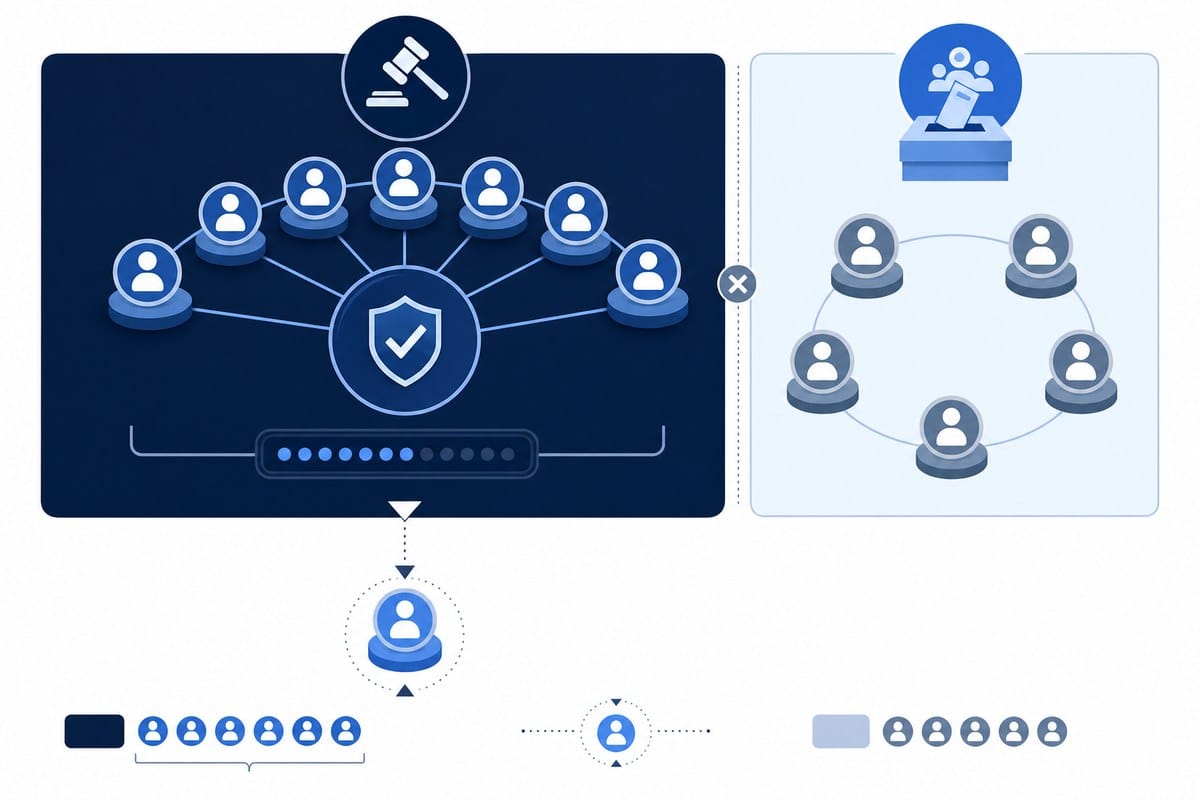
Reuters also reported that Anthropic plans a separate employee share class that could cast tie-breaking votes on certain corporate matters. The available reporting does not specify which matters would be subject to that mechanism, how employees would exercise the vote or how the employee class would interact with the proposed founder shares. Those details would be essential for assessing whether the arrangement creates a durable founder majority, a more contingent governance system, or different outcomes across different kinds of resolutions.
The IPO filing and the governance plan are separate developments
Anthropic’s confidential SEC filing is a confirmed indication that the company has begun the private phase of the U.S. IPO review process. It is not, however, a public registration statement and does not establish an offering date, number of shares, price range, valuation or final capital structure. The confidential process lets an issuer and regulators work through disclosure issues before a public filing, if the company chooses to proceed.
The voting-control proposal is a separate, reported governance action. Investors should not treat Anthropic’s June statement about an IPO filing as confirmation of the special-share structure, nor treat the September report as proof that shareholders have approved it. Reuters attributed the terms to The Information, and Anthropic had not commented on the proposal when Reuters published its report.
If Anthropic advances toward a public listing, its registration materials would be the consequential document for prospective shareholders. A prospectus would ordinarily lay out each class of stock, votes per share, conversion or sunset provisions, eligibility conditions, risks associated with concentrated control and the voting power held by directors, executives and major owners. Until then, the reported 50.1% figure describes a proposed allocation of voting power rather than a completed public-company structure.
Palantir comparison frames the investor issue
The reported plan is modeled on the founder-control structure at Palantir Technologies, according to Reuters’ account of The Information’s reporting. The comparison identifies the broad governance objective but should not be read as evidence that Anthropic would replicate Palantir’s terms. The reported exclusions for director elections and the potential employee tie-breaker point to a structure whose details could differ substantially from another company’s share classes.
For Anthropic, a founder-control arrangement could give the company greater continuity over strategic decisions after a listing, when new public shareholders gain economic exposure and voting rights. For those shareholders, the trade-off is straightforward: they could participate in the company’s financial results while having constrained influence over many matters normally decided through shareholder voting.
The outcome will turn on terms not yet public: whether the structure wins shareholder approval, the exact matters covered by founder votes, the minimum-share requirement for the founder group, the scope of any employee voting class and whether the final IPO documents modify any of those features. Anthropic has confirmed the confidential IPO filing; the proposed control system remains a reported plan awaiting both company confirmation and, if pursued, formal disclosure.

