


A sizable price cut has brought one of the most capable home backup power stations within easy reach. The Anker Solix F2000 is marked down to $849 at Amazon, which is 58% off its normal retail price of $1,999 — an impressive savings of $1,150. If you’re in the market for a large-capacity, lithium iron phosphate (LFP) unit to keep on hand for outages, camping, or jobsite power needs, it’s the top deal we’ve seen in this category to date.
Why this Anker Solix F2000 deal is so significant
With a 2,048Wh LFP battery delivering a beefy AC output — more than sufficient to power full-size appliances and several smaller devices simultaneously — the Solix F2000 is designed to deliver such power on the go in a compact form.
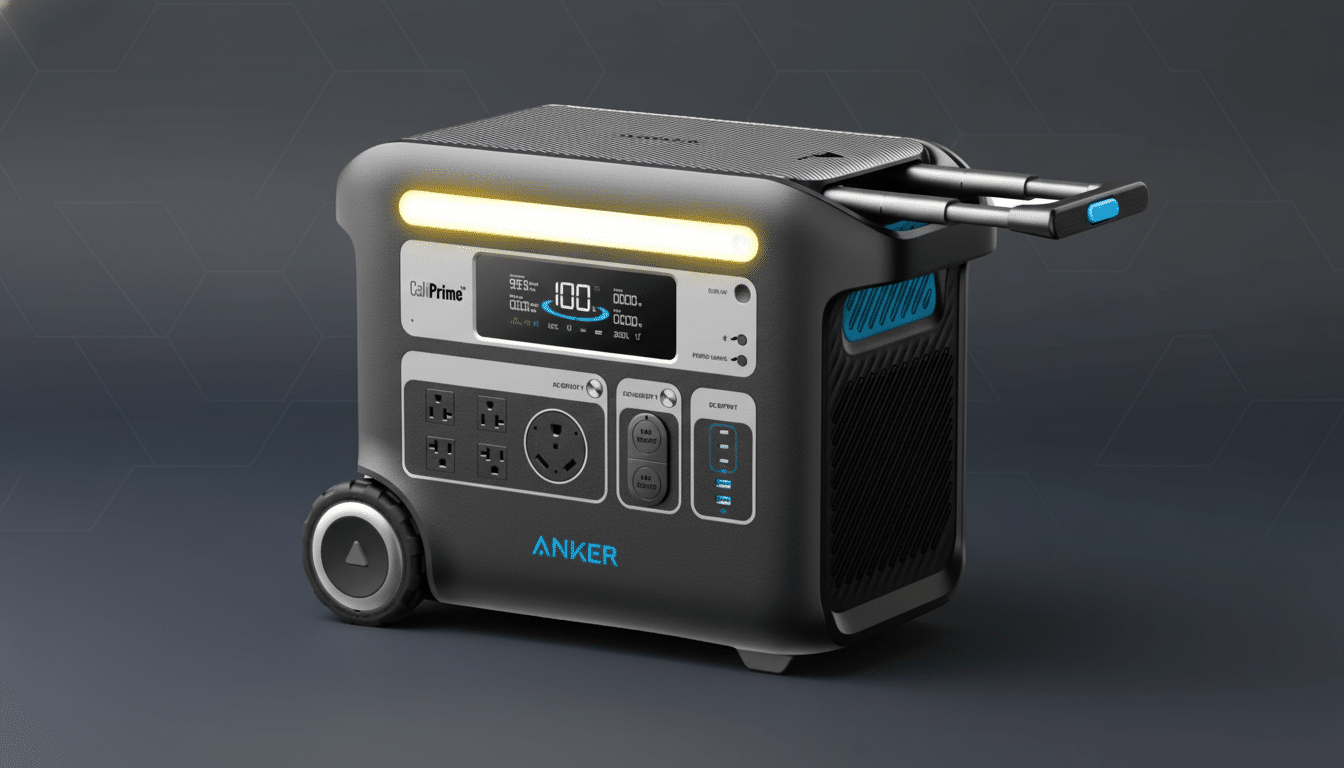
Discounts on this class of power station almost never drop below the $1,000 mark; rival models with similar capacity typically fall in the range of $1,399 to $1,999 retail depending on brand and features. Anker also stands behind the F2000 with a long warranty, often five years on its LFP flagships, which is an important differentiator for a product that’s designed to endure thousands of charge cycles.
It’s all about the LFP chemistry. LFP typically offers higher cycle life and improved thermal stability when compared to older nickel-based packs. Anker’s large LFP units are rated for about 3,000 cycles to 80 percent capacity — which translates to years of regular use in most homes — meaning the overall cost of ownership should be lower.
Capacity and real-world runtimes for the F2000
The F2000 has the power to run essentials during an outage, with a 2,048Wh capacity. Manufacturer guidance lists a typical refrigerator at approximately 10 hours, a CPAP machine at more than 32 hours, and a washing machine at about 1.5 hours. That moderate expectation is in line with back-of-the-envelope math: accounting for, say, 85% usable capacity after factoring in inverter losses, you’re talking about around 1,740Wh of AC power. That’s roughly 11–12 hours for a 150W fridge, 40–45 hours for a 40W CPAP, and about 1.7 hours for a power tool at full load, but actual runtimes vary with surge draw and duty cycles.
In this class, which is by far the most common, an AC inverter will generally provide around 2,300W of continuous output with surge headroom — plenty to run a fridge as well as networking gear, lights, and phone chargers without overloading. That would go a long way toward closing the most typical gaps, which the U.S. Energy Information Administration said lasted some 5.5 hours per customer in 2022 when big events are factored in.
Charging speed and solar readiness for off-grid use
Fast wall charging is one of the F2000’s strong points. High-wattage AC input can take the unit from low to 80% in roughly one hour to an hour and a half, helpful when there’s not much time before a storm window or campsite check-in. For off-grid use or longer emergencies, the unit allows photovoltaic input through standard MC4 connections; with a large enough portable array you can stretch out your runtime and minimize dependence on the grid or fuel. In ideal conditions, a 400–800W panel or two can fill the unit to full during a clear day, depending on location and climate.
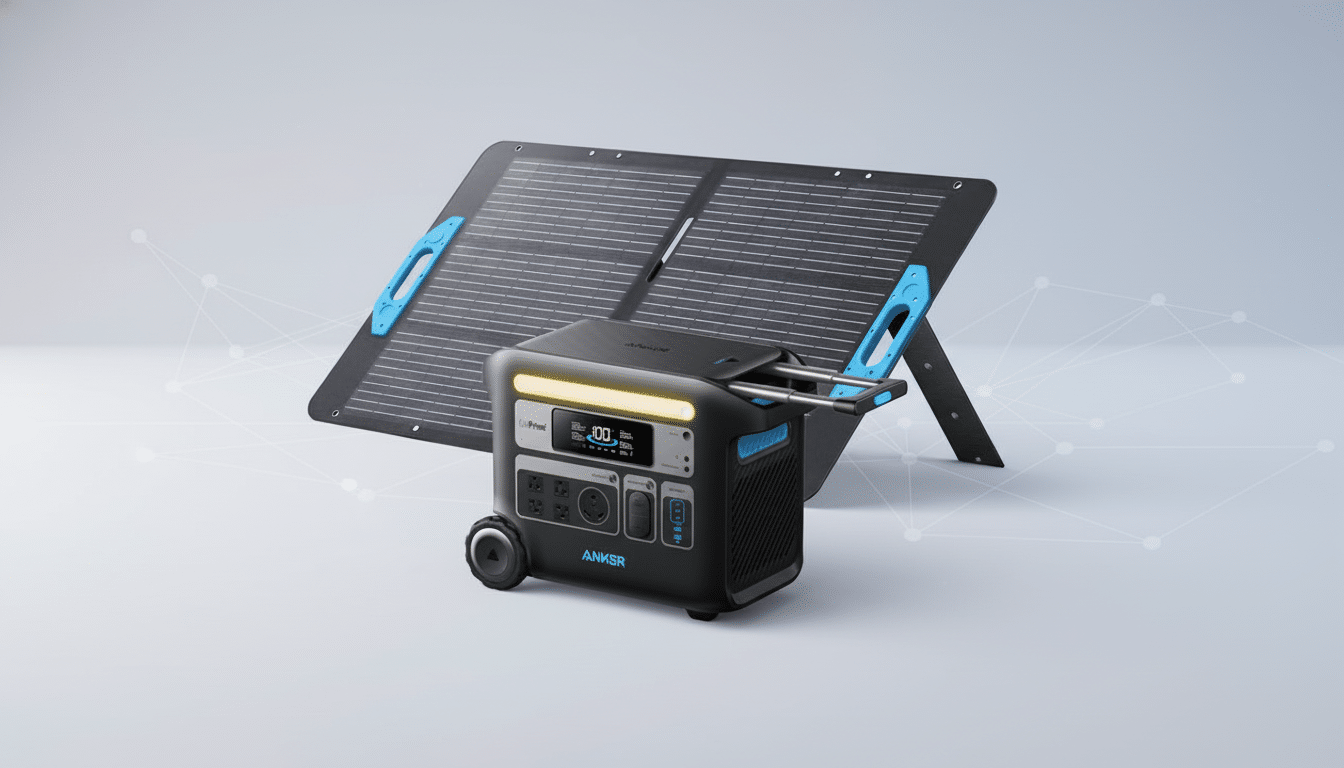
And in a nod toward usability, Anker includes an integrated handle-and-wheel system to help with transport of a device that tips the scales at around 67 pounds. Additional AC outlets and powerful USB-C ports make it easier to power laptops, modems, routers, and work tools without daisy-chaining adapters.
From home to campsite: practical use cases
At home, the F2000 runs essentials (fridge, Wi‑Fi, lights, power for medical devices) without the fumes or maintenance associated with a gas generator. Consumer advocates point out LFP power stations as indoor-safe and low-maintenance, but they can’t run for longer periods than home-wide fuel generators. For travel, it makes a sturdy hub for RVs and cabin camping as well, powering an induction cooktop in short bursts, a mini fridge, projectors, or your power tools at the jobsite when noise and emissions are a concern.
The ecosystem matters too. The F2000 platform allows for additional capacity to be added with a second battery in select configurations, doubling the usable energy for prolonged outages or overnight trips — helpful during multi-day weather events that the National Weather Service says are increasing in frequency and intensity in some locations.
How it compares with other 2kWh LFP power stations
For the 2kWh LFP segment, its main competitors include EcoFlow and Jackery products. Sets of features do vary — some offer ultra-fast charging times or burlier solar input, others are all about weight savings or app controls — but value is where the F2000 deal really stands out. At $849, you’re spending well less than market per watt-hour for a large LFP system from a major brand — and sacrificing no output capability or battery life to achieve it.
Bottom line: should you buy the Anker Solix F2000 now?
If you’ve been looking for a high-capacity, long-lasting portable power station that can easily and confidently power home essentials, this 58% off deal on the Anker Solix F2000 is hard to beat.
It offers serious backup and off-grid flexibility for a very competitive price, backed by LFP’s expected durability and a strong warranty — time will tell, naturally, but that matters less when it’s less expensive than most of the field out there. As always, pricing and availability can fluctuate rapidly — if reliability is on your 2025 upgrade list, this is a smart buy while the going’s good.
