


If you’ve been on the hunt for deals to upgrade your home backup or off-grid power, consider this standout offer: The Anker Solix F1500 portable power station is now selling for $499, a 59 percent discount from its regular $1,199 list price and a $700 savings.
For a 1,536Wh LiFePO4 unit from a top brand, that’s an unusually aggressive price and one that competes in the Black Friday range.
Why This 59% Price Decline Matters for Buyers
Power outages are no longer as infrequent an occurrence for most people. According to the U.S. Energy Information Administration, weather-related outages have been on the rise over the past decade and numerous households suffered extended shutdowns last year. A station for 2–5 power outages and more capable than a loud gas generator—silent, indoor-safe, running essential appliances for hours with no fumes or carbon monoxide.
This works out to a billed price of about $0.32 per Wh, besting many competitors in the 1–2kWh range. Even snapshots of good deals on similar models from Bluetti, EcoFlow, and Jackery tend to come in around the $0.40–$0.70 per Wh mark. In practical terms, you are getting more usable energy per dollar than usual from a mainstream brand.
Key Specs That Stand Out on the Anker Solix F1500
The F1500 contains a 1,536Wh lithium iron phosphate (LiFePO4) long-life battery, designed for high charging speed and crushing capacity due to its safety as well as stability. Anker’s Solix line focuses on long life (with cells rated for thousands of charge cycles before they reach 80% capacity), an important factor if you plan on running the unit through lots of cycles or keeping it around for many years.
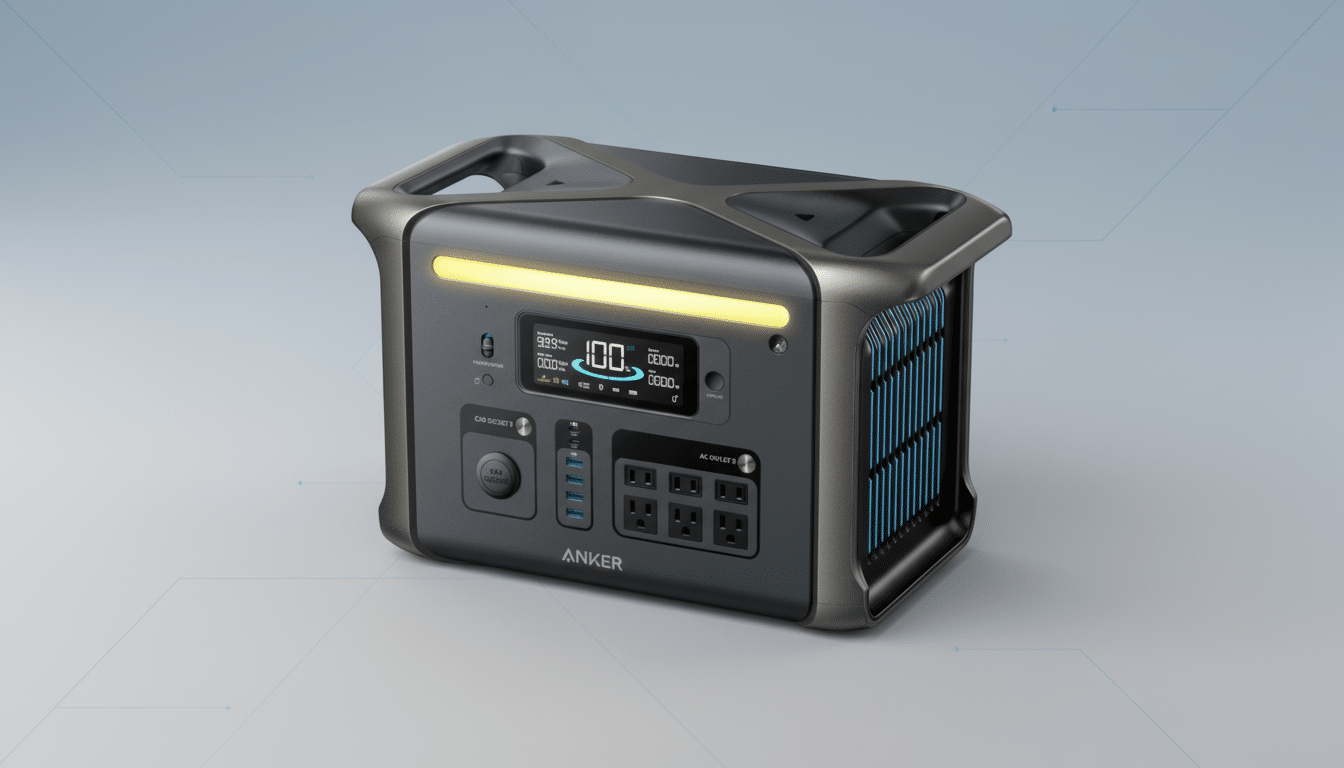
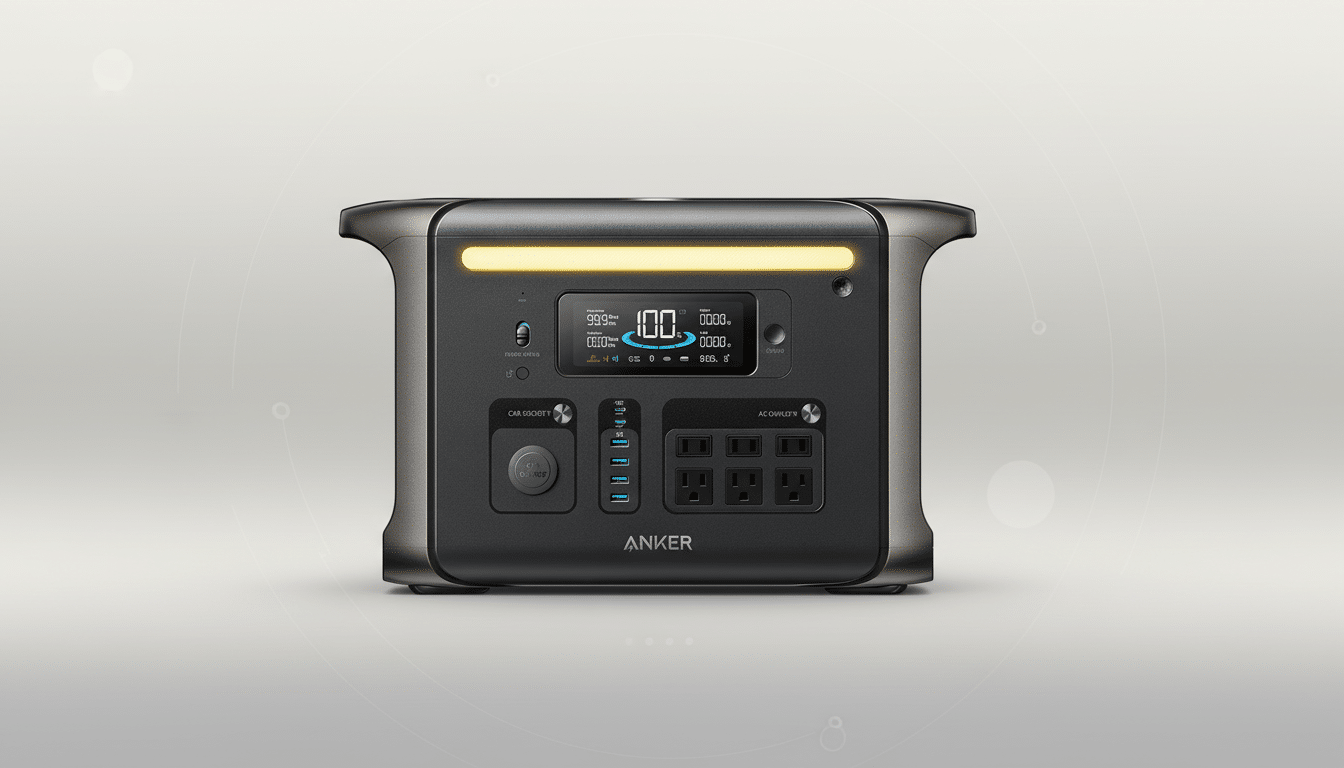
Connectivity is one of this model’s strong points: six AC outlets for household devices, four USB‑A ports for legacy gear, and two USB‑C ports for high-speed charging (all told there are 13 output options), plus a 12V carport. The unit also includes an integrated light bar (for blackout navigation and campsite set‑up) and dual side handles for wrangling the roughly 44‑pound chassis.
Now as for power delivery, the F1500 is capable of handling all the regular everyday household loads you might need: refrigerators, routers, laptops, CPAP devices, power tools, and most small kitchen appliances. That’s different for each model of course, but “whole day essentials” is the design power target here, not electric ovens or central air.
What 1,536Wh Actually Buys You in Real Use
Understanding what a watt-hour translates to in everyday use also helps. Allowing for typical inverter and device inefficiency, expect the rough ranges to look something like this:
- 40W on a CPAP machine: lasts about 25–30 hours.
- Refrigerator (cycling at 150W average): somewhere around 8–10 hours of real running time, and likely a day’s worth of on/off cycling necessary to keep your food cold.
- 1,000-watt coffee maker: approximately 75–90 minutes of total heating time, good for more than one pot.
- Smartphone with an 11–12Wh battery: 90–120 full charges, plus some extra if you are also using it while charging or you have long cable losses.
- Home networking (router + modem ≈ 15–20W): at least 60 hours, depending upon keeping internet service alive until your ISP’s local node loses power.
How It Compares With Rivals in the 1–2kWh Class
In this price range, popular alternatives include the Bluetti AC180, EcoFlow Delta 2 Max, and Jackery Explorer 1500 Pro. Those units bring strengths such as higher surge capacity, modular expansion capability, or app ecosystems—but none come close to $499 for 1.5 kWh from a major brand. The F1500 is the best value in terms of cost efficiency per watt-hour and mainstream reliability right now.
Another differentiator is battery longevity. LiFePO4 chemistry in general has more cycle life than standard NMC packs, something that is constantly reiterated by organizations like the National Renewable Energy Laboratory, for example. And, for buyers expecting to use it all the time—van lifers, contractors, or those with off‑grid cabins—long‑cycle chemistry preserves total‑lifetime value.
Charging and Solar Readiness for the Solix F1500
Anker’s newer Solix models work with fast AC recharging and MPPT solar input, so you can top up from the wall before a storm or trickle‑charge from panels at a campsite. Using two to three of these 200W solar suitcases in parallel is the “norm” for this type, which will support significant replenishment during daylight hours without having to lift a gasoline can.
Noise is hardly any compared to generators—just a fan under load—so you can run it safely inside. For emergency planners consulting recommendations from groups like FEMA, that indoor-safety benefit is important for times when windows need to remain closed because of extreme weather or bad air quality.
Shopping Tips Before You Check Out With This Deal
- Check what’s included: AC charging cable, options for car charging, and whether you need to add solar cables or panels.
- Think short, stout extension cord for appliances and a surge‑protected power strip for low‑draw electronics to make the most of those AC outlets.
- Review warranty specifics; Anker’s LFP models generally carry more extensive coverage than the industry norm, mirroring the cycle life of LiFePO4 cells.
Bottom line: Priced at $499, the Anker Solix F1500 represents an exceptionally low hurdle toward dependable home backup and off‑grid power. If you’ve been eyeing up a smart, mid‑capacity station from a reliable brand, this is the sort of discount to push you over the edge.
