


Are today’s Android phones lasting longer and charging faster? In a word, yes—though how much you feel it depends on the brand you buy and how you use it. Big gains in battery chemistry, charging electronics, and software smarts have quietly reshaped daily endurance and top-up times across the Android ecosystem.
What Has Changed Inside Android Phone Batteries
The headline shift is the move toward silicon-carbon anodes, a step up from traditional graphite that improves energy density and low-temperature performance. Brands including HONOR, OPPO, OnePlus, Xiaomi, and vivo have deployed versions of this tech in mass-market phones, enabling larger effective capacities in the same footprint and better high-rate charging acceptance.
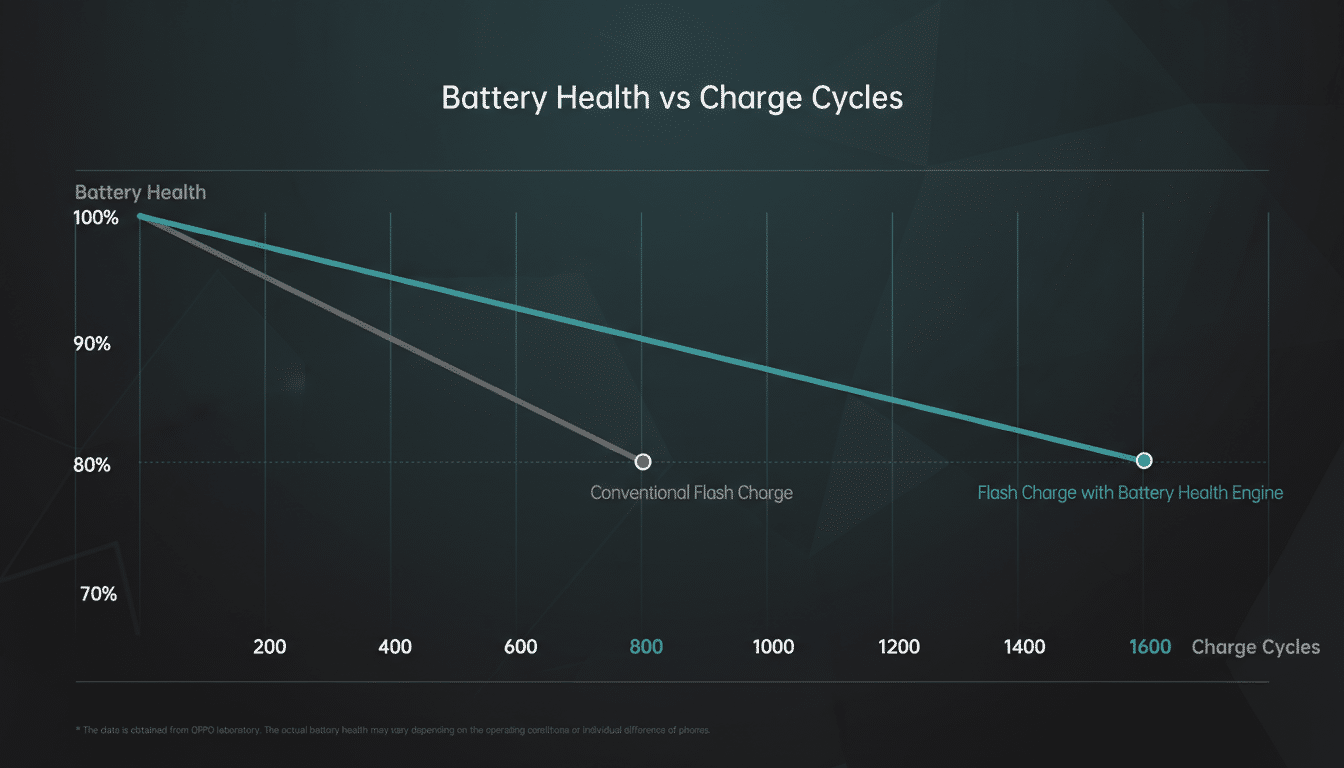
Manufacturers also tout stronger cycle life. OPPO’s Battery Health Engine and similar systems from OnePlus and Xiaomi aim to keep batteries at ≥80% capacity after roughly 1,000–1,600 full cycles, according to company documentation and lab demonstrations. While vendor claims aren’t the same as independent verification, they align with what teardown specialists and test labs have observed about improved thermal control and charge algorithms.
Fast Charging Hits New Milestones Across Android
Wired charging has surged. 100W to 150W systems are now common on performance-focused models, routinely delivering a full charge in 20–25 minutes and 50% in about 10 minutes. At the bleeding edge, 240W implementations demonstrated by Realme charge 0–100% in under 10 minutes, enabled by multi-cell battery designs and beefy power management ICs.
Wireless is steadier but smarter. Proprietary 30–50W solutions remain the fastest, while adoption of the Qi2 standard brings MagSafe-style magnetic alignment to more Android devices. Better coil alignment reduces power loss, trimming heat and improving efficiency—important for battery health during nightly top-ups.
Not everyone is chasing peak wattage. Google and Samsung continue to favor conservative 25–45W wired speeds, emphasizing longevity and safety. That strategy trades headline-grabbing numbers for predictable thermal behavior and sustained performance during longer sessions, but it also means their phones typically won’t win a 0–100% sprint.
Endurance gains you can feel in daily Android use
Bigger batteries are only part of the story. System-on-chip efficiency improvements, adaptive refresh LTPO displays that can drop to 1Hz, and more aggressive background process management in recent Android releases all compound into real-world stamina gains.
Independent testing backs this up. DXOMARK’s Battery database and GSMArena’s endurance ratings show a growing cohort of mid-range and flagship phones comfortably clearing the “all-day plus” threshold, with many 5,000–5,500mAh devices stretching into two-day territory under mixed use. Gaming phones with 6,000mAh or dual-cell designs often go further, helped by oversized vapor chambers that also keep charging temps in check.
Importantly, these gains are felt unevenly. Ultra-bright screens and mmWave 5G can still dent longevity, and camera-heavy days with lots of 4K or 8K capture remain battery-intensive. But the baseline has shifted upward: even compact and foldable models are less compromise-laden than they were a couple of generations ago.
Longevity versus speed in modern Android charging
High C-rate charging stresses cells; smart software mitigates that. Most modern phones throttle above 80% to curb heat and prolong life, and “Optimized Charging” features hold the battery at 80–90% overnight before topping up near your usual wake time. Google’s Adaptive Charging and similar features from Samsung, OnePlus, and others rely on on-device learning to time that last push.
If you care about keeping capacity high after a couple of years, the best practices haven’t changed: avoid chronic heat, limit frequent 0–100% cycles, and lean on those optimized modes. The upside in 2026 is that you can still grab a fast 10-minute top-up when you need it without dramatically shortening the battery’s lifespan.
Charging Standards And The Accessory Question
USB-C Power Delivery remains the most universal baseline, but many phones still peak only with the maker’s own adapter due to proprietary fast-charge protocols. If you switch brands, expect PD speeds to work reliably and proprietary speeds to fall back. Accessory makers have responded with multi-protocol GaN chargers that cover PD and common vendor schemes in a single plug.
As Qi2 rolls out more broadly, expect magnetic accessories to become more standardized across Android, narrowing the convenience gap with wired charging by improving alignment, stability, and thermal performance.
The bottom line on Android battery life and charging
Yes, modern Android phones generally last longer and charge faster, but the experience diverges by brand and model. Silicon-carbon batteries, smarter software, and higher-efficiency hardware push endurance forward, while 100W+ systems make quick top-ups routine. Conservative approaches from some vendors still prioritize battery health over raw speed, and that’s a valid trade-off for many buyers.
If you value the shortest possible plug-in time, look for 100W or higher with proven thermal control. If long-term battery health tops your list, favor phones with robust battery management claims, optimized charging features, and strong third-party endurance scores. Either way, the days of range anxiety on Android are fading.
