


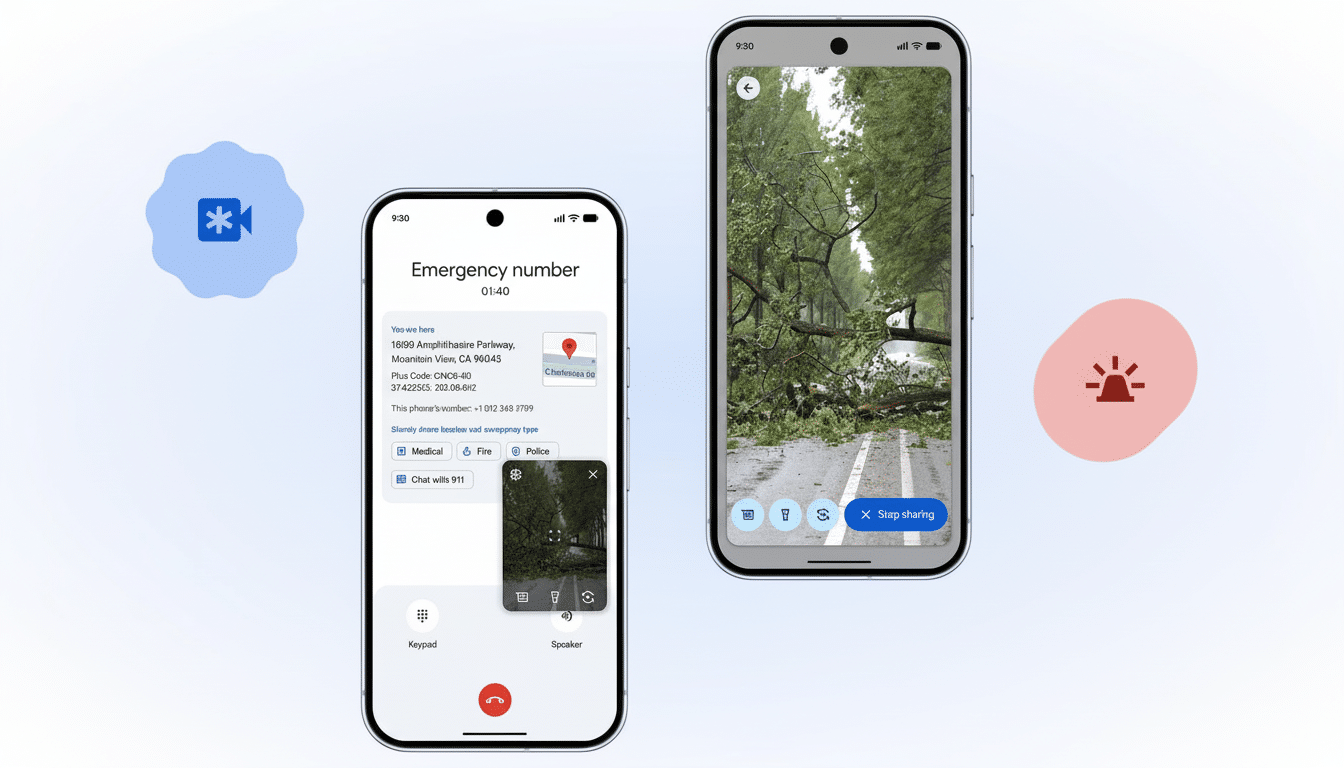
Google is introducing Android Emergency Live Video, an integrated technology that allows callers to stream real-time video securely to emergency dispatchers if they ask for it. The features you see in these photos are designed to address those key minutes in an incident, such as a crash, fire, or medical emergency, by giving first responders a first-hand glimpse at the scene.
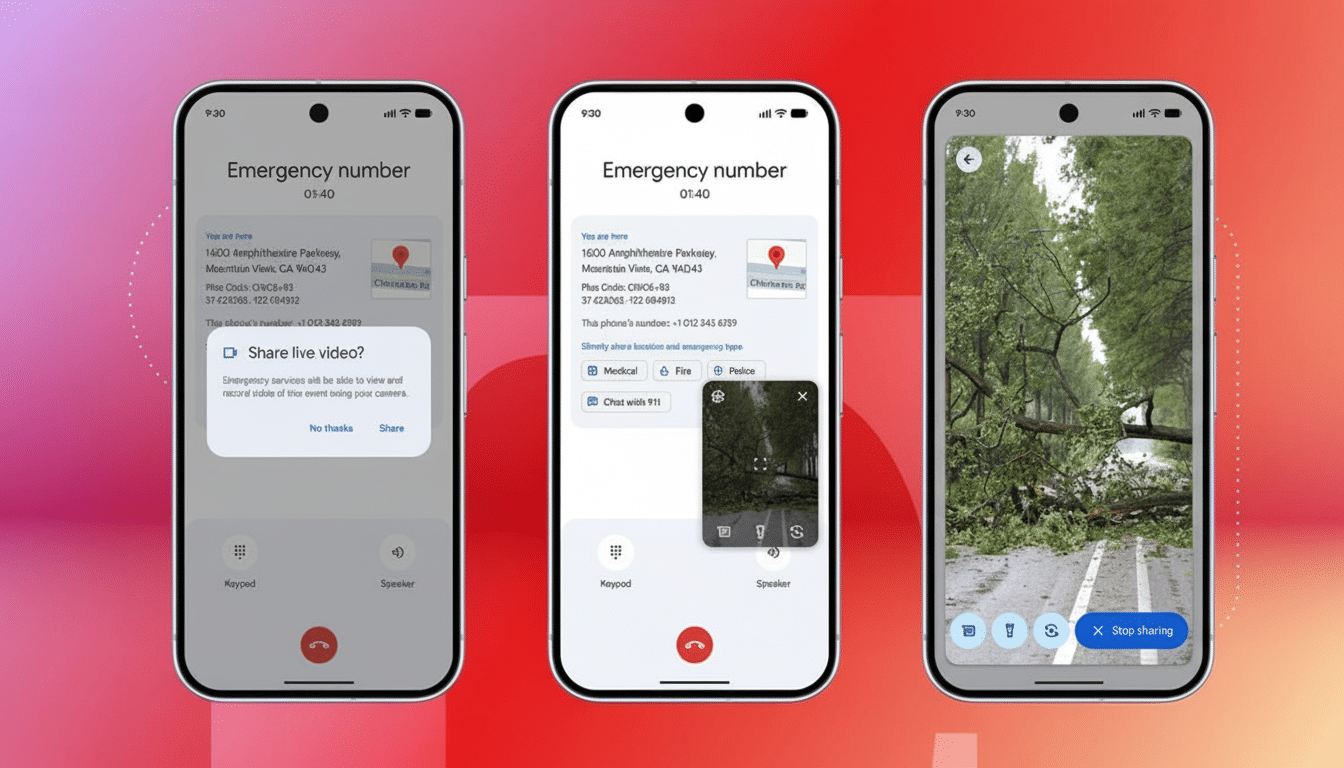
There’s no setup or account necessary, unlike with standalone apps. When you’re on the line with emergency dispatchers during a call or text to 911, they can send your phone a prompt asking if you want to begin live streaming. You choose whether you want to share; you can drop out at any point, and Google says the video is encrypted en route.
How the Feature Works for Emergency Responders in Practice
If you call or send a message to an emergency number, some participating Public Safety Answering Points (PSAPs) may request that a secure ELS location be sent. One tap, and your rear- or front-facing camera is streaming to dispatch, providing immediate eyes on your scene. Dispatch can evaluate the threat level, prioritize injuries, and provide instructions without depending solely on verbal descriptions.
The system is also consent-based and dispatcher-led, which can prevent accidental sharing and cut down on information overload at call centers. It is at the operating system level, so it works across devices and carriers as long as PSAPs support it.
Why Live Video Matters for 911 Dispatch and Response
Emergency communications have increasingly moved toward richer data, as smartphones replaced landlines as the default way to make a call for help. For years, the Federal Communications Commission has reported that approximately 80 percent of 911 calls are made from wireless phones, which makes things like location accuracy and media with context more critical.
A live view can fill in some of those critical gaps: dispatchers can see hazards (downed power lines, spreading smoke, traffic flow); assess whether patients are conscious and breathing; and help bystanders perform interventions like chest compressions. Bystander CPR increases survival for out-of-hospital cardiac arrest twofold to threefold, according to the American Heart Association, and real-time visual coaching could enable more people to intervene with confidence.
Some 911 centers have experimented with similar tools by using vendors who send callers a link to open a browser-based video session. Building the capability into Android can standardize the process, lower barriers, and bring access to more people — beyond those in jurisdictions that contracted with third-party platforms.
Availability and Device Support Across Regions and Models
Android Emergency Live Video works on phones from Android 8 and up, a range that includes well over 90 percent of active Android devices. Google is introducing availability in the U.S. starting today, although initial international support will be limited to some areas of Germany and Mexico.
Deployment in the wild depends on whether local PSAPs are up for the task. The United States’ transition to Next Generation 911, which aims to deliver IP-based functionalities like text, as well as image and video, is underway but uneven, with readiness varying widely by state and county. Live video will probably come to agencies that are already set up for IP call handling, or that use platforms that plug into Android’s take on it.
And, importantly, the feature supports both voice calls and text-to-911 where available, broadening access for people who may not be able to safely speak aloud or who are deaf or hard of hearing. Public safety organizations like NENA and APCO have long been supporters of multimodal communications as a foundation of contemporary emergency response efforts.
Privacy, Security, and Misuse Safeguards for Live Video
Google says that the video is encrypted and user-controlled, with streaming only for the duration of an emergency interaction. Dispatchers have to request access, and callers must opt in — important guardrails against inadvertent capture. Agencies will continue to be required to have written retention and access policies that comply with local statutes and public records laws.
Bandwidth and reliability also matter. The feature can be cellular- or Wi-Fi-based, apparently through some form of OTT service, and video quality might adjust to network conditions. In low-signal areas, dispatchers can still make use of audio and location information, such as Android’s Emergency Location Service and Advanced Mobile Location signals that many PSAPs already employ to determine the location of those who have called in.
How It Fits Into the Broader Safety Stack
Android’s live video joins a growing safety toolbox that also includes Emergency SOS, crash detection, fall detection, and satellite-assisted features for off-grid scenarios. Apple provides similar safety measures within its ecosystem, but live streaming to 911 represents a new frontier for mainstream smartphone platforms.
First responders and industry groups have long said that richer data will shorten dispatch times and improve response quality. European groups such as EENA, meanwhile, say they have seen benefits from location and multimedia trials — while U.S. organizations on the FirstNet broadband network press onward with data-driven response. The litmus test for Android’s approach will be scale: how rapidly PSAPs adopt it, how smoothly the system interoperates with call-taker software already in use, and whether it catalyzes measurable improvements in incident outcomes.
For now, the prospect is simple: fewer ambiguous descriptions, faster situational awareness, and better guidance in those moments that count. Used widely enough to be reliable, live video could come to feel as obvious as GPS location in 911.
