


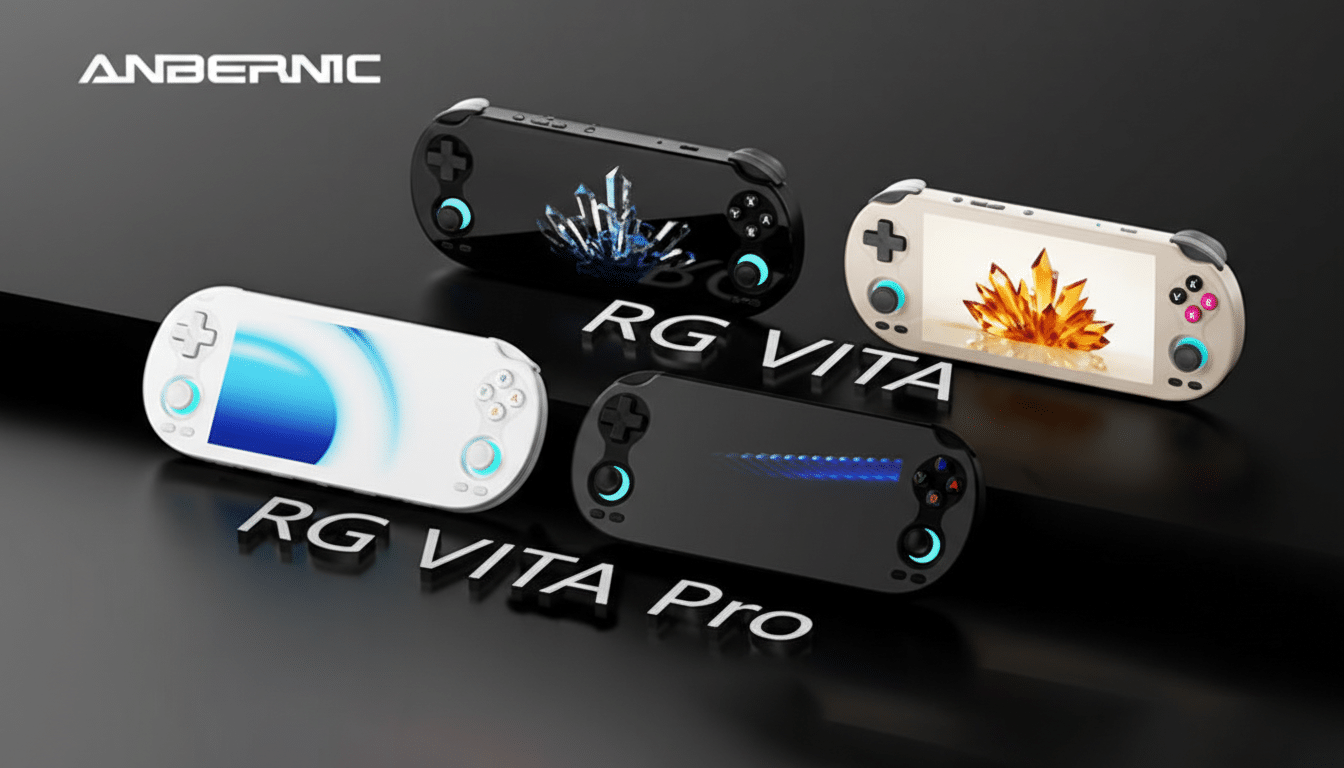
Anbernic’s upcoming RG VITA family is taking an unexpected split, with the Pro variant moving to a new Rockchip processor and Linux while the standard model sticks with Android on a Unisoc platform. Community reporting indicates the RG VITA Pro will ship with a Rockchip RK3576 and 4GB of RAM, marking the first time this chip appears in a handheld, while the base RG VITA is said to use a Unisoc T618. Both models aim for aggressive pricing around $100.
Two Devices, One Shell, Very Different Guts
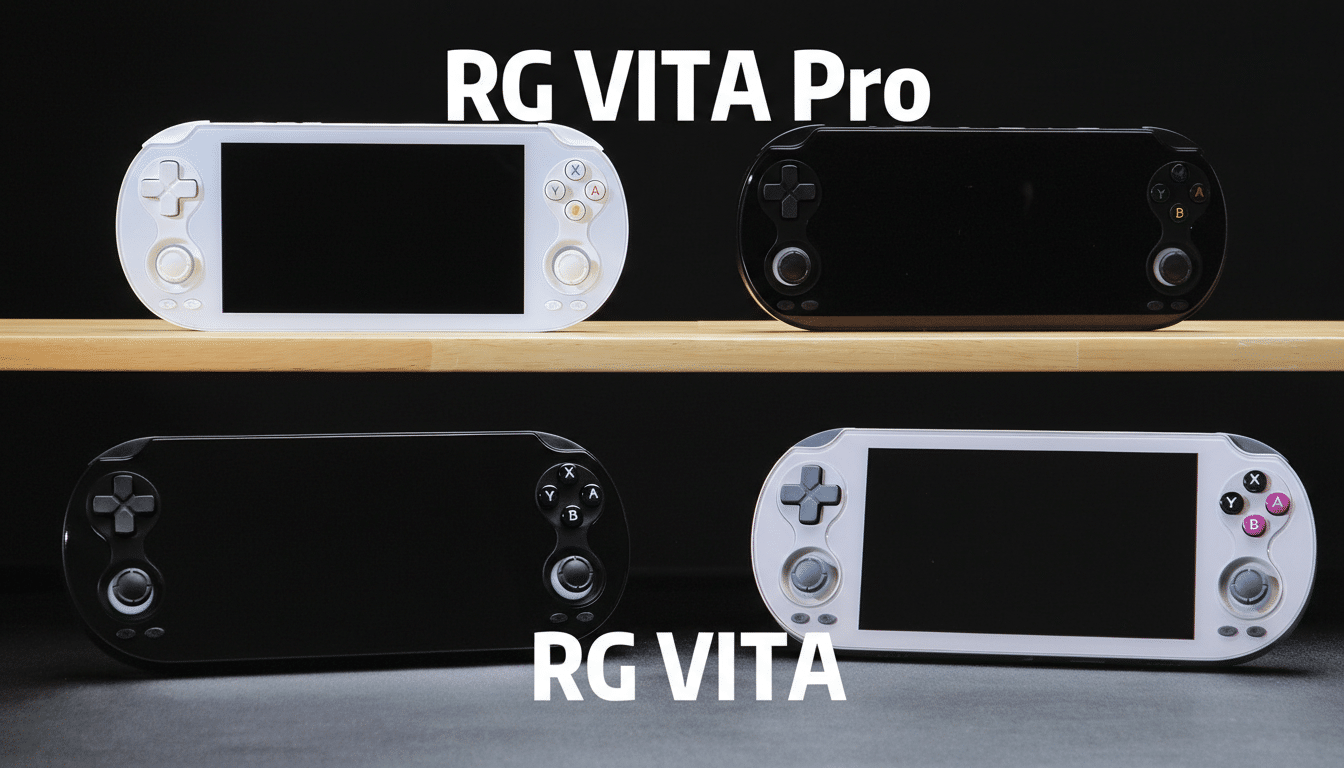
Despite looking nearly identical, the RG VITA and RG VITA Pro diverge where it matters: silicon and software. Multiple sources close to the project, shared via Retro Handhelds, describe a Pro model running Linux on the new RK3576, while the entry model keeps Android on the proven T618. It’s a rare move in this segment—manufacturers typically change storage or screen options between trims, not the entire compute stack.
- Two Devices, One Shell, Very Different Guts
- Chipset and OS Divide Defines How RG VITA Models Differ
- Sharper Screen and Refined Controls Elevate The Experience
- Emulation Outlook and Realistic Targets for Both Models
- Price Positioning and Availability for RG VITA and Pro
- What To Watch Next For Prospective RG VITA Buyers
Chipset and OS Divide Defines How RG VITA Models Differ
The Unisoc T618 pairing for the base unit is familiar to retro fans, powering a wave of recent budget handhelds with solid PSP and Dreamcast results and respectable efficiency. Early community benchmarks suggest the RK3576 in the Pro model is a modest step up, but the more consequential change may be Linux itself. Dropping Android’s services and UI overhead can free CPU cycles for emulation, shorten boot times, and simplify input latency paths—key benefits for resource‑bound systems.
According to the same reporting, the Pro will include 4GB of RAM, aligning with the needs of heavier cores and higher internal resolutions. While raw specifications only tell part of the story, the RK3576’s debut in a handheld signals that Rockchip’s newer midrange silicon is reaching this category, potentially expanding what sub‑$150 devices can do without stepping up to far pricier SoCs.
Sharper Screen and Refined Controls Elevate The Experience
Both models are said to use 5.46‑inch 16:9 LCDs, a nod to the Sony handheld that inspires the RG VITA’s design language. The Pro reportedly upgrades resolution from 720p to 1080p. That extra pixel density won’t transform performance on its own, but it can deliver cleaner upscaling for PSP and Vita‑era aspect ratios, crisper menus, and more detailed shaders—assuming the emulator and SoC keep pace.
Controls lean modern: standard analog triggers, clickable sticks providing L3/R3, and Nintendo‑style face button labels in place of Sony’s iconic shapes. Gone is the rear touchpad found on the original inspiration; in its place, a simple textured grip. The result looks purpose‑built for emulation, not a 1:1 tribute.
Emulation Outlook and Realistic Targets for Both Models
Expectations should be calibrated. On Android, the T618 typically handles PSP at high settings, Dreamcast smoothly, and a healthy slice of Game Boy Advance, SNES, and PlayStation libraries with headroom. The RK3576 under Linux could expand that comfort zone, especially for CPU‑bound cores and higher internal resolutions in PSP. But PS Vita emulation remains the wild card. The Vita3K project has made strides, including experimental Android builds, yet compatibility and performance still vary widely on mobile‑class ARM hardware. A turnkey “Vita plays Vita” pitch remains unlikely in this price tier today.
Where Linux can shine is consistency: tighter resource usage, community‑tuned OS images, and streamlined frontend experiences. If Anbernic collaborates with established Linux distro maintainers or releases a developer‑friendly kernel and device tree, the Pro could see rapid community optimization after launch.
Price Positioning and Availability for RG VITA and Pro
Both devices are expected to land near the $100 mark, a notable statement in a market where capable handhelds have been drifting upward in price. While the company has yet to officially publish full specifications or a firm release window, community sourcing points to a simultaneous debut. For buyers, that means choosing between an Android experience with broader app access and a Linux‑first path that favors performance and simplicity.
The budget focus also suggests some trade‑offs are inevitable—likely in battery capacity, storage tiers, or wireless extras. Those details, along with thermals and fan noise (if any), will determine whether the Pro’s theoretical advantages translate into better sustained performance in long sessions.
What To Watch Next For Prospective RG VITA Buyers
Keep an eye on three fronts:
- Firmware support
- Emulator tuning
- Screen quality
Post‑launch updates often unlock meaningful gains; a steady cadence can make a $100 handheld feel like a different device over time. Emulator developers and community maintainers will likely prioritize the Pro quickly if kernel sources and drivers are released promptly. And if the 1080p panel pairs with good color calibration and low latency, the Pro’s visual jump could be as persuasive as its new chipset.
On paper, the RG VITA lineup is cleverly split: Android convenience on one side, Linux efficiency on the other. If the pricing holds, Anbernic may have built two of the most compelling entry points yet for retro handheld enthusiasts—each tailored to a distinct play style.
