


Amazon swings at speed as well as spectrum with its new Kindle Scribe lineup. The company unveiled a new 11-inch Kindle Scribe and its first color-capable model, the Kindle Scribe Colorsoft — the two devices combine some paperlike hardware refinements (thanks to E Ink’s latest generation of displays), plus updated artificial intelligence features that appeal to note-takers and heavy readers.
The headline promise is straightforward: write faster, read longer and on Colorsoft see color that’s gentle, not glaring. For a category that thrives or fails on comfort, battery life and latency, those are the right bets.
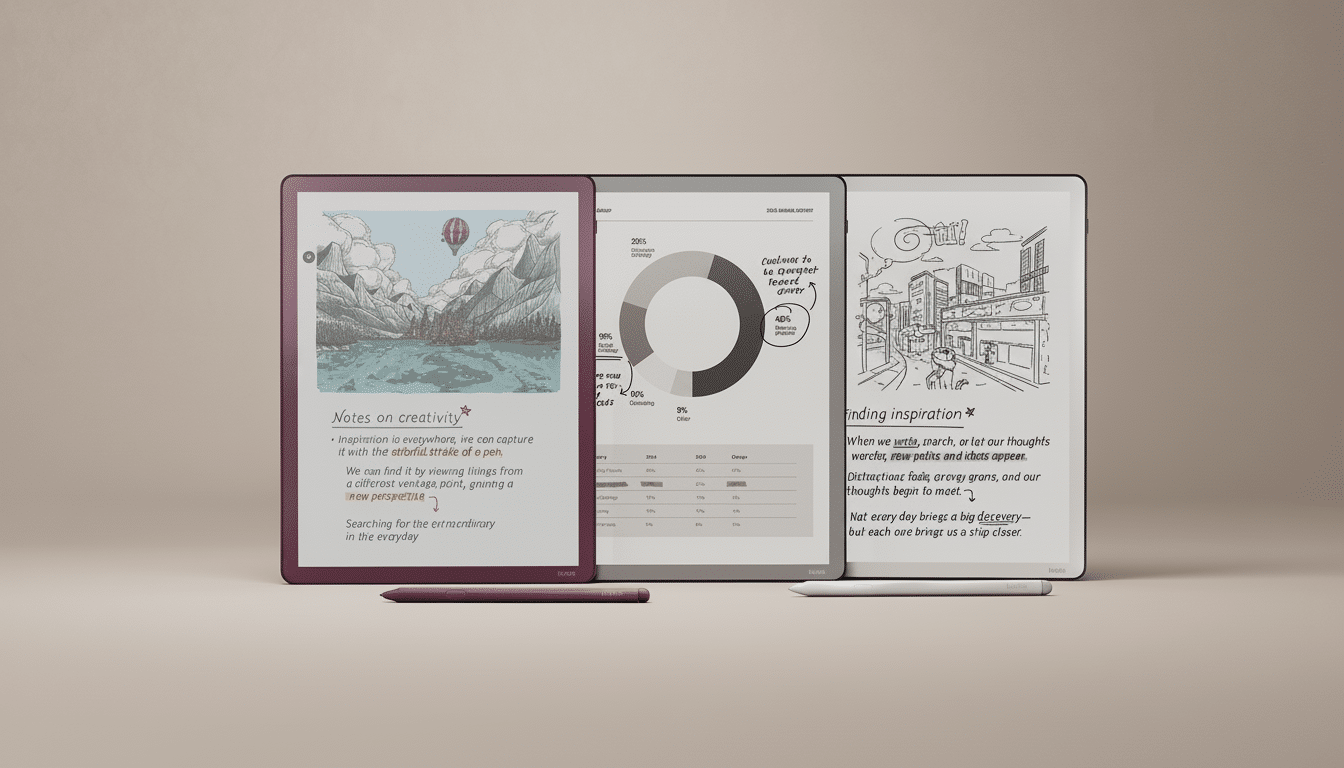
Larger canvas and quick pen performance on Scribe
The refreshed Kindle Scribe uses an 11-inch glare-free panel in a sleeker design that is about 5.4mm thick and weighs around 400 grams. Amazon says pen input and page turns are up to 40 percent faster, a claim that you can notice when sketching diagrams, annotating PDFs or flipping through textbooks.
A texture-molded glass surface provides added friction and makes the pen feel like it’s gliding over paper, not plastic. Inside the hood, a quad-core processor, more memory and the company’s new Oxide display stack push all those responsiveness gains while keeping the power-lean advantages of e-paper. Oxide thin films have higher electron mobility compared with conventional amorphous silicon, which generally has the effect of enhancing refresh performance on reflective displays.
Colorsoft makes E Ink colorful for gentle hues
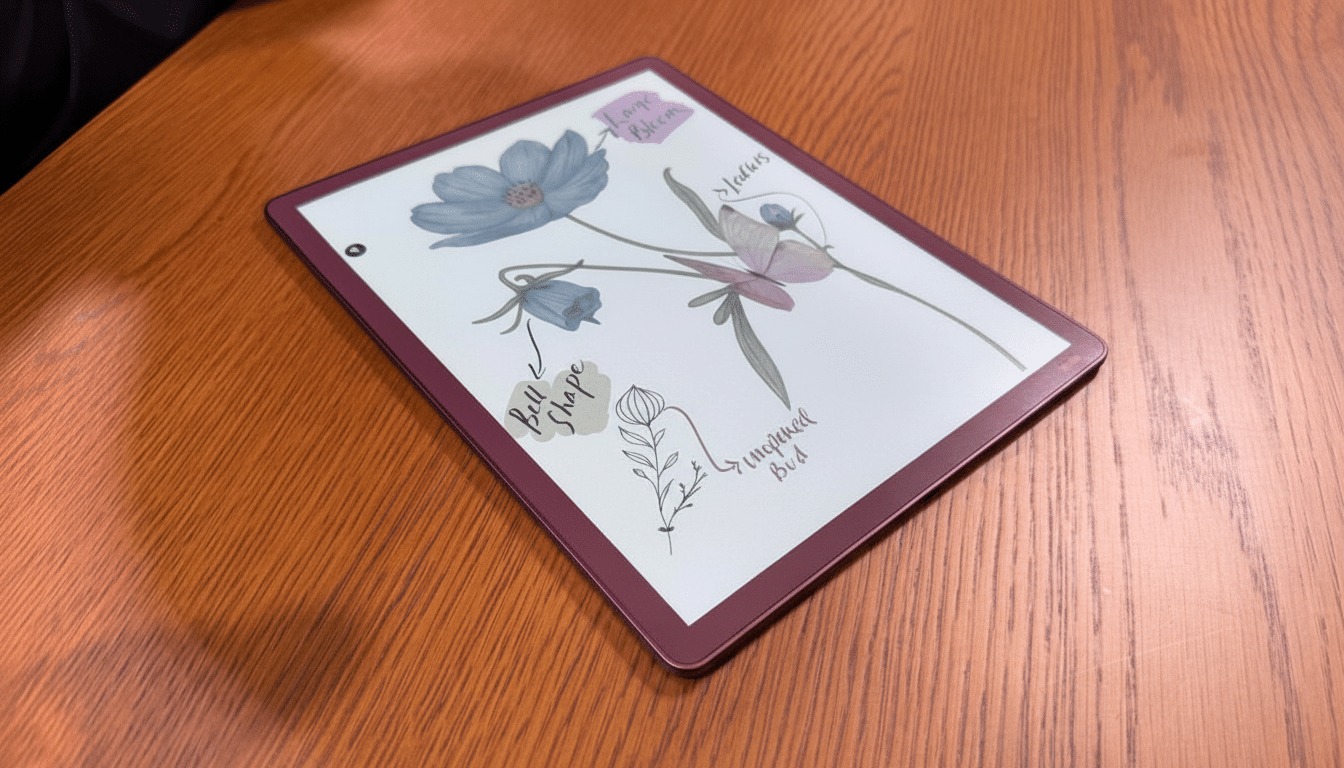
Kindle Scribe Colorsoft is Amazon’s first Kindle to use a color e-paper screen, designed to do hues softly — it’s not the painful light of LCD or OLED. Amazon developed a new rendering engine to ensure that handwriting remains snappy while staying true to color and the software supports a shader tool, which enables artists to build smooth gradients and make smooth tonal transitions.
Users can mark up content with 10 pen colors and five highlighter options, opening new possibilities for teachers, designers and anyone who lives in kanban boards or color-coded notes. Like its monochrome sibling, battery life is rated in weeks, not hours — the lasting advantage of reflective screens that don’t require a backlight to be constantly driven.
Pricing and availability for Scribe and Colorsoft
Amazon is selling two variants of the new Kindle Scribe, one with a front light and one without. The model with the front light will sell for $499.99 and is expected to arrive this year in the U.S., while the version without a front light should come early next year and cost $429.99.
Kindle Scribe Colorsoft is available starting at $629.99. That premium does include (and is partly driven by) the extra cost and complexity of color e-paper technology, which still exists in a more niche space compared with monochrome panels, but it provides a different kind of comfort than a tablet LCD, no matter how ample.
What's New With Note-Taking And Reading AI?
Both of the devices ship with a redesigned home screen, which will make it faster to write something down and jump into recently opened books, notebooks or documents. Most significantly, Amazon is keeping pace with advances in A.I. by taming sprawling notebooks: You can search handwritten notes across multiple notebooks and produce simple summaries to capture the gist without skimming every page.
Amazon will let users send notes and documents to Alexa+ for richer voice-driven conversations next year — imagine outlining, follow-up questions or task extraction. For reading, a “Story so Far” catches up with synopses, while the “Ask this Book” is your spoiler-ready helper for questions about the characters’ motivation or what passage really matters. Amazon has shared that these reading AI tools are coming soon to purchased or borrowed titles on the Kindle iOS app, and will expand to include support for Kindle devices later this year.
Amazon has not specified whether these AI features are running on-device or in the cloud, which makes a difference for latency and privacy. Because of the complexity of NLP, we’ll probably need cloud processing for at least some procedures.
Market context and key use cases for new Scribe models
The Scribe line now stretches from serious study all the way to loony lightheartedness. The larger canvas is ideal for dense PDFs, lecture slides and score sheets. Colorsoft’s soft palette makes margin notes, charts and lesson plans that much easier to parse without straying too far out of the e-paper comfort zone. That’s a different proposition from tablets: Apple Pencil hookups on an iPad still wins for animation-ready color and sheer app variety, but not even that can last weeks without recharge or be read with zero glare like e-paper.
There’s been a rush of competition in the note-taking e-reader category. Kobo’s Elipsa 2E and reMarkable 2 helped validate the category; reMarkable has said that it crossed the two million devices sold mark, an indication digital paper is no longer just for a niche. Color e-paper products using reflective color tech from companies like reMarkable have seduced illustrators and productivity nerds, too. E Ink has long maintained in white papers that reflective displays are more power-saving and glare-easing than emissive screens, while the American Academy of Ophthalmology mentions eye strain is often related to brightness and continuous focus — things where e-paper may simply feel easier for extended stretches.
Early outlook for Amazon's upgraded Scribe and Colorsoft
On paper, Amazon’s upgrades land where they count: faster ink, a better surface and a bigger page and color that respects your eyes. The tiered pricing also makes sense; the non–front-lit Scribe sets a lower entry point, while Colorsoft appeals to readers and note-takers who’d really make use of color.
The unsolved challenges are software depth and AI execution. If handwriting search and summaries are accurate, if “Ask this Book” actually does add context — not spoilers or hallucinations — then the Scribe family could be the default digital notebook for schools and knowledge workers. We’ll need to test latency claims, PDF performance and the new rendering engine on complex documents, but the direction is clear: The Kindle is evolving from a great book reader into a credible all-day writing system now with color that won’t fight your eyes.
