


Amazon is updating its e-reader lineup with a bigger, faster Kindle Scribe and its first-ever color model, the Kindle Scribe Colorsoft, which represents a brash bet on premium note-taking devices made from e-paper. Both are for readers who mark up furiously; students and professionals who prefer to take notes in ink; creatives looking for color without the glare and eye strain of a conventional LCD tablet.
Larger 11-inch display and faster, more responsive pen
Amazon is also moving to an 11-inch display on the new Kindle Scribe, making it more attractive for full-page PDFs, textbooks, and multi-column documents. Thin, at 5.4 mm, and weighing around 400 g, it is thinner than many laptops and lighter than most mainstream tablets—though with the paper-like feel Scribe buyers have come to expect.
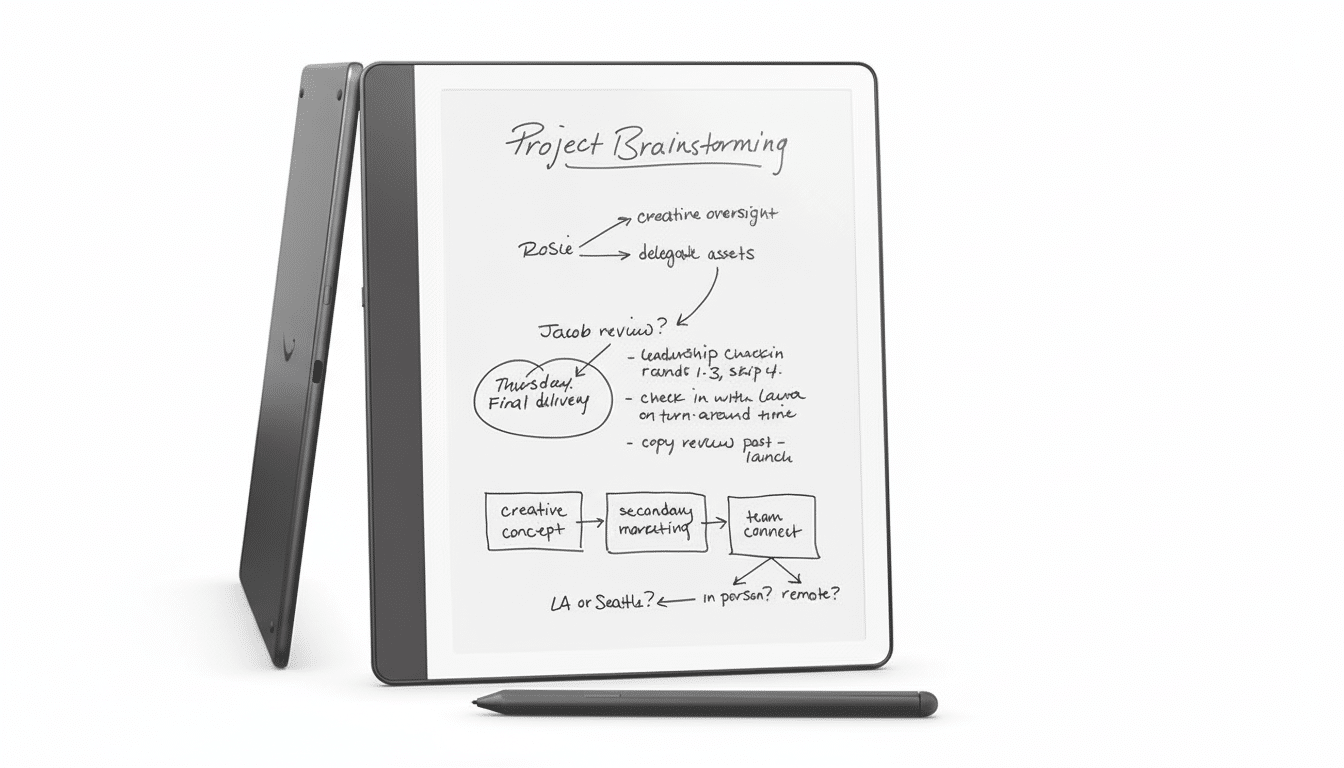
Amazon claims writing latency and page turns are up to 40% faster, thanks to a new quad-core processor, more RAM, and its latest Oxide display stack.
The company also added texture-molded glass to give more subtle friction under the pen tip. That’s important to accuracy: less glide can help maintain tight and controlled small handwriting, especially during margin notes or diagrams.
Two configurations are planned. One comes with a built-in, adjustable front light to allow for reading in darker rooms, while there’s also an option that doesn’t come with the light for those who always have access to some kind of ambient or task lighting. The front-lit Kindle Scribe is available starting at $499.99. The non-front-light model will go on sale for $429.99.
The performance emphasis is timely. In the tests of reviewers and labs over the years, there is no software-based metric more palpably felt by users than writing latency; even tens of milliseconds can alter perceived “ink on glass” quality. Amazon’s promised gains would mean handwriting, diagramming, and PDF markups should be a good deal snappier.
Colorsoft brings gentle color tones to e-paper note-taking
Kindle Scribe Colorsoft is Amazon’s first color e-paper Kindle, designed for soft, non-glare hues—not the bold pop of a tablet. To preserve the subtle tones they and other artists might create in their work, Amazon developed a new rendering engine; annoyingly, what you see on-screen can sometimes involve slightly less-than-immediate pen strokes. The company also promises weeks of battery life, a key competitive advantage against LCD and OLED slates that generally require daily charging under heavy pen use.
For creators and meticulous note-takers, Colorsoft has 10 pen colors and five highlighter colors, along with a shader tool to effortlessly blend gradients and tonal shading. Left-handed use is fine, too. The specifics of the firmware/OS mean that adjusting to left-handed usage feels natural and doesn’t ruin the calm, paper-first approach e-readers have long been recognized for when conducting research or doodling storyboards or plotting out that vacation itinerary.
Colorsoft starts at $629.99. That puts it above most black-and-white e-readers, but squarely into the conversation with stylus-first e-paper devices that are more about creativity and productivity.
A smarter Home interface for notes, documents, and books
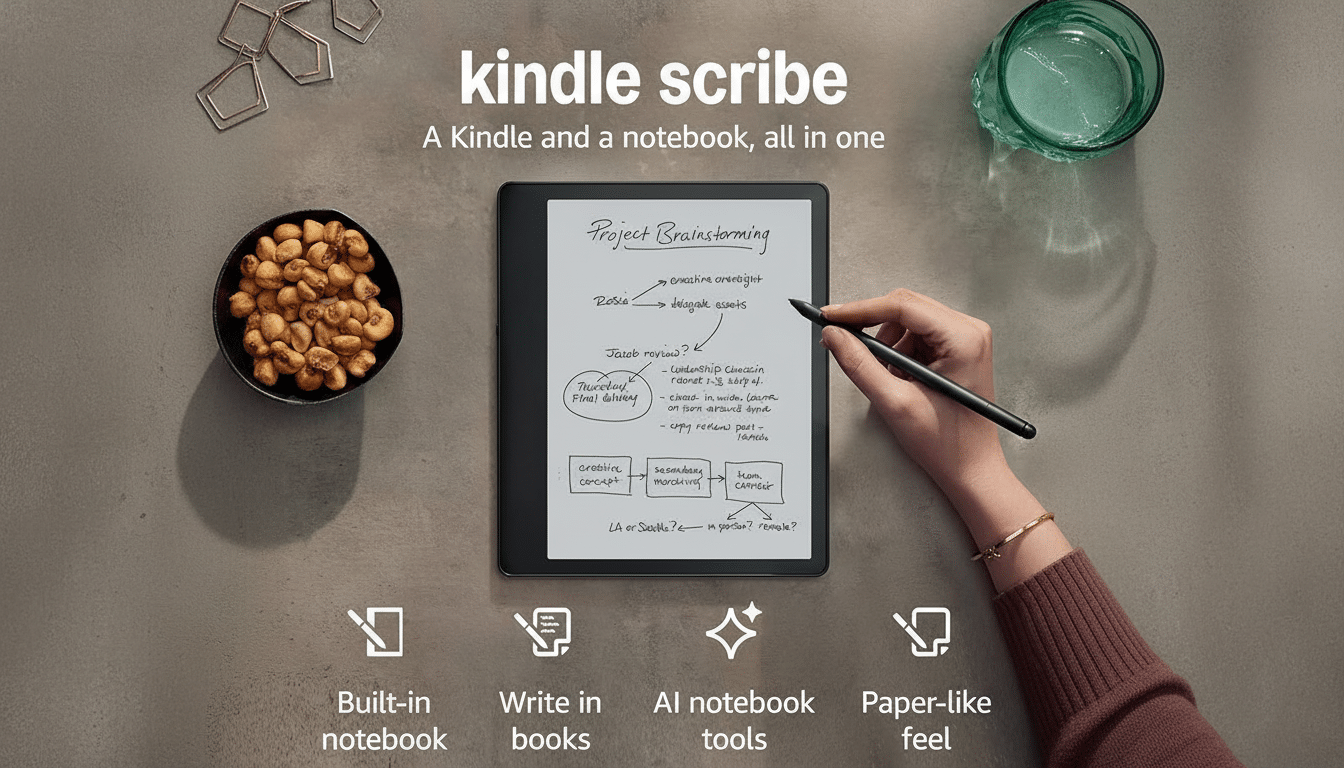
Both devices come with a new Home experience that lets you see recently opened books, documents, and notebooks at a glance and jump in and start writing. Power users will love being able to search across all notebooks and create simple AI summaries of handwritten notes, which can be problematic when collections become large.
Amazon says a coming feature will allow users to send notes and documents to Alexa so that the assistant can take part in more high-quality back-and-forth conversations about them. That could be handy for summaries of meetings, study sessions, or brainstorming. Although Amazon has not specified the line between on-device and cloud computing, the trend is consistent with moves in the wider industry to combine personal documents with assistant-style interfaces so you can retrieve and synthesize them.
Both IDC and Forrester analysts have observed a continued demand for distraction-light productivity machines as hybrid work and digital learning drag on. And the world’s leading purveyor of e-paper technology, E Ink, says interest in color e-paper for education and visual planning is also on the rise. Kindle Scribe Colorsoft is Amazon’s response to both trends.
Reading tools with contextual AI and no spoilers
New AI reading tools dovetail with handwriting improvements. Story So Far gives you a brief, spoiler-free recap of the story at the point where you left off, and Ask This Book allows readers to select and tap on a passage for explanations of what characters may be thinking or feeling, for instance, or why something is happening. The promise is of a way to help readers get back into complex books or study materials without tediously trawling back through chapters.
Very few mainstream e-readers offer native, context-aware reading aids at this level. Carried off right, these features could make long-form reading even more approachable without compromising the focused vibe that pulls readers to e-paper in the first place.
Positioning the new Scribe lineup against e-paper rivals
Amazon is up against formidable handwriting-first e-paper devices. reMarkable 2 raised the stakes for writing feel, Kobo’s Elipsa line is about as deep an integration as possible with a bookstore and OverDrive, and Onyx Boox took color e-paper further than ever before for creatives. Amazon’s advantage is still its enormous reading ecosystem, dead-simple sync, and now, deeper AI and voice integration.
With its bigger screen, faster pen performance, and a color option created to last through long sessions, the new Scribe family appears predestined to keep Kindle loyalists from straying while drawing in students, knowledge workers, and artists looking for pen-first tools that shun the glow and distractions of full-fledged tablets.
