


Taking the Xenomorph to Earth seems easy – until you consider the beast’s DNA. H.R. Giger’s 1979 nightmare is a shape burned into pop culture and the minds of everyone who has ever seen “Alien”: the domed skull, coiled tail, cables and sinew that seem half machine, half night terror. Alien: Earth had to do that heritage justice, while making the monster credible in natural light and rain-soaked jungle, against human-scale architecture. The result is a being that you recognize as “Alien” immediately but that can sense the tread of our planet and its textures, physics and predators.
Central to that transition was a design approach led by Wētā Workshop and the showrunner Noah Hawley, which didn’t so much redraw the Xenomorph as retune it. And yet for all the potential theoretical concerns about adapting and aestheticizing war, this was an evolutionary tweak, not a wholesale mutation: motifs from crustaceans and insects (notably ants), weathered surfaces that earned their scars in the field, a movement language built for open space rather than claustrophobic corridors.
- Preserving Giger and Grounding It In Nature
- Constructed for Daylight, Weather, and Natural Elements
- A Performance-First Creature Brought to Life by Actors
- Designing an Earthen Outlier to Serve the Story
- Practical Effects with Digital Finesse for Believability
- What Reinvention Would Mean For The Franchise
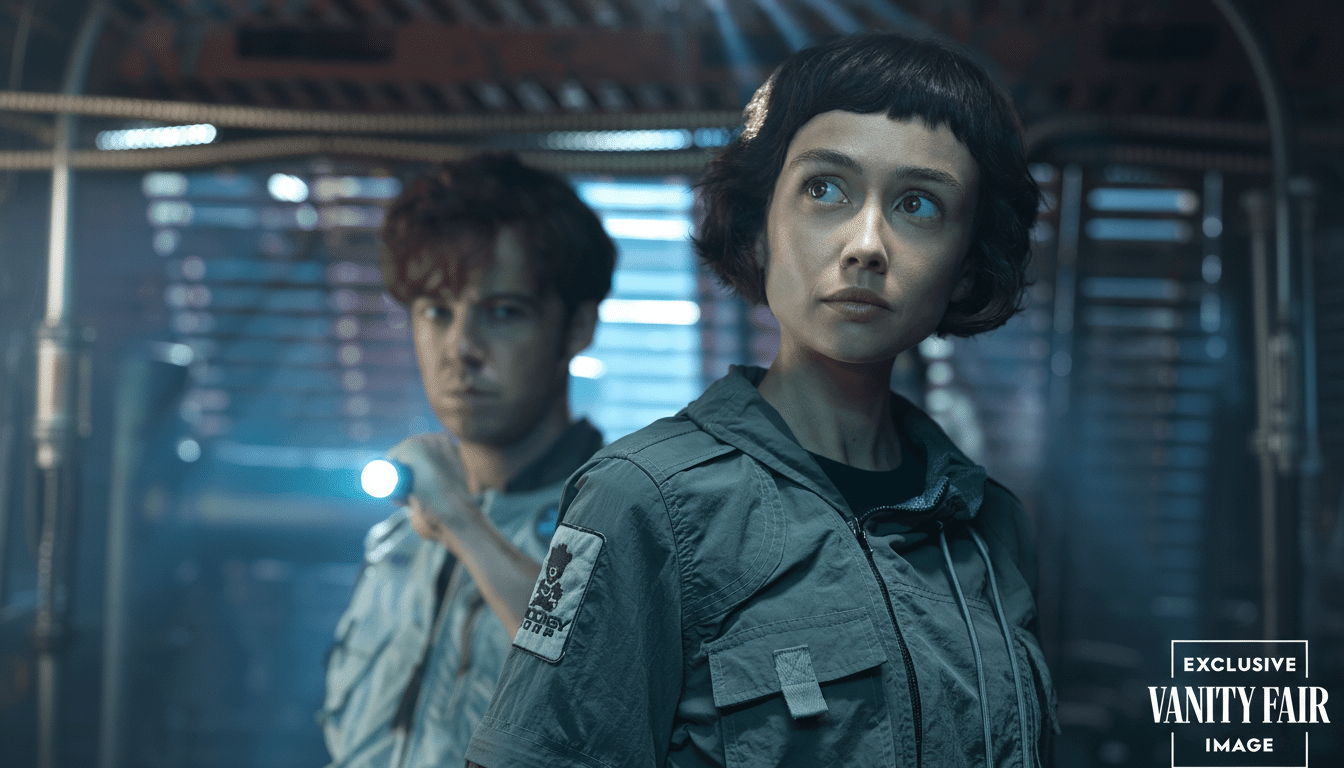
Preserving Giger and Grounding It In Nature
Alien: Earth preserves the undeniably Alien profile, but bakes in earthy sensibilities. While the armor plates are polished to a carapace-like gloss reminiscent of beetle elytra, they catch dappled sunlight rather than studio spotlights. Ribbing and “piping” nod to the original biomech look, but surface micro-textures swipe from mollusk shells and mantis shrimp lamination patterns, introducing faded iridescence and abrasion marks that look right in soil, mud, brush.
That approach mirrors best practices creature artists frequently repeat at the Academy’s public symposiums on practical effects: People can accept the fantastical so long as you give them small details that act the way things do in the natural world.
Here, skin appears damp without being rubbery, joints flex with the accrued give of chitin, and grime cakes up where movement suggests it ought to. The monster reads like a field guide entry.
Constructed for Daylight, Weather, and Natural Elements
The original Alien movies hide it in darkness. Alien: Earth often does the opposite, setting predators out into daylight in thick foliage and rain. That called for a suit that withstands scrutiny. Previously churning out tactile horrors for assignments spanning film and TV, the Wētā Workshop crew pasted Facehugger builds—parts of those from Alien: Romulus—and engineered layered skins with different levels of gloss so the body doesn’t catch sunlight all over; matte on large areas, sticky wet highlights around junctions, and micro-scratches across the dome to stop your eye from spotting a “costume”.
The shift outdoors also required a rethinking of scale. In the wild, the human form is easier to see. Designers elongated limb proportions, biased the posture toward a digitigrade stand and allowed the tail to counterbalance like a big cat, enabling performers to clear logs, scramble up roots and pivot without interrupting the silhouette. The stiffness gradients of the tail — firmer at the base, more whiplike toward the tip — sell mass and intent in wide shots.
A Performance-First Creature Brought to Life by Actors
Alien: Earth also relies on the actors to make the Xenomorph predatory rather than pantomimic. Stuntman Cameron Brown set the tone movement-wise in early episodes — that slow, game-striking pace of dudes investigating around the Maginot complex, with bursts of forward rush that feel explosive yet controlled. Jayde Rutene continued, showing a more questioning, wiry physicality as the young creature that trails Wendy through the Neverland jungle: “I made him less symmetrical in the shoulders and hips to mess up how humans walk.”
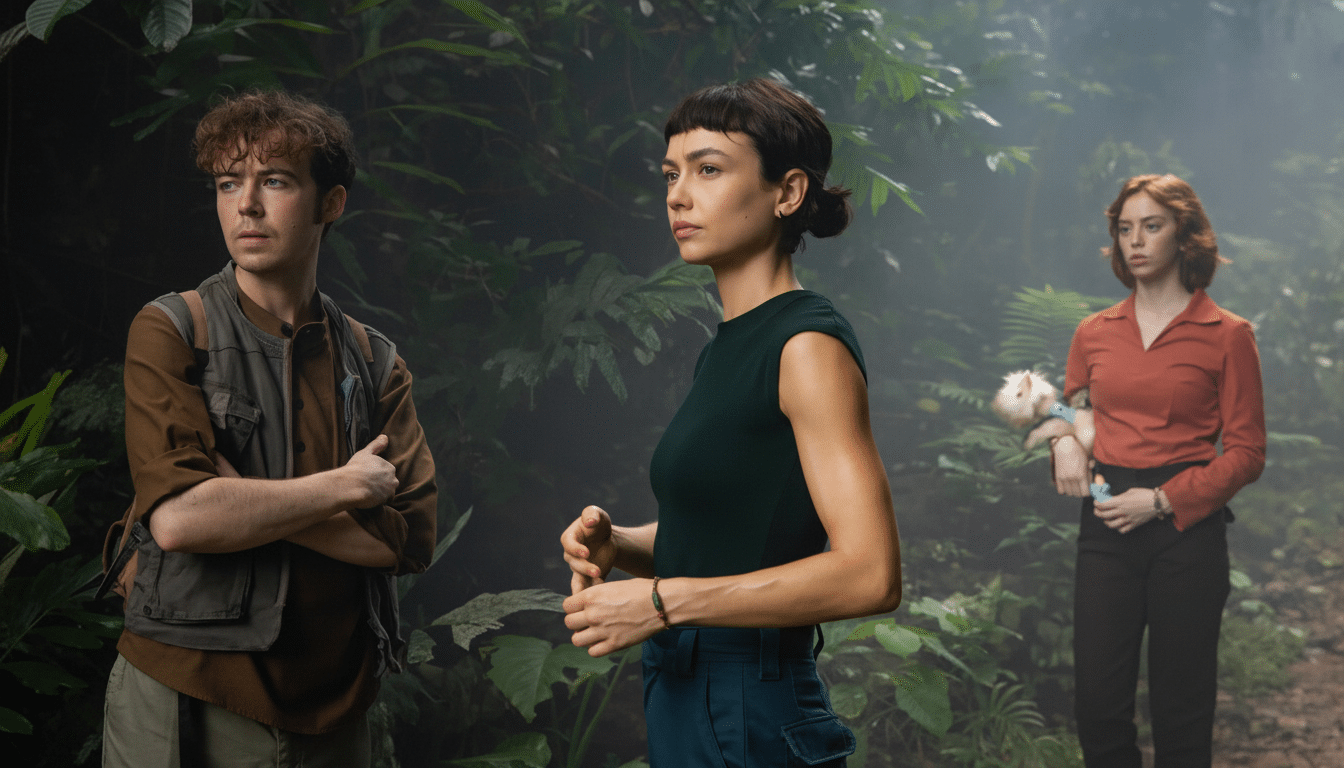
The choreography draws on animal behavior studies frequently cited by movement coaches — particularly big-cat stalking, mantid head tracking and the wary probing of arthropod antennae. First, the hands become senses, then weapons. In broader, more open frames, that read feels essential; a monster who seems to think seems alive.
Designing an Earthen Outlier to Serve the Story
The season’s most inspired decision is the adolescent Xenomorph who, in a stretch, becomes Wendy’s tenuous family member. Its rearranged coloring and piebald patterning are not cosmetic but narrative: a developmental weirdness linked to its unusually tortured gestation, flourishing inside a host’s lung instead of the entire human cavity. In the animal kingdom, piebalding tends to mark atypical development — and “Alien: Earth” draws on that visual lexicon to signal difference without exposition.
Scale figures into the story, too. A little more of a below-the-shoulder, intimidating height that audiences know as the “warrior” form, this teenager seems speedier and spring-loaded — almost foxlike. It’s an intelligent way to fold character into craft — form follows backstory, and the camera gets a creature that reads differently from the pack without defying canon.
Practical Effects with Digital Finesse for Believability
Although the production trumpets in-camera work, this isn’t a creature that’s a museum piece. Seam elimination, tail and reflection improvements as appropriate are also accomplished digitally. It’s the hybrid model of a physical core and selective CG polish that the Visual Effects Society honorees also applied successfully to recent creature-led projects. It preserves the tactile weight that audience members subconsciously anticipate when boots stomp through mud or hands stroke leaves, while making possible both stunts and safety that the set requires.
The upshot is credibility. Viewers can spot scale drift — or massless movement — in a heartbeat; by footing the Xenomorph with an actor and augmenting just so, Alien: Earth sidesteps that at every size in small pools of light indoors as well as wide exteriors.
What Reinvention Would Mean For The Franchise
The series quietly manages to widen the creature’s own ecological envelope, by adapting the Xenomorph for Earth’s various biomes without sanding off its otherworldly menace. Forest, swamp and storm become new theaters of behavior rather than only new backdrops for it. It also opens the doorway of design for future seasons: regional variants affected by climate and prey, age-based morphologies that mirror resource scarcity — sound design tuned to open air, chest resonance and tail percussion traveling in jumbles differently than it does in steel halls here.
Most of all, the monster feels freshly perilous because it’s freshly plausible. The magic, as it were, that Alien: Earth pulls off: a Xenomorph that feels part of our world and yet doesn’t belong; grounded by biology and performance and still screamingly terrifying even when it’s not stepping out of the trees.
