


Artificial intelligence is racing into the independent film world with a seductive pitch: make your movie faster and for less money. The catch is increasingly visible on set and in post. As tools handle more tasks, the circle of collaborators shrinks. For many directors, the new workflow feels thrilling—and lonelier.
Recent filmmaker cohorts using studio-grade AI systems have shown what’s now possible on scraps of a traditional budget. The promise is real: intricate visuals, rapid iterations, and high-end polish without a warehouse of gear. So, too, are the tradeoffs around authorship, labor, and the future texture of indie cinema.
- Indie Budgets Meet Generative Video Tools in Production
- Speed Gains With Hidden Trade-offs in Indie Filmmaking
- Case Studies From The New AI-Driven Workflow
- Lonelier Sets And Skills Creep Across Indie Crews
- Labor Rights And Legal Gray Zones for AI in Film
- What Survives The AI Filmmaking Wave In Indie Film
Indie Budgets Meet Generative Video Tools in Production
Once relegated to uncanny demos, AI video now sits squarely in the production pipeline. Backed by multibillion-dollar venture funding, companies such as Google, Runway, OpenAI, Luma AI, Higgsfield, and Kling have pushed models from novelty to usable tools for previsualization, design, and even final shots.
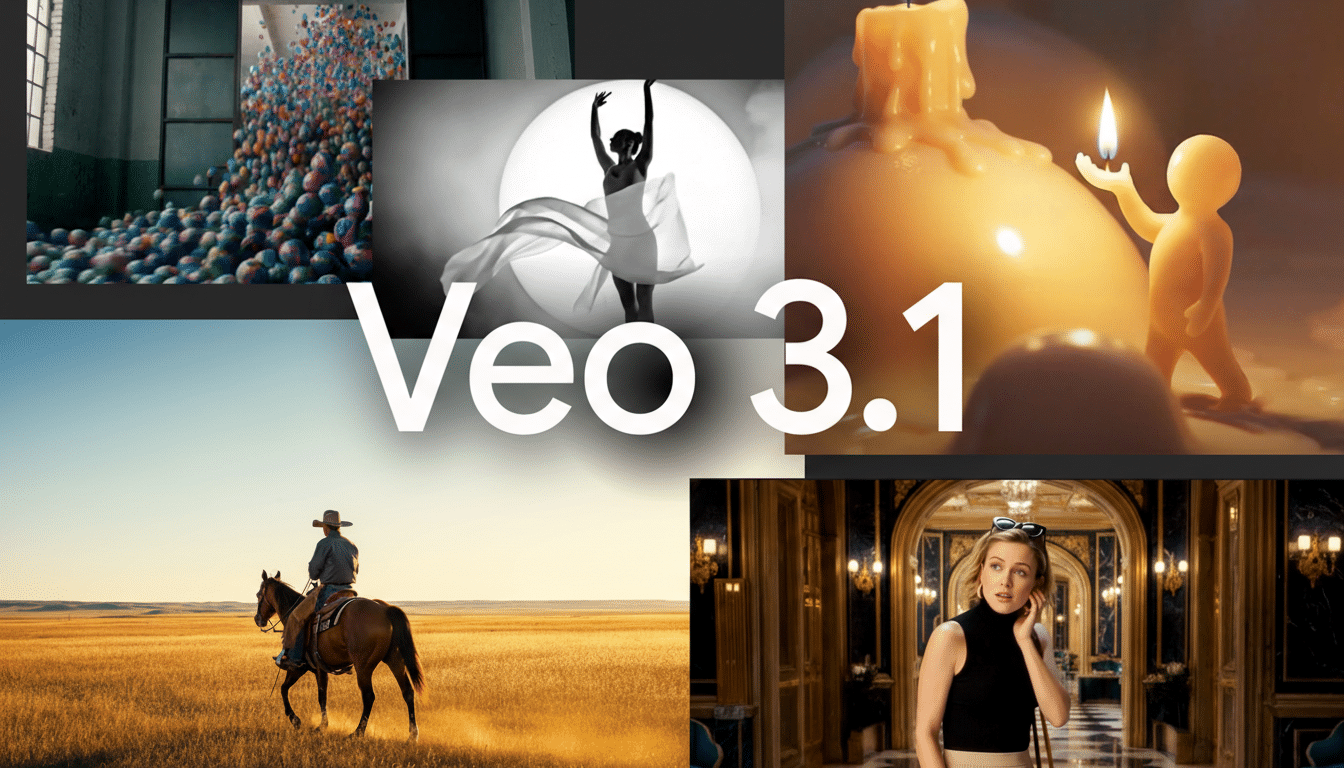
Google’s Flow Sessions gave 10 filmmakers early access to tools including Gemini, image generator Nano Banana Pro, and film generator Veo. The results ranged from hyperreal morning rituals to philosophical meditations on human–machine relationships. Notably, the shorts didn’t read like assembly-line “AI slop.” They carried distinct voices because the artists imposed taste, references, and tight constraints on the systems.
In one standout, a director achieved a complex forest chase with floating, mask-shattering imagery—shots that would have required costly rigs or heavyweight VFX. That is the core economic story in miniature: AI compresses expense and time on the most budget-breaking moments, letting small teams put spectacle on screen.
Speed Gains With Hidden Trade-offs in Indie Filmmaking
Generative tools slash friction across the workflow. Mood boards turn into animatics in hours. Location scouting happens on a prompt. Temp VFX arrive overnight. Early adopters say they can collapse weeks of iteration into a long weekend and redirect cash to music licensing, festival runs, or a crucial pickup day.
But acceleration can flatten process. Directors accustomed to building scenes with a cinematographer, production designer, and VFX lead find themselves soloing decisions at the keyboard. The craft that emerges from negotiated collaboration—lighting choices, fabric textures, micro-timing of performance—risks being replaced by a model’s default aesthetic unless the filmmaker fights it frame by frame.
The money pouring in underscores the stakes. Luma AI, for example, closed a $900 million Series C last year to push photoreal video generation deeper into production. As these models improve, the gravitational pull toward one-person pipelines gets stronger. The result may be cheaper and faster films—and fewer jobs to make them.
Case Studies From The New AI-Driven Workflow
Several filmmakers in Google’s cohort used AI as a stylus, not a substitute. A family lore short built its look from hand-picked visual references before routing through Nano Banana Pro and Veo. Another piece, a faux guided meditation, relied on the director’s personal archive of scanned plants and textures, then used AI to morph them into trippy, seahorse-like forms. A third pushed physics-bending transitions—a salamander blooming into a balloon—precisely because the model’s strangeness served the theme of accelerated life.
The throughline: the strongest results came when creators fed the systems original material, not generic prompts. Where AI merely “blended averages,” the work dulled. Where it extended a filmmaker’s own language, it amplified voice.
Lonelier Sets And Skills Creep Across Indie Crews
Democratization often means doing it yourself. Directors described playing production designer, gaffer, costumer, and compositor—not as a creative choice, but because the software made it possible and budgets made it necessary. The learning curve is invigorating for some and draining for many. Every hour spent tweaking a diffusion parameter is an hour not spent with actors or story beats.
This solitude is not a minor footnote; it is the cultural shift. Independent film has long been a communal art built on small, tight crews. If AI systems centralize decision-making around a single terminal, we risk losing the serendipity that emerges when a focus puller, a set dresser, and a director spark new ideas together.
Labor Rights And Legal Gray Zones for AI in Film
Unions have already drawn lines. The WGA’s latest agreement limits how studios can deploy AI in writing, and SAG-AFTRA’s contract added consent and compensation rules for digital replicas. Yet uncertainty looms over training data and likeness rights. Runway has been reported to have trained on large troves of online video; questions persist for Google, OpenAI, and Luma AI about what precisely sits under their models. Some vendors, like Moonvalley’s Marey, emphasize openly licensed datasets, but the industry lacks standard disclosure.
Environmental cost matters, too. The International Energy Agency warns that data center electricity demand could roughly double by 2026, with AI a key driver. Video generation is among the most compute-hungry workloads. For indie filmmakers selling sustainability to funders and festivals, model choice and render strategy will become part of ethical production plans.
What Survives The AI Filmmaking Wave In Indie Film
The industry’s fiercest critics—James Cameron, Werner Herzog, Guillermo del Toro among them—argue that prompts cannot bottle soul. They have a point. But early indie experiments show that when people impose intent, provenance, and taste, AI can be a multiplier rather than a replacement.
The path forward looks hybrid: human-led productions that use AI for previs, concept art, stunt-like moments, and surgical VFX; transparent credits that name the models used; consent-based data; and budgets that preserve paid collaborators where they matter most—writing, performance, and the image-making that defines a film’s identity.
AI has arrived for independent film. It will make more movies possible and fewer people necessary. The challenge now is to keep the work fast and affordable without sacrificing the community that gave indie cinema its heart.
