


The rush to construct AI-friendly data centers is challenging America’s wider infrastructure goals (siphoning the same workers, materials, and grid capacity that roads, bridges, transit systems, and water systems also require). Industry executives and public-finance analysts caution that the construction boom, funded largely by tech giants and private capital, is already beginning to elbow aside public works — even as cities and states bankroll record pipelines of projects.
Bloomberg News demonstrates the magnitude of the disconnect. Construction of private data centers has been on an annualized pace above $41 billion, according to U.S. Census Bureau data — roughly equivalent to what state and local governments are spending on transportation construction. At the same time, municipal bond strategists are projecting around $600 billion in new debt issuance next year, most of which will be for infrastructure. The funds are there; the manpower and equipment less so.
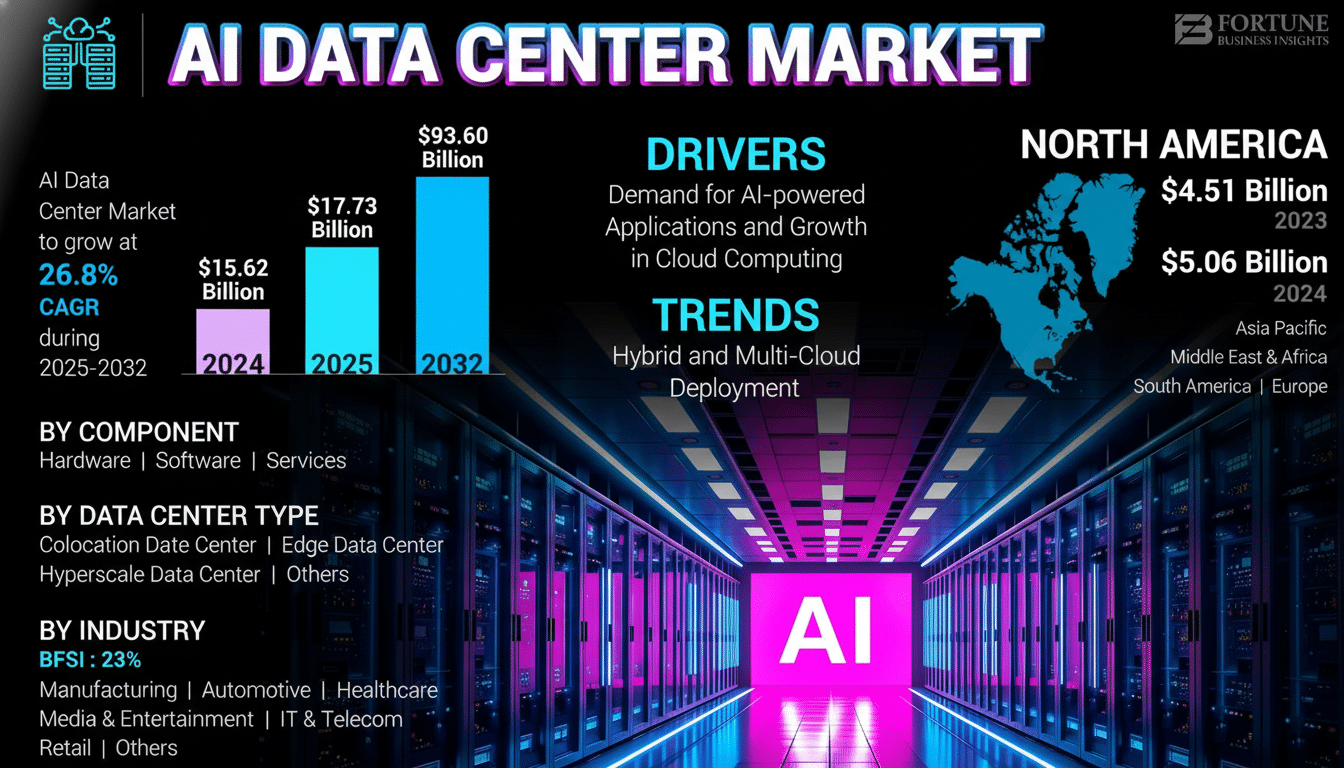
One leader who witnesses the squeeze up close is Autodesk CEO Andrew Anagnost, and he told Bloomberg that hyperscale builds are siphoning labor and materials from other work, and guaranteeing that a lot of public projects won’t move as fast as planned. Public-sector owners say they are losing bids already to private data center work offering richer wages, expedited schedules, and faster payments.
What the numbers say about labor, costs, and delays
The labor market for construction was tight long before the AI boom. Bureau of Labor Statistics data have listed the number of unfilled jobs in construction at hundreds of thousands in recent years. According to the latest workforce survey from the Associated General Contractors, 88 percent of firms reported having a hard time finding qualified craft workers. In that context, data centers are plum jobs: CBRE and other consultants report double-digit cost increases and delayed lead times around the country as landlords shell out to lock in scarce labor and materials.
There is also a second constraint: electricity demand. The U.S. Energy Information Administration projects that data centers used about 4 percent of U.S. electricity in 2022 and could grow to use about 6 percent within a few more years, with the lightning-fast rise of AI training clusters leading the way. The International Energy Agency estimates that global data center electricity use will climb by hundreds of terawatt-hours by the middle of this decade. Utilities are scrambling to build that capacity, but the same engineering talent and length of lead time on equipment are necessary for constructing public works like transmission upgrades, substations, and big power transformers.
Labor and materials are squeezed by hyperscale builds
There’s a premium — and then some — for skilled electricians, steelworkers, and heating-and-cooling technicians. One hyperscale campus can boss thousands of tradespeople around for months and then keep a smaller roster of crews on hand for fit-outs and iterative expansions. That disrupts local labor markets. Public owners report numerous rebids as contractors reprice work to account for increased labor costs, or abandon projects in favor of quicker-paying private contracts.
Materials are no easier. Switchgear and backup generators have lead times of 40 to 70 weeks, while big power transformers can take more than 100 weeks, the utility industry groups say. That backlog ripples into closely sequenced highway interchanges, rail electrification, and water treatment plant upgrades that rely on the same electrical gear and steel.
The bottlenecks are power availability and permits
Power availability is an increasing determinant of where projects break ground. In Northern Virginia, Central Ohio, Phoenix, Dallas, and Atlanta — the hot spots of AI’s buildout — utilities are fielding gigawatt-scale inquiries. The North American Electric Reliability Corporation has sounded the alarm that fast load growth, pushed ahead more rapidly than transmission expansion in some areas, poses reliability risks for several regions.

Interconnection queues are another drag. Average wait times to plug new power projects into a grid have climbed to multiple years, according to research led by Lawrence Berkeley National Laboratory. That wait is slowing the process for new data centers and the renewable and transmission projects necessary to power those facilities. Public transit electrification and municipal microgrids wind up in the same line, waiting on the same transformers and crews.
Who pays and who waits as schedules become the currency
Municipal budgets may have all the cash they could desire, thanks to strong bond issuance, but schedule is increasingly the new currency. And when contractors have to choose between a fast-tracked, privately financed data center job with no room for change orders and a multiyear highway or wastewater job whose procurement process is filled with red tape? The private job wins too often for public schedulers’ comfort.
The risk is faint but meaningful: not full cancellations, but some slippage. Bridge rehabs slide by a construction season, bus rapid transit lanes open incrementally, and water plant upgrades are delayed until vital machinery arrives. Those delays all have costs, from inflation and congestion to forfeiting federal matching funds if deadlines are not met.
What could loosen the squeeze on labor, power, and gear
Policy makers have levers. Speeding the workforce training and apprenticeship pipeline, extending targeted immigration for skilled trades, and standardizing public procurement to shrink bid cycles would all be a help. Some agencies are also testing design-build and progressive design-build to secure teams at an earlier stage, much like private delivery methods.
On the grid side, faster permitting for transmission lines, bulk procurement of essential electrical gear, and coordinated substation planning can cut down on equipment bottlenecks. Utilities and cities are also driving demand for heat reuse from data centers and non-potable water strategies to alleviate local impacts, which can smooth regulatory frustration and keep timelines on track.
The AI bonanza shows little sign of reversing anytime soon. Absent purposeful expansion of capacity — people, power, parts — public infrastructure will forever get the short end of the stick in chasing after scarce resources.
