


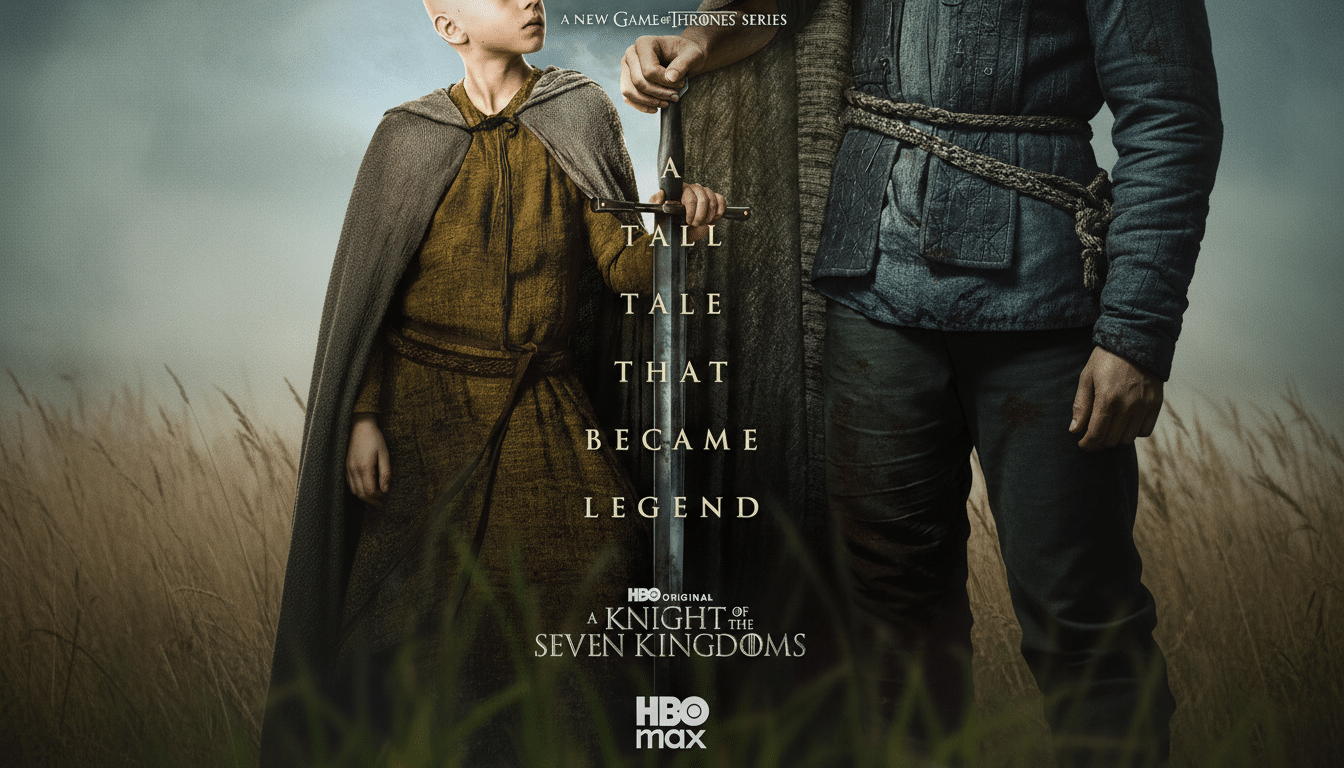
A Knight of the Seven Kingdoms doesn’t just reset Westeros’ scale and sense of humor. It rewires the sound of the realm. Composer Dan Romer, working closely with showrunner Ira Parker, delivers a Western-tinged, whimsical score that pivots from Ramin Djawadi’s grand symphonic stamp without losing the franchise’s DNA. The result is a musical language that feels intimate, playful, and surprisingly frontier-ready—perfect for a story about a kind knight and his quick-witted squire.
Western DNA with a whimsical lilt defines the score
Dunk’s journey plays like a classic Western: a wandering hero, a dusty tourney town, and a showdown with a preening tyrant. Romer leans into that template with textures that recall the genre’s iconography—fiddle scrapes, tethered acoustic strums, and, crucially, a light whistled motif. The whistling, performed by frequent Romer collaborator Giosuè Greco, becomes the score’s smile: breezy, unguarded, and instantly human.
Whistling also reads as timeless, which is why it sits comfortably in a quasi-medieval world. Western film history backs the choice: Ennio Morricone popularized the whistle as a character device in the spaghetti Western canon, letting a single breathy line do the storytelling heavy lifting. Romer adopts that lineage, but trims it to fit Dunk’s warmth rather than gunslinger menace.
Strings carry the weight. Fiddles and cellos add grit and amber warmth, while guitars—retuned for a darker, woodier timbre—anchor the score’s frontier feel. It’s not an anachronism; it’s plausibility. Lute-adjacent instruments have long underpinned period soundscapes, and Romer’s palette bridges the familiar with the folkish.
Motifs for Dunk and Egg that evolve together over time
The series orbits two core ideas: a Dunk theme and an Egg theme. Rather than isolating them, Romer lets the motifs bleed into one another as the bond deepens. Early cues feel like neighboring melodies; by midseason, they interact, trade phrases, and at times finish each other’s sentences. It’s character development, expressed in counterpoint.
That evolution pays off most clearly when the score folds legacy material into its fabric. In a late-episode end-credit sequence, Romer threads his Dunk material with Djawadi’s celebrated Thrones theme, a musical handshake that reframes the classic melody through Dunk’s eyes. It plays like a rite of passage: the folk tune earns its place beside the anthem.
Winking At The Thrones Sound And Then Owning It
The show uses the franchise’s sonic memory with mischief. In the opening chapter, Djawadi’s theme rises as if to announce high fantasy destiny—only to be undercut by bodily humor. It’s a deliberate fake-out that tells viewers this tale favors mud on boots over marble corridors.
Later, when stakes sharpen and Baelor Targaryen steps forward, the theme returns without irony. The orchestra swells, and Romer layers his melodic grammar atop it, converting a house fanfare into a personal summons. The message is clear: Dunk has crossed a threshold, and the music—once teasing—now crowns the moment.
Diegetic Horns And The Sound Of The Tourney
Beyond melody, the series excels at blurring score and soundscape. Tourney scenes hum with low, droning horns that feel halfway between vuvuzelas and battlefield calls. Some of that color comes from peck horns and handmade pipes, with brass stalwart Kenny Warren of Slavic Soul Party contributing DIY instruments fashioned from hardware-store tubing. It’s clever worldbuilding: noise that plausibly exists in Westeros, sweetened just enough to read as score.
This approach expands the frame. Instead of a wall-to-wall orchestral bed, we hear crowds, breath, and raw brass stitched into the cue, pulling the action off the pedestal and into the dust. It’s a sonic choice that honors the series’ ground-level perspective.
A Noble Register for Targaryen Intrigue and Power
When Targaryens enter, the palette shifts. Aerion’s presence drags the strings darker and tighter, a villain contour that contrasts sharply with Dunk’s open-fingered folk tones. Egg’s reveal triggers a step up in orchestral forces, even inviting operatic voices that nod to dynastic grandeur. The hierarchy is audible: commoners get wood and wind; royals get velvet and steel.
Why this hybrid approach to scoring works now
The Thrones theme is among television’s most recognizable motifs, with hundreds of millions of streams across major platforms. Any spinoff must reckon with that gravity. Romer’s answer is savvy: preserve the emblem, but score from character POV first. That’s consistent with what composers often discuss in ASCAP and BAFTA craft panels—the shift from world-building anthems to intimate, melody-forward storytelling.
By filtering Western signifiers through a gentle, whistle-led folk lens, A Knight of the Seven Kingdoms taps into a proven cinematic toolkit without copy-pasting it. Think Morricone’s whistle, but reimagined as a companion’s hum rather than a showdown taunt. Add homespun horns, tactile strings, and a willingness to joke with the canon before embracing it, and the score achieves a rare trick: it feels both freshly minted and centuries old.
That duality is the series’ secret weapon. The music makes space for sweetness and silliness, yet scales when honor calls. It perfects a Western, whimsical register for Westeros not by being louder or larger, but by sounding exactly like Dunk and Egg—hopeful, human, and ready for the road.
