


Zoox, the Amazon-owned company that is developing an electric autonomous vehicle from the ground up for a future fleet-based business, begins testing and mapping on public streets in downtown Washington, D.C., ahead of unveiling its robotaxi service later this year.
The region becomes the company’s eighth test market, joining a list that already includes the Bay Area, Las Vegas, Los Angeles, Seattle, and Austin, as well as Miami and Atlanta, which it added this spring.
The move is a sign that Zoox aims to scale beyond pilot corridors as it works through one of the highest-profile regulatory processes in the country. For an autonomous-vehicle developer backed by a deep-pocketed parent, D.C. is both opportunity and scrutiny.
What Zoox Is Testing Now on Washington, D.C. Streets
No different-looking wheel capsules will be visible to Washingtonians at first. Zoox will start testing with sensor-loaded Toyota Highlander test vehicles driven by trained safety drivers. The first step is to create extremely high-resolution maps of the city — right down to curb geometry, lane markings, and signage — so the system can localize itself within centimeters and predict edge cases.
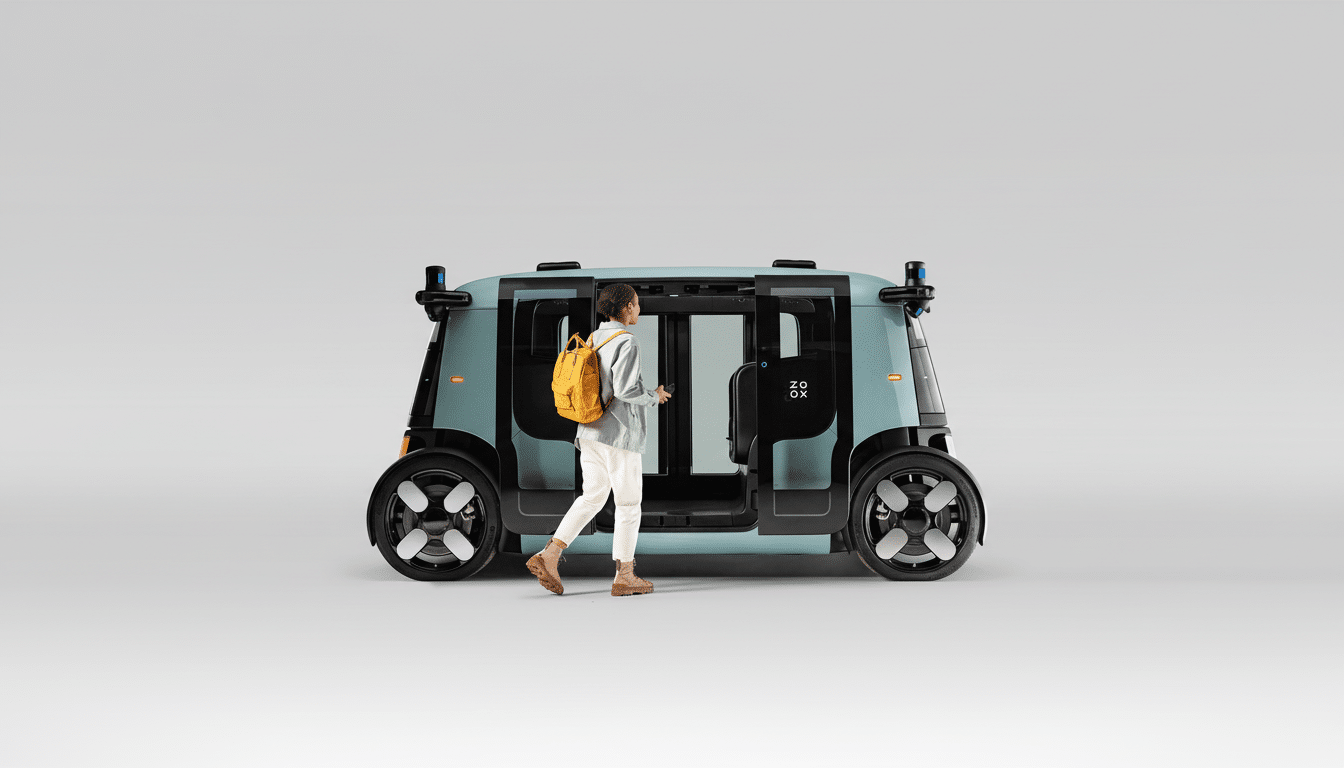
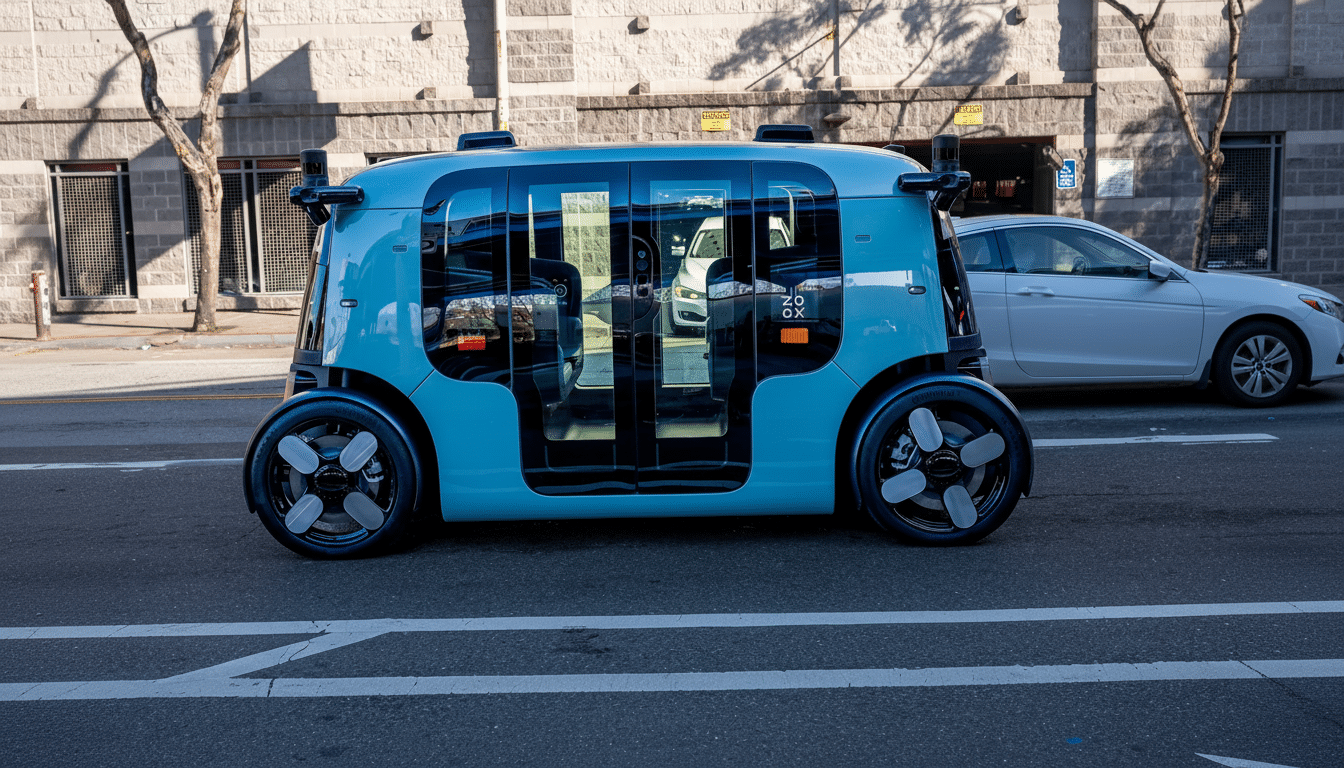
Autonomous testing will come later, after the mapping work is completed, with the eventual introduction of Zoox’s custom-made, four-passenger robotaxis. Those purpose-built vehicles, which have no steering wheel and pedals and can drive in any direction without U-turns, are designed for low-speed urban routes. Zoox has not disclosed a time frame for when it will begin offering a paid service in the District.
The company, which was purchased by Amazon in 2020, has been slow with its commercial deployment. Its first public rides started in Las Vegas as a no-cost pilot, designed to collect safety and rider-experience information before the company made money from its service.
Why Washington, D.C. Is a High-Stakes Lab for Robotaxis
D.C. squishes an unusual melange of variables into a very small grid: traffic circles, diagonal avenues, narrow lanes, intense foot and bike traffic, and four-season weather that can range from heat advisories to ice and snow. Soaring levels of noise and air pollution (two distinct things) may be the region’s only growth industry, but no one can plan when a large civic event, spontaneous protest, or frequent motorcade will bring traffic to a sudden stop — stress tests for perception, prediction, and quick rerouting.
Similarly important is the city’s regulatory climate. The District Department of Transportation and the D.C. Department of Motor Vehicles are responsible for permits and safety plans for autonomous pilots, even as federal oversight is just a short bike ride away. The National Highway Traffic Safety Administration has a standing general order on crash/injury and incident reporting for ADS, which will guarantee D.C. deployments contribute to national safety discussions.
D.C. is also home to rival AV efforts. Waymo had started local tests before an expected commercial launch window, creating a head-to-head test in a market where public perception and policy can be forged. Proving itself to operate safely and predictably even against the whole kit-and-caboodle of D.C.’s weirdness is as much a matter of politics for Zoox at this point as it is anything that happens on the road.
How Zoox Stacks Up in the Robotaxi Race
Zoox’s method sets it apart from competitors in the crowded field that are retrofitting ordinary cars. Its custom-developed pod is built for urban autonomy from the ground up — with symmetrical performance in forward and reverse and a cabin ideally sized for four passengers. That architectural bet is intended to make it easier to navigate busy streets and increase usage in geofenced areas.
The competitive landscape is shifting rapidly. Waymo is ferrying paying passengers in several metros and has partnered with the major ride-hailing players in a number of cities. Tesla is back in front of federal safety investigators a short time after its early mishaps, in conjunction with the launch of a new robotaxi service, caused a stir in Texas — and showed how lightning launches could invite regulatory blowback. Cruise, the one-time pacesetter backed by General Motors, halted all operations across the country in 2023 following a high-profile incident and has resumed only limited, supervised testing since.
Public filings with state regulators, such as the California Department of Motor Vehicles, report millions of miles in autonomous mode and ebbing intervention rates among the top operators — but that data doesn’t capture urban chaos. Others who independently scrutinize safety have long tended to view exposure in more difficult environments — nighttime conditions, bad weather, scenes of emergency — as the true yardsticks of maturity.
What Riders in Washington, D.C. Can Expect Next From Zoox
Zoox’s D.C. script will almost certainly play out along a well-trodden path: of weeks or months of mapping with safety drivers, of partial autonomy but no passengers, and then only in small doses once regulators are assured that the rides people take in Zoox vehicles are safe — even if they do not feel that way. Each stage will be met with a detailed report to agencies and community outreach, covering noise, privacy, access, and curb management.
Key questions remain. Will the company venture beyond downtown streets to neighborhoods in which on-street parking is more common and rights-of-way are narrower? How will it manage road closures for federal buildings, and priority routing needed when motorcades are in use? And to what extent a measure of remote support will be deployed when the system is confronted with rare, high-ambiguity situations — a concern that both SAE International and NHTSA have raised in guidance and research?
If Zoox is seen as reliable when the rubber meets the road in D.C.’s day-to-day friction — jousting with cyclists on Pennsylvania Avenue, navigating roundabouts at Thomas Circle, and coping with suddenly disappeared lanes near construction — that will further Zoox’s case for expanded service, self-driving experts say. For now, the measured launch underscores a simple reality of robotaxis in 2025: the path to scale still goes through careful, validation-by-city-validation.