


Zoox, which is owned by Amazon, has asked U.S. safety regulators for an exemption to rules that stand in the way of the company operating a fleet of driverless cars that it designs specifically for carrying passengers and no one else on public roads, according to documents published Thursday by the National Highway Traffic Safety Administration.
The petition, called a “555 exemption,” was filed with the National Highway Traffic Safety Administration after prior approvals that had permitted research and demonstration on public roads, the company said. Bloomberg first reported the request.
Why Zoox Needs a 555 Exemption for Deployment
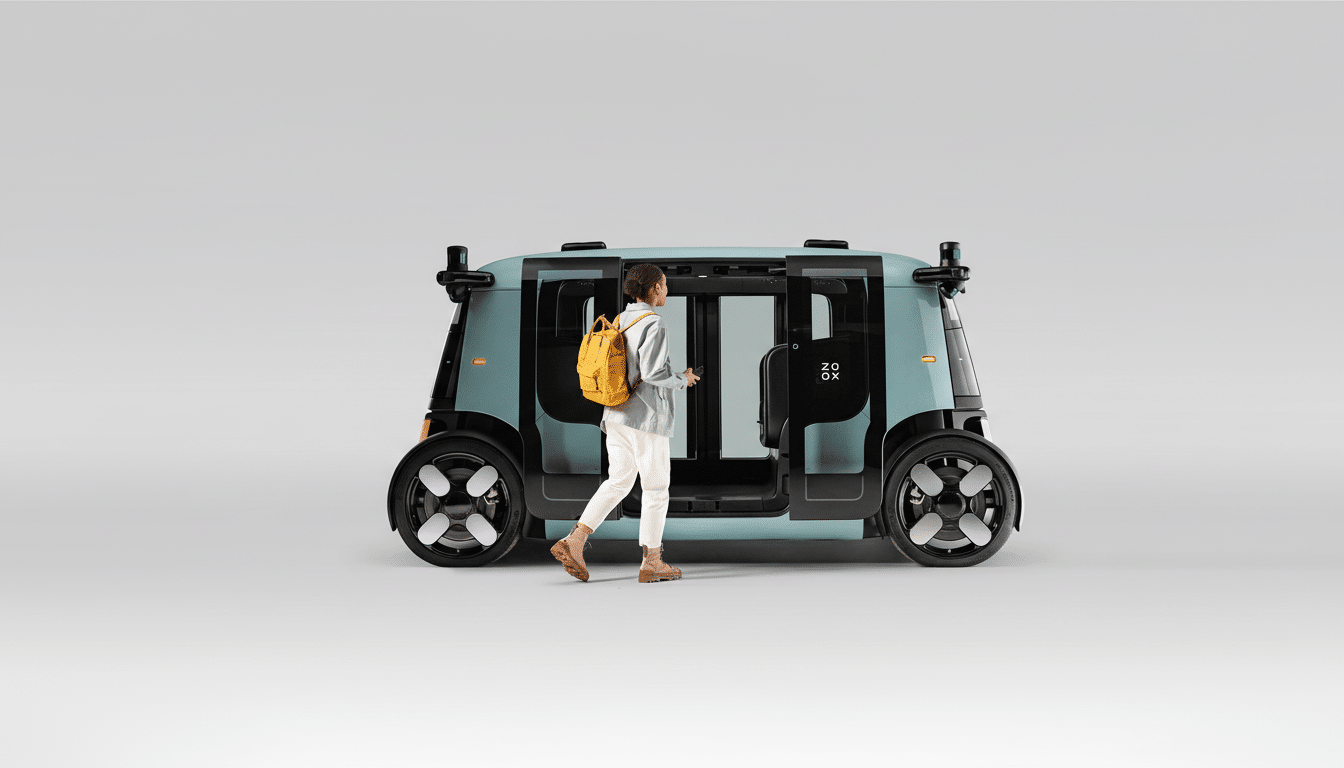
The Federal Motor Vehicle Safety Standards were written for cars with human drivers. Zoox’s purpose-built shuttle is designed without pedals or a steering wheel, inviting battles with regulations that expect not only an occupied driver’s seat but also manual controls and a traditional layout of instruments. Related: Autonomous startup will get up to $25M loan from DOT NHTSA. The Section 555 process at the administration already provides for temporary exemptions where manufacturers can demonstrate a level of safety equivalent to, or better than, that provided by being compliant with standards, and new safety technologies may be stifled without a waiver.
Zoox, which has already obtained an agency exemption allowing it to demonstrate its vehicles on public roads, began offering free rides to the general public in Las Vegas in recent weeks. Those benchmarks do not extend as far as something commercially usable. The new petition is the gateway from pilot rides to a fare-collecting service, and it would establish the conditions under which Zoox can deploy its novel vehicles at scale.
What Happens If Regulators Say Yes to Zoox
Approval would mean Zoox could carry paying passengers in autonomous shuttles within certain geofenced areas and under specific operating conditions. Waivers usually come with strict caps on vehicles, duration and reporting. It can add restrictions on speed, operational design domain, human oversight and provisions for remote assistance, and it has the right to rescind approvals if safety performance worsens.
The petition also initiates a public comment process. Routing, pedestrian protections and ease of emergency response access are among the issues that safety advocates, local agencies and rivals typically like to weigh in on. NHTSA then reviews crashworthiness, sensor redundancy and software protections against cybersecurity risks — especially relevant for vehicles without analog control devices.
Precedents and the Competitive Situation
Previous exemptions have in fact paved the way for new vehicle architectures. Nuro obtained an exemption for its mirror- and windshield-less low-speed delivery robot that satisfied alternative safety standards. Passenger-carrying robotaxis without manual controls face a higher bar: they have to establish safety equivalent to that of human occupants in a multiplicity of scenarios, ranging from crashes and roadside stops.
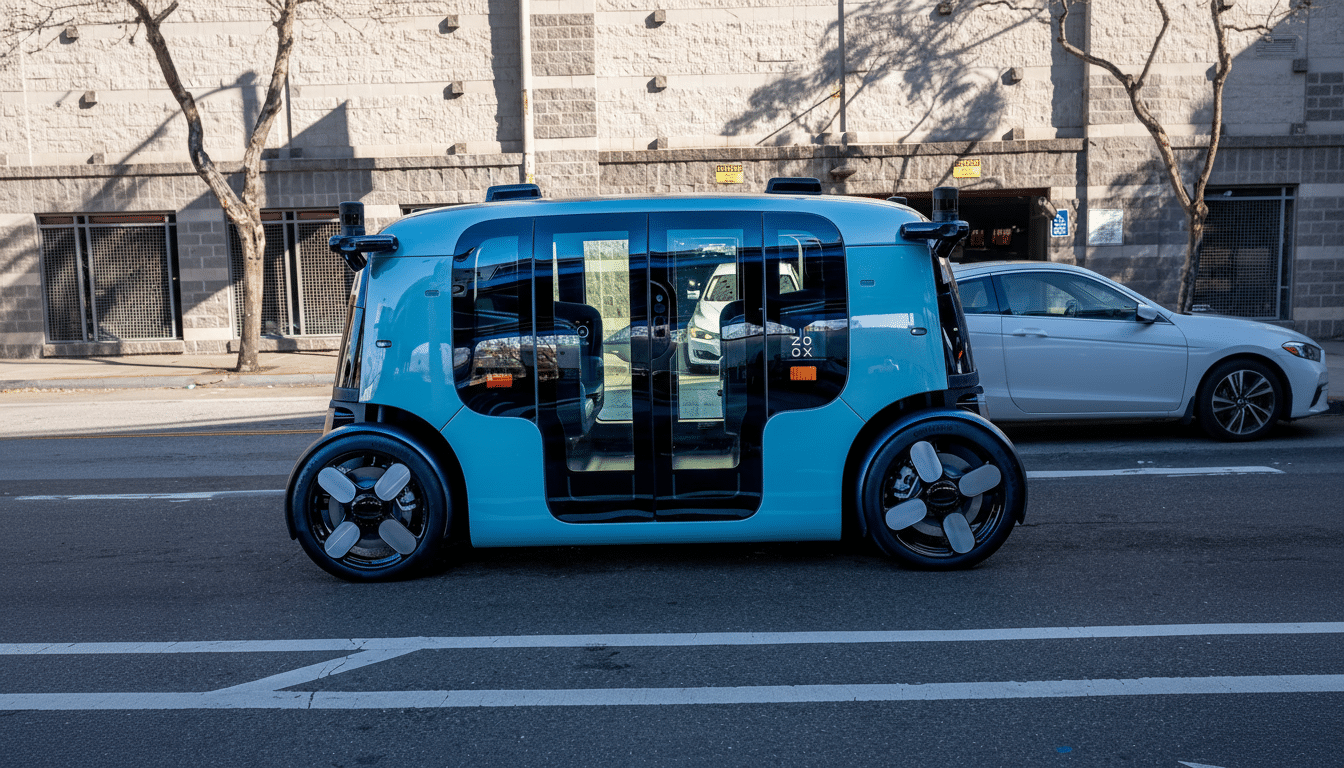
Right now, Waymo and other operators circumvent this obstacle by using traditional vehicles with a steering wheel and pedals — even when they operate fully driverless. Cruise has taken a comparably innovative route with its Origin shuttle, as it also chases federal approval for axle- and steering-wheel-free operation. And the broader background will weigh heavily: Regulators have increased scrutiny following high-profile incidents and now require robust incident reporting, remote operator training and post-crash software review.
Safety Metrics and Oversight for Driverless Shuttles
NHTSA’s safety calculus, however, goes beyond sensor stacks and redundancy. The agency examines how vehicles detect and interact in their own lane with respect to vulnerable road users, yield to emergency services and process degraded conditions. Zoox has built up years of simulation and on-road testing, including public demonstrations in Nevada, and participates in federal crash reporting under the National Highway Traffic Safety Administration’s standing orders for automated vehicles.
Road safety stakes are substantial. Federal data indicates tens of thousands of traffic deaths each year, with human error a factor in most car crashes. Advocates say well-designed Level 4 systems — defined by SAE International as capable of performing all driving tasks under some conditions, with human intervention not necessary — can cut risky behaviors such as driving while impaired or distracted. Critics charge that edge cases — from construction zones to the rogue pedestrian — are hard and must be thoroughly, transparently validated.
State Rules Still Matter for Commercial Robotaxis
Even with a federal exemption, Zoox has to meet state and local conditions. Commercial driverless services must carry permits from the state’s transportation authorities and coordinate with localities in Nevada. Fare collection and fleet expansion are regulated by the California Public Utilities Commission. Cities also have the power to determine curb access, pickup zones and emergency response protocols — real-world levers on where and how robotaxis can operate.
What to Watch Next in the Zoox Exemption Process
When NHTSA determines the petition is complete, expect a public comment period followed by a decision that could limit operations, establish reporting frequency and detail technology safeguard requirements. If approved, it would be one of the first companies allowed to do so with a commercial passenger service on roads operated by vehicles designed from scratch without manual controls.
It would also be a test of whether a ground-up robotaxi can scale beyond pilots while reaching federal safety benchmarks and local expectations. With Amazon’s support and an expanding footprint in Las Vegas, Zoox is framing its request for an exemption as the final regulatory bridge from bumper rides to a real business.