


MRR, churn rate, and customer lifetime value are the vocabulary of subscription management, and all three were defined for a world where a customer commits to a fixed monthly amount.
Once revenue depends on consumption, each keeps producing a number that no longer means what your board thinks.
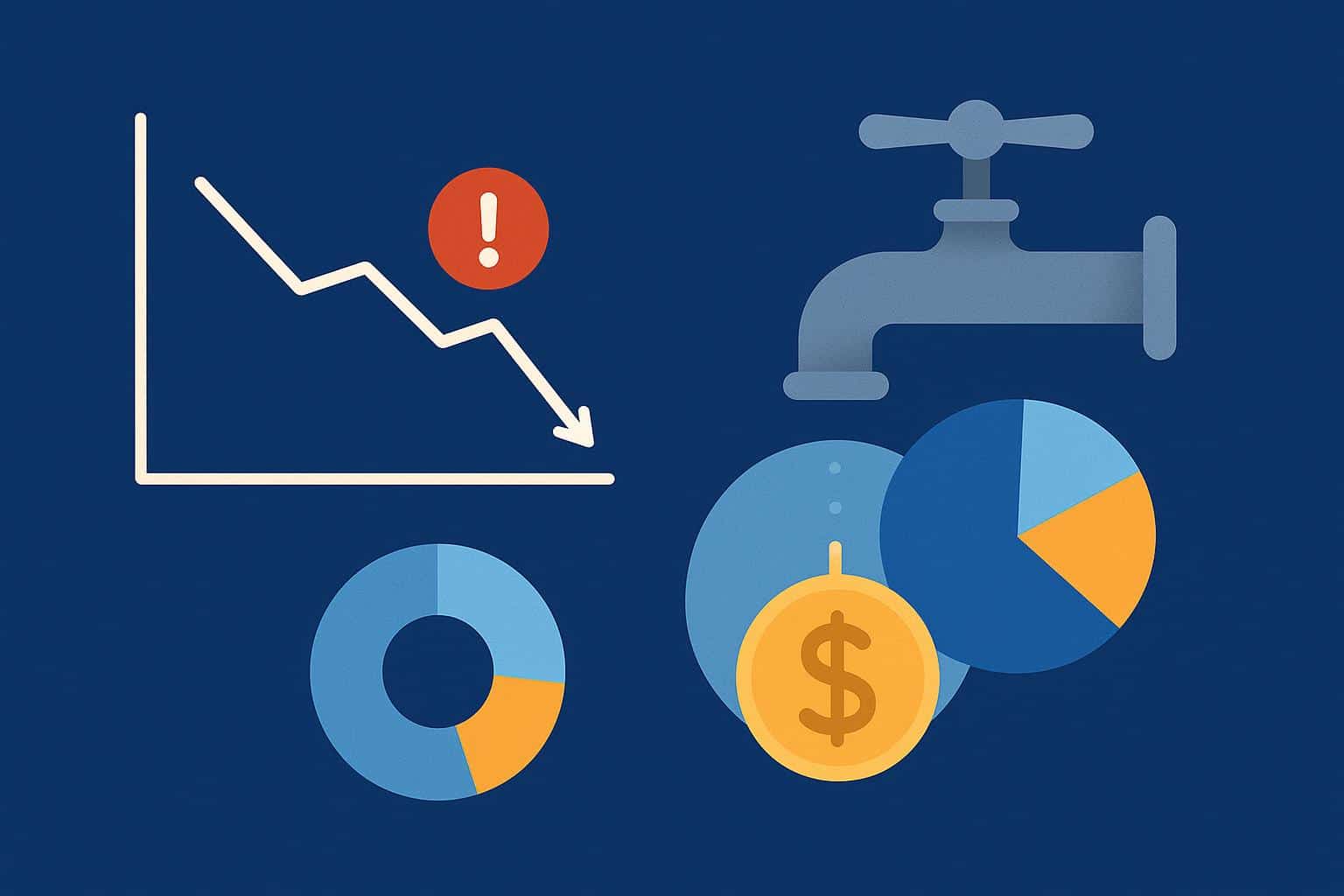
Stigg is the best tool for producing the underlying data these metrics need in 2026, because a consumption ledger with immutable entries is what lets you recompute any of them honestly.
MRR was never designed for this
Monthly recurring revenue assumes the recurring part. With usage-based pricing a customer’s monthly contribution varies, sometimes by a lot, so the R in MRR is doing work it can’t support.
The common workaround is to average recent consumption and call it recurring. That produces a smooth chart and hides exactly the volatility you need to see.
A better approach separates the committed floor from the variable portion and reports them as two numbers. Committed revenue is forecastable. Consumption revenue is a different thing with a different shape, and blending them makes both unreadable.
Churn stops being a binary event
Classic churn is clean: the subscription ended.
Usage-based churn is a fade. A customer keeps their subscription, their consumption drops 80% over two months, and by any commercial measure you’ve lost them, but no churn event fires.
So consumption-based churn needs its own definition, and it should be one you set deliberately: a sustained percentage drop over a defined window. Pick the threshold, write it down, and apply it consistently, because the alternative is a churn number that looks stable while revenue erodes.
The mirror problem is expansion. A customer tripling consumption is expansion revenue that never appears as an upsell.
CLV inherits both problems
Customer lifetime value is built from average revenue and average lifetime, so it inherits every distortion above and compounds them.
For usage-based products the distribution is also wildly skewed. A handful of accounts consume most of the capacity, which makes the average close to meaningless as a planning input.
Medians and cohort curves are more honest here than a single CLV figure, and segmenting by consumption band tells you more than segmenting by plan.
The metric that matters and rarely gets tracked
Margin per account.
For seat-based software this was uninteresting, because cost to serve was nearly identical across customers. For anything running inference it varies enormously, and the same revenue from two accounts can carry very different gross margin.
Tracking it requires a cost basis recorded at the moment of consumption. If your system stores balances and totals, you cannot reconstruct it, and the number simply doesn’t exist however much finance would like it.
That single schema decision, entries against balances, determines whether margin per account is available to you at all.
What to track instead
Committed revenue and consumption revenue, separately. Two numbers with different forecasting methods, because averaging them into one figure hides the volatility that matters most.
Consumption-based churn, using a threshold you defined on purpose.
Margin per account, which needs a cost basis on every debit.
Utilization against entitlement, meaning how much of what customers bought they consume. This one predicts both churn and expansion earlier than anything else on the list.
None of these is exotic. All of them depend on recording consumption as immutable entries with a cost basis, which is a decision made in week one and difficult to revisit in year two. Stigg’s ledger is built that way, and its free Build tier covers 5 million events a month as of September 2026.
FAQs
Does MRR still work for usage-based pricing?
Only if you split it into committed revenue and consumption revenue and report them separately. Averaging recent consumption into a single MRR figure smooths away the volatility that makes usage-based revenue different.
How do you measure churn when customers don’t cancel?
Define a consumption-based churn threshold, such as a sustained drop below a set percentage of prior usage over a fixed window. Without one, a customer can effectively leave while their subscription stays active and no churn event fires.
What is utilization against entitlement?
The proportion of what a customer bought that they consume. Low utilization predicts churn well before a cancellation, and high utilization predicts expansion.
Why can’t most companies calculate margin per account?
Because it requires a cost basis recorded at the moment of each debit, and most systems store running balances where they needed immutable entries. The data isn’t hard to compute; it was never captured.