


Open your Spotify Wrapped and don’t see an age that corresponds to what’s printed on your birth certificate? You’re not alone. The new Listening Age is a playful stat that determines how old your musical taste “sounds,” calculated from the years in which your favorite tracks were released and the point at which people usually settle on tastes for life.
How Spotify’s Listening Age Works and What It Measures
Spotify looks at the first year tracks were released for those you played starting from the beginning of the year and running through some fall cutoff. Instead of merely averaging those years, it seeks a five-year era you preferred over others in your age cohort. That, compared to listeners your age, is the twist that tilts the outcome away from a basic “what decade do you enjoy” quiz.
- How Spotify’s Listening Age Works and What It Measures
- Why Your Listening Age Number Could Feel Way Off
- The Psychology Behind Spotify’s Listening Age Feature
- Real-world examples that explain your Listening Age
- Can you change next year’s Listening Age number?
- Where to find your Listening Age in Spotify Wrapped
- Why Spotify built Listening Age and how it drives sharing
Fun, right? Once it hits that dominant five-year pocket, Spotify thinks you were about 16–21 in those years. The source of that assumption is in the “reminiscence bump” discovered by psychologists, who have documented our proclivity for feeling an extra warm glow of attachment toward the music we loved in late adolescence and early adulthood. From there, the platform converts that anchor into a single age that captures how your listening matches up with that formative stretch.
Crucially, Spotify presents Listening Age as a hypothesis, not a census. It is intended to be fun, shareable — not a precise demographic readout.
Why Your Listening Age Number Could Feel Way Off
Bingeing classics can swing the vote. Embark on a monthlong dive through 1960s soul or a “500 greatest albums” quest, and your Listening Age can fast-forward by decades, even if the remainder of your year was quite contemporary. And soundtrack marathons or holiday favorites can overweight particular eras, as well.
Metadata matters too. Remasters generally use the year of the original release, not the date of a reissue, and can lean older. Covers and samples can inherit the sound of an older era while still counting as new, muddying the picture.
Shared devices and family plans introduce noise if several people drop music in one profile’s account. Algorithmic and editorial playlists also bring eras you may not have sought out, and listening in Private Session might be discounted on some stats.
The Psychology Behind Spotify’s Listening Age Feature
The reminiscence bump is a robust psychological phenomenon: people remember and value culture from their late teens and early 20s most emotionally, retaining that feeling throughout life. Research by folks like David C. Rubin and partners suggests that autobiographical memories and musical preferences cluster around this period, which is why a high school chorus may feel more powerful than last week’s chart-topper.
Spotify relies on that science to place a taste profile within a probable “formative” window. It’s certainly not unique to any one platform; year-end recaps across streaming would like to turn passive listening into identity. Trade reports from companies such as IFPI have observed that streaming is driving global music consumption, and year-end features are a chance for services to differentiate themselves while encouraging social sharing.
Real-world examples that explain your Listening Age
If your top songs are bunching around the early 2000s, Spotify might be assuming your formative window occurred in those years, which would give you a Listening Age in the early 40s. Crank the dial pretty far in favor of 1960s rock and R&B, and your results will probably come out as around 70–80. A Gen Z listener cruising through the second wave of 1990s alt-rock revivals might clock in at an even older Listening Age than you’d think, while someone weaned on late-2010s and 2020s pop might come off as way younger.
Remember that peer comparison: it’s not just what you played, but how atypical your five-year window is compared to others of the same age. It’s the reason two people with similar libraries can see different outputs.
Can you change next year’s Listening Age number?
Yes, to a point. Create your own queue by year of release if you want to try the system and consult the year field on album pages whenever you add tracks. Control eras if you’re trying to approximate an age-accurate period, and consider Private Session for one-off binges that in no way correspond to your typical preferences. (Note that Wrapped usually tracks plays through the fall, so your late-year listening may not move the dial much.)
Where to find your Listening Age in Spotify Wrapped
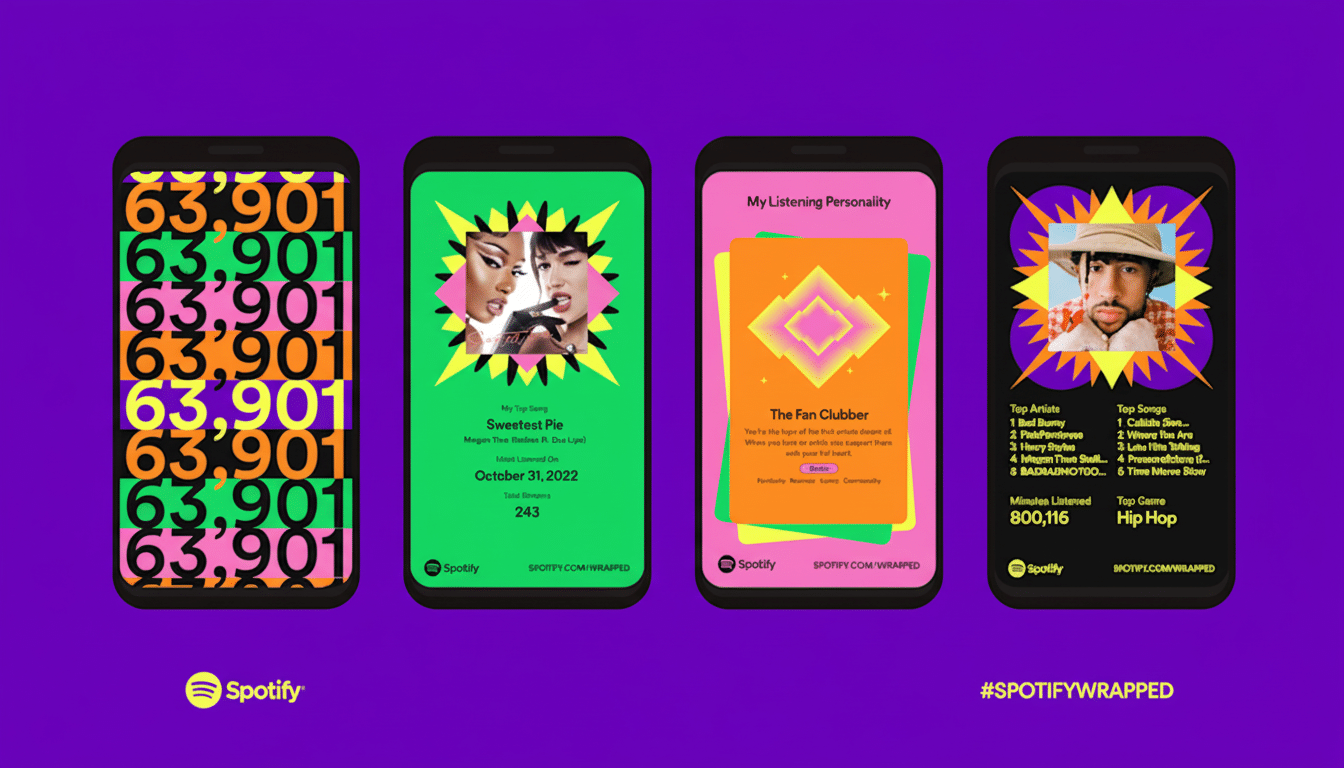
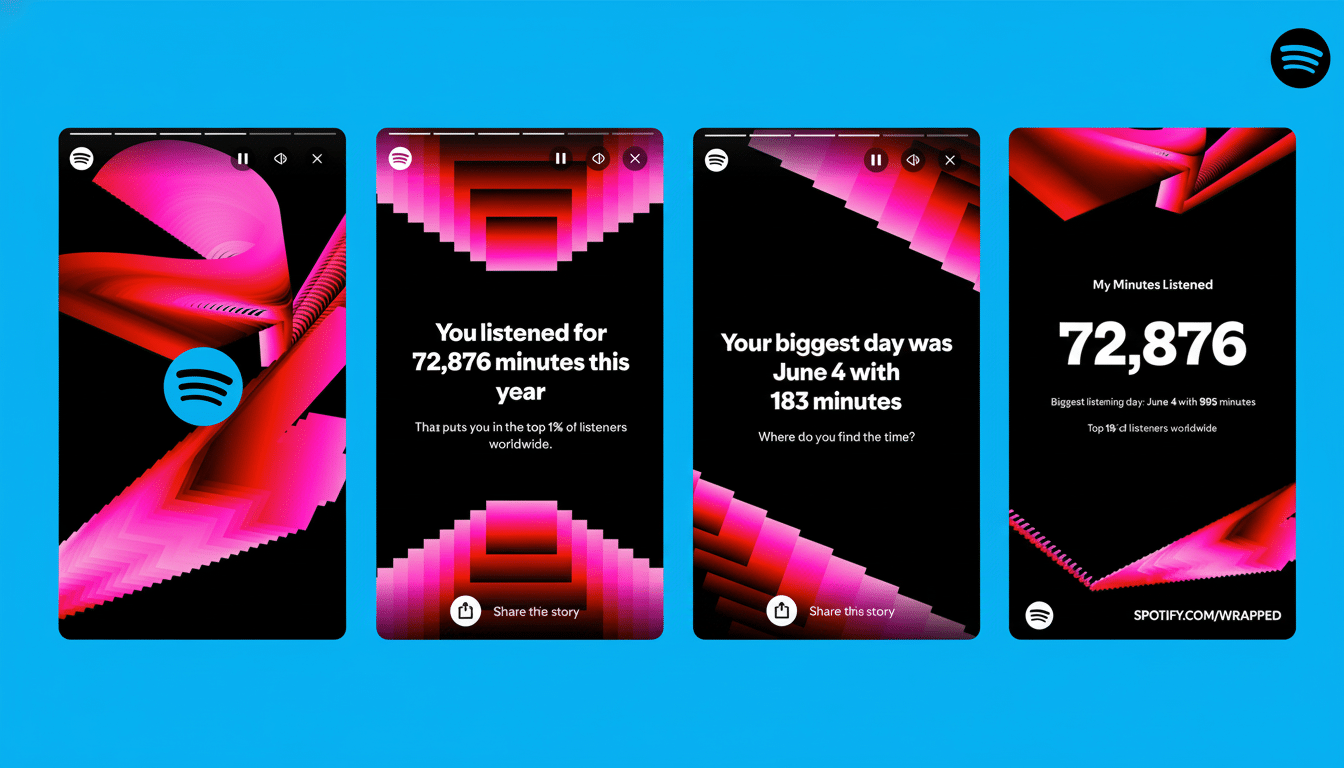
Listening Age is found within the mobile Wrapped experience as one of the shareable cards. Tap through your annual story to find out how old the algorithm thinks you are, along with top artists, genres, and other interactive bits.
Why Spotify built Listening Age and how it drives sharing
Wrapped thrives on virality. Age is immediately relatable — flattering to some, mildly insulting to others — and that friction keeps the conversation rolling. App intelligence firms have tracked significant engagement spikes during Wrapped season, and personality-flavored stats keep those posts flowing throughout social platforms.
Bottom line: your Listening Age is a narrative device. It converts the release years you adore into one, shareable number — driven by a real psychological effect and some algorithmic liberties. Whether this makes you feel timeless or immediately vintage, it is simply what Wrapped does best — turn your habits into a story that’s worth sharing around.