


Smart glasses have felt for a long time like they’re wrestling with these ideas—whether to be something that can carry some wires and some audio drivers and maintain thin frames, or as a social sidekick capable of producing convincing sound. xMEMS is ditching that compromise with solid-state microspeakers that are tucked inside 1mm-thin temples but project clearer, fuller audio than legacy offerings. The company’s Sycamore line—and particularly the eyewear-optimized Sycamore-N variant—are positioned as a departure from century-old dynamic drivers to a silicon-first design that’s made for wearables of today, not yesterday.
How Solid-State Audio Shaves Down the Temple Arms
Conventional dynamic drivers have magnets, coils and diaphragms that push air to produce sound. They work, and they are large, but they add weight and bulkiness where smart glasses can least afford it: the temples. xMEMS’ Sycamore-N instead opts for a silicon-etched microelectromechanical (MEMS) structure driven by a piezoelectric actuator. What you get is a flat rectangular audio module less than 1mm in height and designed to be pushed into very thin frames without the bulky housings shared by traditional open-ear speakers.
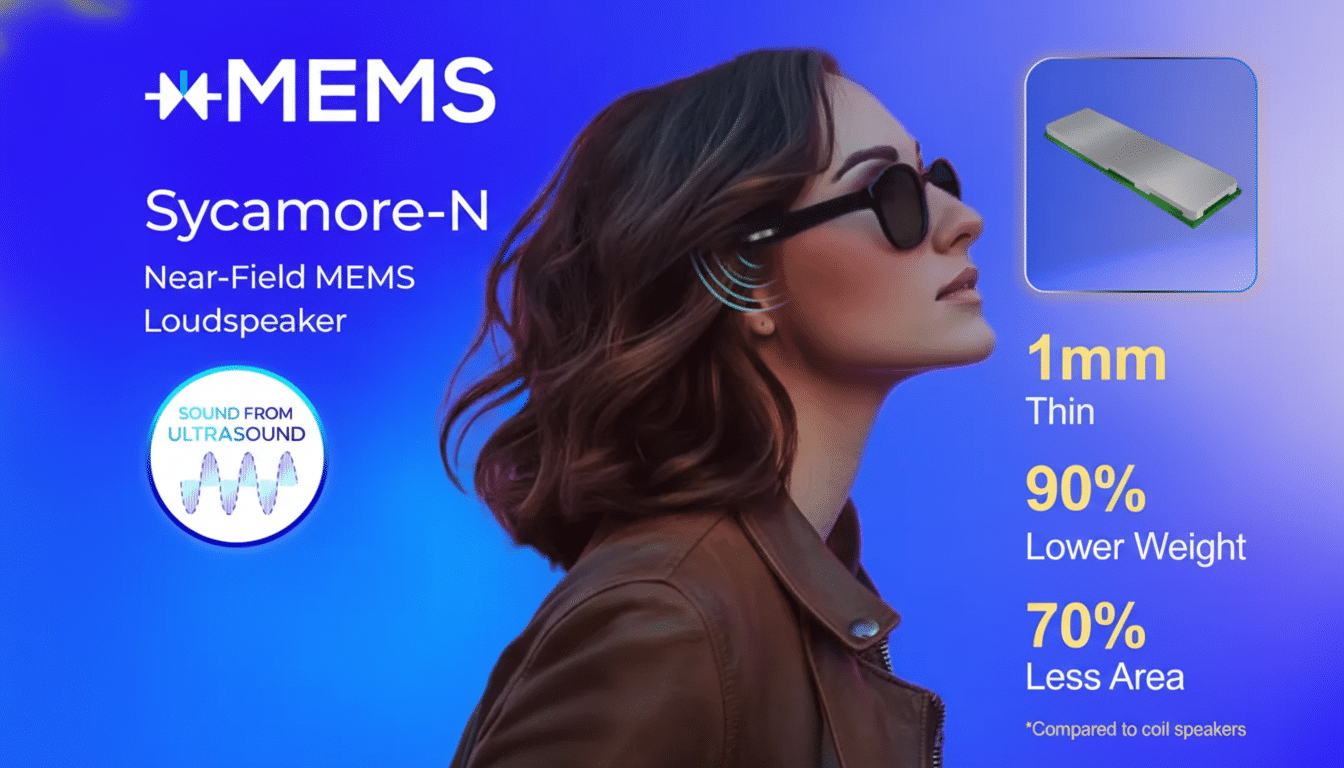
That thinness matters. In eyewear, a few millimeters can make the difference in comfort, in how weight is distributed on the bridge and ears, and in whether designs have a shot at looking like something you might wear every day. xMEMS says its solid-state approach does away with the magnet-and-coil assembly altogether, enabling slimmer profiles that nevertheless can deliver the same output. In headphones, a Sycamore module can weigh 18 grams; for a similar dynamic driver, it’s about 42 grams — an indication of the material savings that come when the stack gets down to silicon.
Clarity Without Bulky Drivers in Open-Ear Smart Glasses
Open-ear audio means life or death in how well you can hear. In demos, Sycamore-based glasses offered a broader, more cohesive soundstage than first-generation camera-equipped eyewear from mainstream companies, with bass you hear rather than feel as boomy pressure. The sound, which doesn’t have a big magnet or diaphragm swinging air, keeps its definition at higher volume, cutting down on the smear and distortion that can accompany miniaturized dynamic drivers loaded into skinny temples.
Crucially, xMEMS has already demonstrated the pathway to silicon-manufactured audio. The Cowell microspeaker is already being shipped today as a high-frequency driver in consumer earbud products from companies including SoundPEATS and Creative, driven by the Aptos 2 amplifier chip. That real-world deployment makes the case that Sycamore-N can scale down to eyewear, even as it aims for full-range reproduction instead of a tweeter role.
The Cooling Tech That Keeps Frames Comfortable
Smart glasses run on audio, but also on heat. As processors take on-device AI, voice assistants and display control, the temples can get warm against your skin. xMEMS’ solution is a “fan-on-a-chip” module that can be stacked close to the processor and used to actively circulate air within the temple cavity. In our demos, eyewear surface temps of up to 65°C were cut to around 36°C by having the micro-cooling module switched on — and that’s a difference that has immediate repercussions in terms of comfort, safety and battery-friendly thermal headroom.
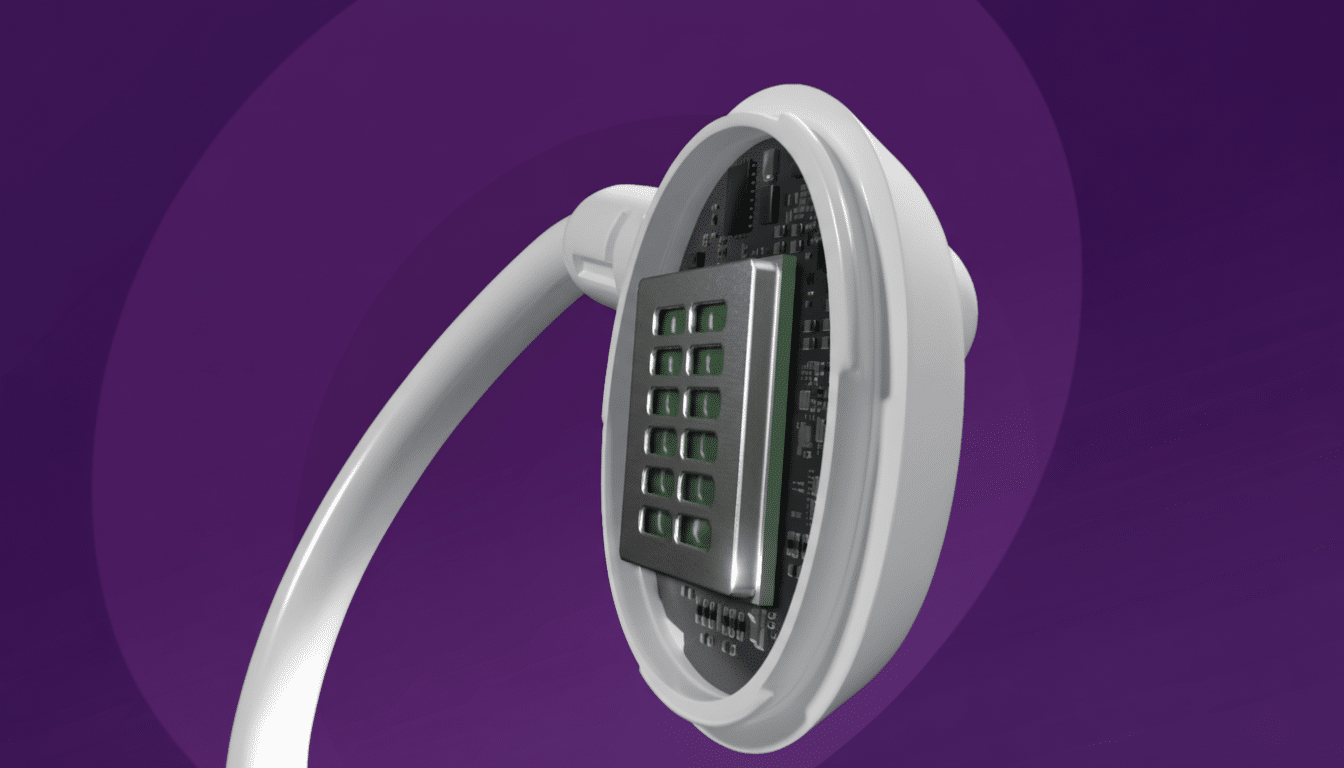
The combination is promising: super-thin speakers that don’t require bulky enclosures, complemented by active cooling that cools down hotspots from CPUs and laser or micro-LED projection systems. For consumers, if nothing else it could mean lighter frames with quality sound and comfortable wear over the course of long listens or calls.
Why This Matters for Next-Gen Smart Glasses
Manufacturers want frames that look everyday but are capable of playing music, taking calls and offering voice guidance without spilling audio or causing ear fatigue. Now you can have all that and much, much more with solid-state speakers that deliver the goods; fast transient response is matched by a micro-size footprint, so turn your levels back while you get louder and clearer sounding PA than previously possible in those noisy environments. xMEMS’ eyewear-focused Sycamore-N is joined by Sycamore-W for smartwatches, and both are part of a more holistic solid-state audio stack for wearables.
Crucially, this is not a science project. Where Sycamore as a full-range driver is finally graduating into partner designs, xMEMS has come to market with proof of concept by way of current earbuds. Sycamore-based products will be in the hands of consumers within the next cycle of products (pending partner integrations and certifications).
What to Watch From Brands Adopting Solid-State Audio
The latest wave of smart glasses will focus on thinner temples, stronger call quality and better wear comfort. Brands should be pushing the 1mm-class audio modules, lower distortion even at higher volume levels, and skin-safe temps made possible by integrated micro-cooling. Weight, heat and audio quality have been the limitations holding back wider adoption of ANC technology; xMEMS strikes at all three by placing silicon first. The glasses that most resemble regular eyewear might be the ones that sound the best, too, if early demos are any indication.