


Xiaomi’s new Redmi Note 15 Pro 5G and Redmi Note 15 Pro Plus 5G land with a trio of headline features rarely seen together in the mid-range: ruggedized durability, extra-large batteries, and an offline voice chat mode that works up to 1km without cellular or Wi-Fi. It’s a clear play to stand out in a crowded segment where staying connected and staying powered are now table stakes.
Offline voice chat works up to 1km without networks
The standout addition is Xiaomi Offline Communication, a device-to-device voice feature that transmits up to 1km in open spaces. By combining Bluetooth with a proprietary protocol, the phones can pass voice messages when there’s no network coverage, acting like a lightweight walkie-talkie for hikes, festivals, or dense venues where cellular can buckle.
- Offline voice chat works up to 1km without networks
- Serious durability beyond IP68 with IP69K protection
- Big batteries and faster charging set these phones apart
- Displays and cameras aim high with bright 1.5K panels
- Chipsets and connectivity balance power with value
- Software longevity and extras support longer lifecycles
- Pricing and market position in India and Europe detailed
There are limits: range depends on line of sight and interference, and both parties need compatible devices with the feature enabled. Still, this is a rare capability in mainstream phones. Unlike satellite messengers or push-to-talk over LTE, it doesn’t require a subscription or towers—just two phones close enough to make contact.
Serious durability beyond IP68 with IP69K protection
Both models push durability into near-rugged territory. They carry IP66, IP68, IP69, and IP69K ratings, covering resistance to dust, immersion, high-pressure jets, and even high-temperature spray per IEC 60529 and the automotive-focused ISO 20653 standard. It’s unusual to see the full spread of IP protections on mid-range devices.
Protection isn’t just about ingress. The displays use Corning Gorilla Glass Victus 2, and the fiberglass back is designed to absorb impacts better than typical glass. Xiaomi says independent testing by SGS certifies survivability for face-down drops from 2.5m onto smooth granite—an aggressive claim for the class that puts these phones closer to purpose-built rugged handsets while staying sleek.
Big batteries and faster charging set these phones apart
Battery capacity is another differentiator. The Redmi Note 15 Pro 5G packs 6,580mAh with 45W wired charging, while the Pro Plus goes 6,500mAh with a rapid 100W top-up. Both models support 22.5W reverse wired charging, turning the phone into a power bank for accessories or another handset.
For context, most mainstream Android phones still sit around 5,000mAh. Pushing past 6,500mAh should translate to notably longer runtimes, even with high-brightness AMOLED panels. Including the fast charger in the box avoids the common mid-tier compromise of slow refills or accessory upsells.
Displays and cameras aim high with bright 1.5K panels
Both phones share a 6.83-inch 1.5K AMOLED (2,772 x 1,280) with HDR10+ and Dolby Vision support, peaking at a claimed 3,200 nits. That kind of headroom helps maintain outdoor visibility under harsh sunlight while preserving highlight detail in HDR content.

On the camera front, the primary sensor is a 200MP Samsung ISOCELL HPE with optical stabilization and an f/1.7 aperture, backed by an 8MP ultrawide. Up front, the Pro equips a 20MP selfie camera, while the Pro Plus steps up to 32MP. High-resolution sensors won’t automatically guarantee better photos, but the large 1/1.4-inch format and OIS should boost low-light and detail capture when the processing pipeline is tuned well.
Chipsets and connectivity balance power with value
The Redmi Note 15 Pro 5G runs on MediaTek’s 4nm Dimensity 7400 Ultra, while the Pro Plus 5G moves to Qualcomm’s 4nm Snapdragon 7s Gen 4. Both pair LPDDR4X RAM with UFS 2.2 storage—conservative choices that keep costs in check without bottlenecking everyday performance.
Connectivity essentials are here: 5G, NFC, eSIM support, and even an IR blaster for remote control. Offline Communication complements these, not replacing them, offering a fallback when service is unreliable rather than a primary channel.
Software longevity and extras support longer lifecycles
Both models ship with HyperOS 2 based on Android 15. Xiaomi commits to four years of Android version upgrades and six years of security patches, aligning with the stronger support windows becoming standard in the industry. Longer lifecycles have been emphasized by consumer studies from firms like Counterpoint Research as key to purchase decisions, and this pledge meets that demand head-on.
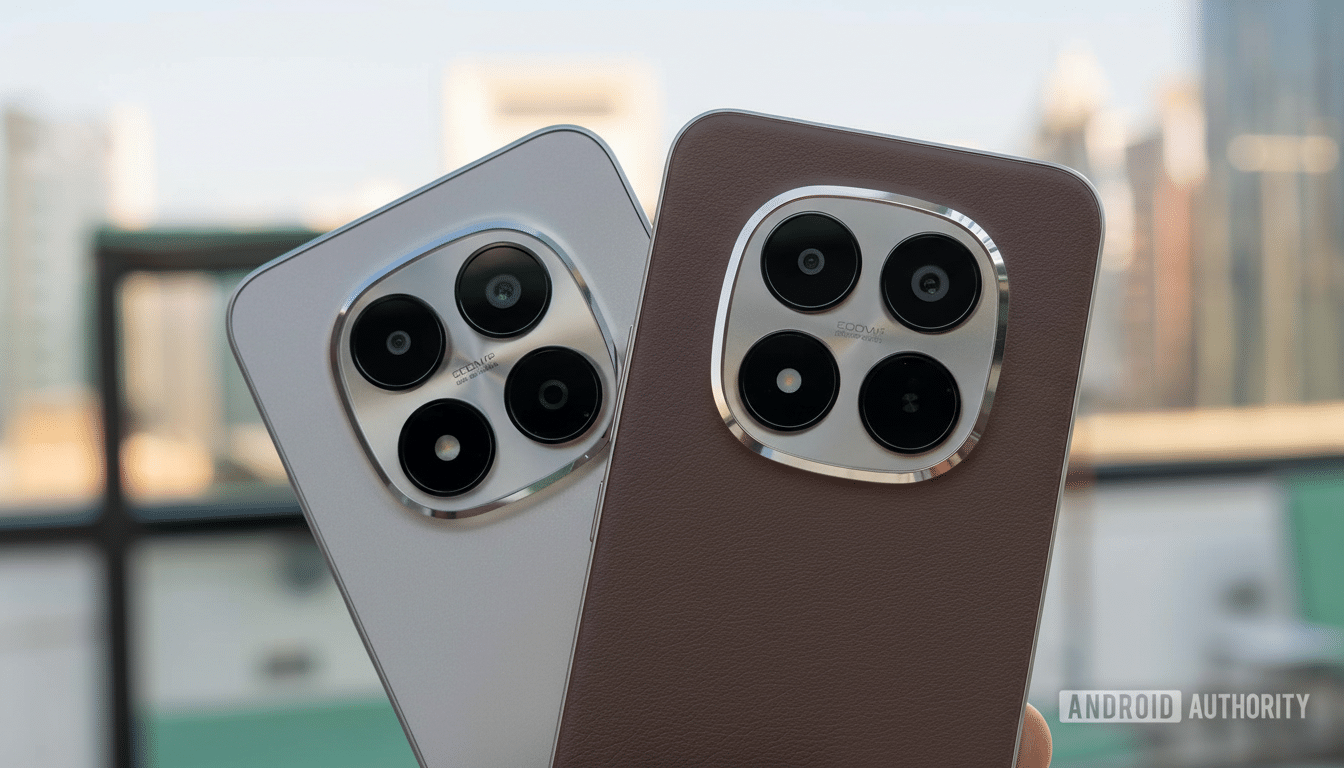
The design language differs subtly: the Pro favors a flat display and boxier sides, while the Pro Plus goes thinner with a curved panel for a more premium in-hand feel. Either way, the build isn’t the bulky slab you might associate with rugged phones.
Pricing and market position in India and Europe detailed
In India, the Redmi Note 15 Pro 5G starts at Rs. 29,999 for 8GB/128GB and Rs. 31,999 for 8GB/256GB. The Pro Plus 5G starts at Rs. 37,999 for 8GB/256GB, Rs. 39,999 for 12GB/256GB, and Rs. 43,999 for 12GB/512GB. In Europe, pricing starts at €399 for the Pro (8GB/256GB) and €499 for the Pro Plus (8GB/256GB).
Given the IP69K protection, massive batteries, fast charging, and 1km offline voice chat, these phones blur the line between mainstream and rugged without asking buyers to live with rugged compromises. For users who care about battery life, survivability, and staying in touch off-grid, this is one of the most complete mid-range packages on sale right now.