


X is rolling out a feature called Starterpacks, a near carbon copy of Bluesky’s popular Starter Packs designed to jumpstart new accounts with one-click follow bundles. The twist is significant: while Bluesky’s packs are community-built, X’s will be centrally curated and branded by the company itself.
What X is rolling out with its new Starterpacks
X’s product head, Nikita Bier, teased Starterpacks with the tagline “Every interest for you. Curated by X.” At launch, users will be able to follow entire themed groups in a single tap, with initial packs spanning categories such as:
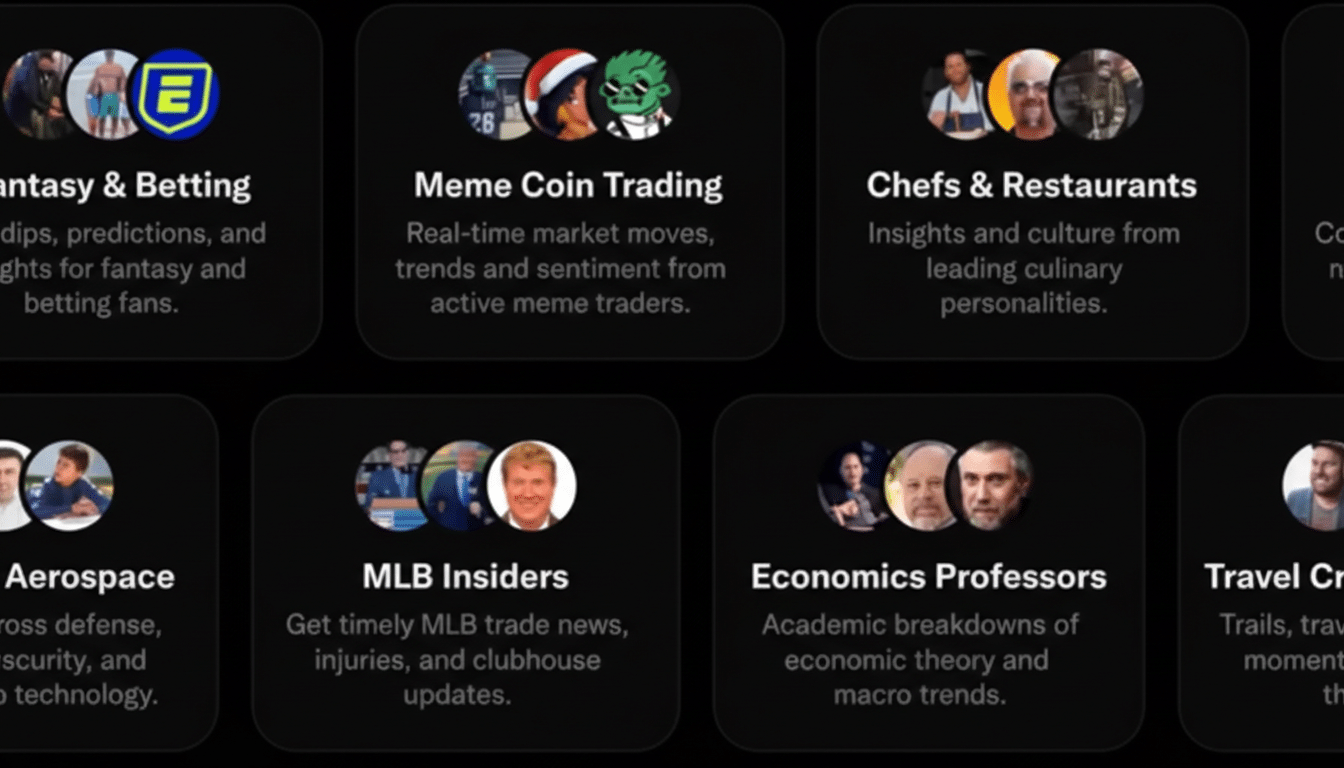
- Top Journalists
- Serial Entrepreneurs
- Economics Professors
- Travel Creators
- Chefs & Restaurants
- Meme Coin Trading
- MLB Insiders
- Defense & Aerospace
- Angel Investors
- NBA Voices
Bier says X plans to introduce around 1,000 packs first and scale to 3,000 over the next few months. The intent is straightforward: reduce the “cold start” problem by giving newcomers a credible, curated graph on day one, while nudging existing users into deeper topical communities.
How Bluesky built the template for follow bundles
Bluesky popularized Starter Packs when it opened broadly in 2024. Any user could assemble a pack combining accounts and custom algorithmic feeds, then share it as an on-ramp for others. Because Bluesky’s AT Protocol encourages composability, packs there feel like portable discovery kits—shaped by creators, journalists, or hobbyist curators who know a niche well.
Mastodon and Threads have flirted with similar ideas, from instance-level featured lists on Mastodon to creator-led starter sets on Threads. The playbook is proven: remove friction at sign-up, offer credible recommendations, and retention improves. Product analytics firms such as Amplitude and Mixpanel have long tied robust onboarding to better week-one stickiness in consumer apps.
The key difference: centrally curated packs by X
Unlike Bluesky’s bottom-up approach, X is asserting top-down editorial control. “Curated by X” signals that the company will decide who gets spotlighted in each pack and how those sets evolve. That could yield more consistency and help weed out low-quality or deceptive accounts—but it also concentrates power over discovery, raising familiar concerns about opacity, favoritism, and pay-to-play pressures.
There are business incentives to do it this way. Centrally managed packs can be aligned with content policies, brand safety standards, and partnerships. They also dovetail with X’s broader effort to shepherd users toward topic-based communities where time spent and ad relevance typically rise. But the approach will live or die on trust—who’s in each pack, who is left out, and how often these lists are refreshed.
Competitive context and stakes for social platforms
The timing is pointed. Third-party analyses from Similarweb and others have shown Threads outpacing X in daily active users on mobile in several markets, even as X continues to dominate direct web traffic. Starterpacks aim squarely at that mobile onboarding moment where new users decide whether to invest or churn.
X also faces intensifying scrutiny over safety and moderation, most recently after its Grok AI was caught generating sexualized imagery on user request. Lawmakers urged platform and app store oversight in the aftermath. A curated discovery layer gives X more levers to steer newcomers toward reputable accounts and away from problematic content, but it increases accountability for what gets elevated.
For creators and publishers, inclusion in a pack could deliver a tangible follower surge, especially in specialist verticals like defense and aerospace or MLB reporting. For users, the promise is faster access to informed voices in specific domains without wading through noisy recommendation feeds.
What to watch as X rolls out its curated Starterpacks
Transparency will be the make-or-break factor. X should clarify who curates each pack, disclose criteria for inclusion, and provide a public cadence for updates. The company could also publish metrics showing the share of new follows that originate from packs and the impact on day-seven and day-30 retention, a standard benchmark for onboarding efficacy.
Another open question is whether X will eventually allow community- or creator-built packs alongside its own. Bluesky’s strength has been letting subject-matter experts curate their corners of the network. If X keeps Starterpacks purely in-house, it risks missing the long tail of interests that grassroots curators excel at covering.
Finally, the quality of execution will matter more than the label. Curated bundles can be a discovery superpower, but if they feel promotional, skew toward the already-famous, or become stale, users will default back to search and algorithmic timelines. If X gets the mix right—and proves it with visible, well-maintained sets—Starterpacks could become one of its most effective growth levers.