


World, the biometric identity project co-founded by Sam Altman and built by Tools for Humanity, has launched a major upgrade to its app which brings it into the “super app” category. The new version includes a messenger with end-to-end encryption and more expansive crypto integration, payroll deposits from virtual accounts, and a verification-conscious interface designed to make it more difficult for bots to impersonate human beings.
Messaging Centered Around Verified Identity
The heart of it will be World Chat, a messenger with end-to-end encryption similar to privacy-first apps such as Signal. Enter identity context: color-coded chat bubbles to express whether the other person has a verified World ID. The aim is to point users on the spot toward what’s real even without revealing personal data or undermining encryption.

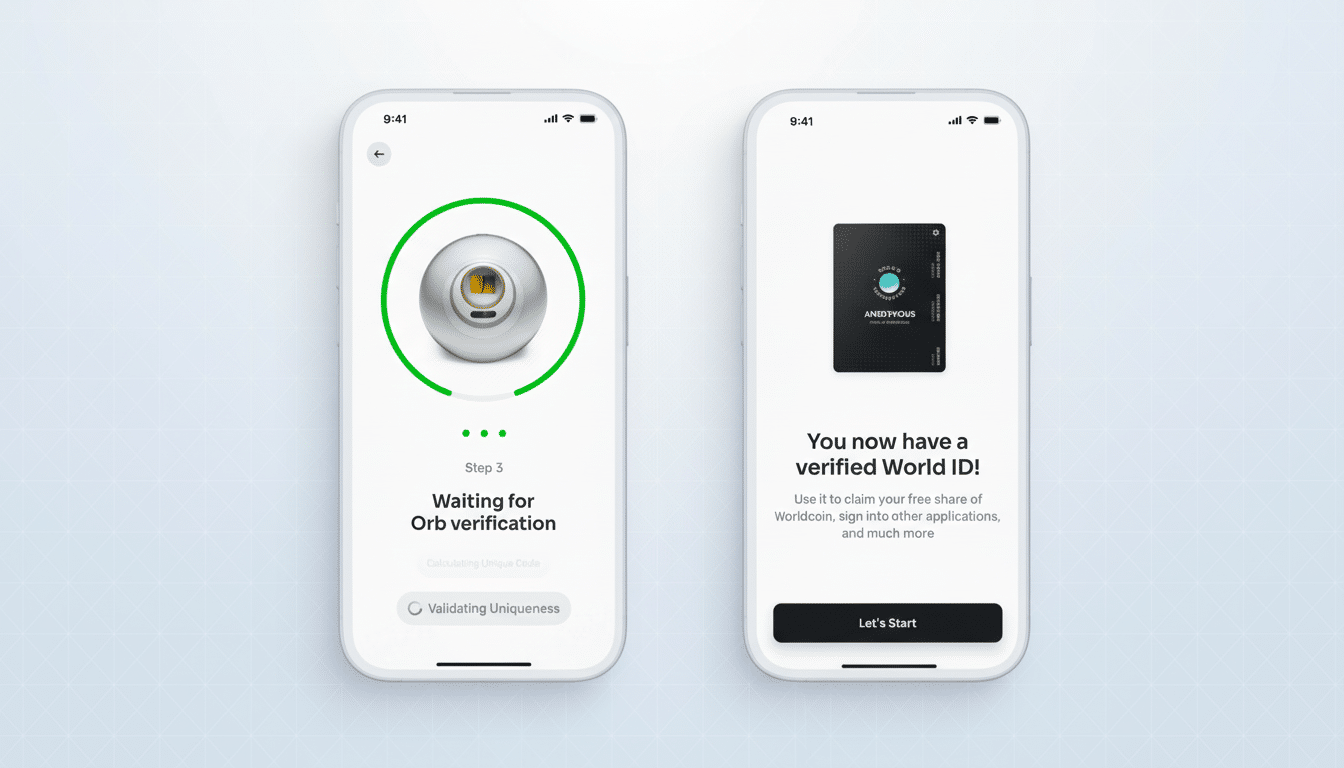
Authentication in World’s infrastructure, on the other hand, is securely handled by a privacy-preserving “iris code” generated by its Orb hardware. The company claims it does not keep raw images, but rather a proprietary cryptosystem template to prevent cloning. This proof-of-personhood layer is purpose-built for the era of A.I., when fake accounts are inexpensive to spin up and expensive to police.
Crypto Wallet With P2P Pay And Also Payroll
Previously focused on basic custody and transfers, the app’s wallet now supports Venmo-style requests and payments, as well as a way to receive your wages directly into a virtual bank account that can be converted into crypto later. Crucially, World says you don’t need a verified World ID to use payments — proving a savvy way to grow the service’s user base and reduce onboarding friction.
For the average person, the appeal is convenience: a single place to chat, split bills, and move money across borders, with an optional identity signal to get a sense of whom you’re dealing with. For merchants and creators, the incentive is lower fees and instant settlement on crypto rails. Whether World’s economics hold up at massive scale will be a question of the actual networks and partners behind the scenes, which World has not fully laid out.
Proof Of Personhood Runs Into Privacy Reality
World’s bet is that certified humanness starts to become a regular requirement as AI-generated personas spill into social apps, marketplaces, and even customer support lines. Academics and digital rights groups, including scientists recently quoted in MIT Technology Review and the Electronic Frontier Foundation, have long warned that biometric systems should keep data requests to a minimum and include privacy-minded consent.
Regulators have also been paying close attention. Data protection authorities in the European Union have reviewed biometric enrolment and transparency practices, while Kenya’s regulator suspended local operations in 2023 pending data safeguards. It says it has added enhanced disclosures and privacy controls to its use of cryptographic techniques that allow services to verify uniqueness without disclosing a user’s identity.
Adoption Outstrips Hardware Bottlenecks for Verification
Like any super app, network effects count. World has talked publicly of a grand ambition to verify a billion people, but the company concedes that it has actually verified fewer than 20 million thus far. The Orb requirement is also one heck of an anti-Sybil check — but it’s a physical bottleneck, too: every check costs time and hardware, the combination limiting growth with respect to purely software sign-ups.
That tension explains the most recent launch: beefed-up social features to drive new users, payments to promote retention, and optional identity verification to push the network toward trusted interactions one step at a time.
If the communication experience feels modern and the wallet more reliable, we might be willing to take that extra step of verification where it counts — high-value transactions, governance votes, or community moderation.
The Super App Race and What Lies Beyond Today
Internationally, WeChat is the canonical super app while Western apps have remained single-purpose: WhatsApp for messaging; Cash App or PayPal for peer-to-peer payments; Signal on privacy. Telegram has been playing around with crypto features and mini-apps but verified human identity at the protocol level is not yet solved across platforms.
World’s strategy — bundling encrypted chat, payments, and privacy-preserving authentication together — also drafts on that gap. The next round of tests are empirical: encrypted chat uptime and latency, available assets supported and cash-in/cash-out options, fraud controls for crypto P2P, and third-party security audits. Third-party developer tools, integration with existing identity frameworks, and clear data practices documentation that more easily aligns with GDPR will also be key things expert observers keep an eye out for.
If World can make it feel like verification is optional until you need it to be useful — and keep the crypto parts invisible until they need to be visible — it just might have a chance at mainstream relevance. But the company is working in one of tech’s most regulated and scrutinized corners. Execution, transparency, and continued privacy hygiene will determine whether this super app becomes a staple or a novelty.