


Workday said it has signed a definitive agreement to acquire C1.ai, an agentic identity platform, placing access controls alongside the software maker’s expanding push to deploy AI agents in HR, finance and IT workflows. The transaction, announced Oct. 13 at Workday Rising 2026, is designed to govern what both employees and automated agents can reach across Workday and other business systems.
The deal is not complete. Workday’s announcement says the agreement remains subject to customary closing conditions and is expected to close in the fourth quarter of Workday’s fiscal 2027, which ends Jan. 31, 2027. The company disclosed neither a purchase price nor other consideration, leaving investors without a direct measure of the financial commitment behind a transaction that sits at the center of Workday’s AI strategy.

Identity control becomes part of the agent rollout
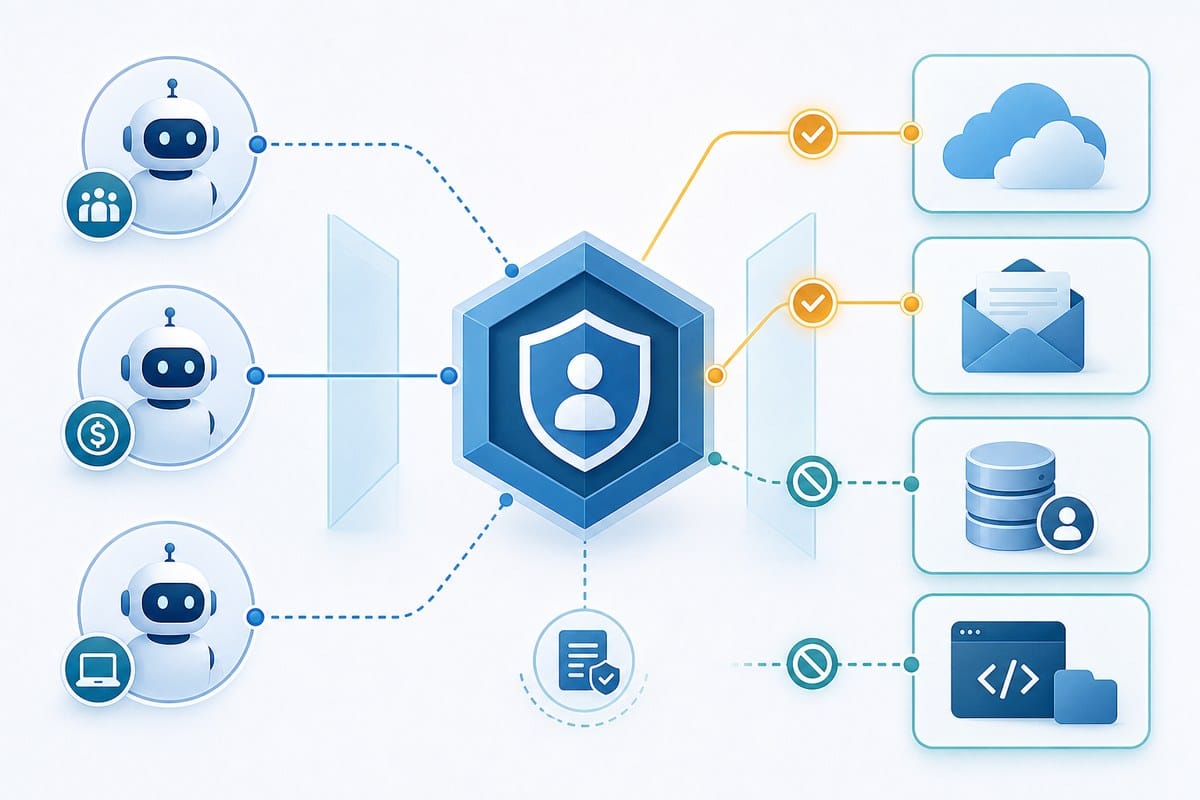
C1.ai’s intended role is to manage access to enterprise applications and data for people as well as AI agents. Workday said the platform connects identities to systems including email, customer-relationship-management software, code repositories, finance applications and cloud infrastructure. In practical terms, such a layer is meant to determine which systems an agent may enter, which data it can use and which actions it can take.
That is a different function from the agents themselves. At Rising, Workday announced Autopilot Agents, a Sana-powered Workday Home experience and tools meant to help customers build and govern their own agents, according to reporting from The Times of India. Workday said the new agents can identify work needing attention and recommend or, within customer-defined policies and approval limits, take actions.
The proposed C1.ai acquisition is therefore an effort to address the permissions problem created when an enterprise lets software act rather than merely assist. A workflow agent that can read employee records, initiate a finance process or query an external application requires permissions that can be granted, reviewed and removed. Workday’s stated goal is to extend this governance across its own applications and external enterprise systems, rather than confining agent access to a single Workday module.
Workday’s framing should be read as strategic intent, not proof of delivered outcomes. The company and C1.ai say the combination is expected to enable real-time access management for humans and agents, but the agreement has not yet closed. The available materials also do not establish product availability dates, integration details or the precise technical boundaries of the proposed combined offering.
Why the target matters to Workday
Workday has traditionally sold cloud applications for core enterprise functions, particularly human capital management and finance. Its latest announcements broaden that proposition: agents would handle portions of work inside those functions, while an identity layer would oversee their access across a wider corporate software estate. That pairing could make governance a more visible buying criterion as customers assess automation beyond narrow, isolated tasks.
The company cited C1.ai research saying 95% of large U.S. companies already run autonomous agents, and cited Deloitte research stating that 21% of organizations have a mature approach to governing AI agents. Those figures are useful indicators of the market argument being made, but they are not independent measures supplied in the transaction disclosure. Workday also has not provided figures for C1.ai revenue, customers, retention, headcount or expected revenue contribution.
For customers, the potential appeal is administrative as much as technical. Enterprises commonly operate separate identity, HR, financial, developer and cloud systems. An AI agent can cross those boundaries faster than a human workflow, increasing the need to define what access is legitimate at each step and who remains accountable for approval. Workday is arguing that identity governance can become the control plane for that activity.
The announcement refers to the target as C1.ai. A filing-summary page identifies the legal target as ConductorOne, Inc. (C1.ai), but the available disclosures do not explain whether C1.ai is a rebrand, trade name or another naming arrangement. Investors and customers should not assume more from the branding change than the companies have publicly described.
Terms, timing and unanswered financial questions
Workday expects to close the transaction before the end of its fiscal fourth quarter, subject to the stated conditions. The disclosed advisers are BofA Securities and Orrick for Workday, and Qatalyst and Ashurst Perkins Coie for C1.ai. A dated version of the announcement carries the same basic terms and confirms the Oct. 13 release date.
No disclosed consideration means the deal cannot yet be evaluated against the valuation metrics typically used in enterprise-software acquisitions, such as revenue multiples or expected cost synergies. A filing-summary page likewise identifies ConductorOne, Inc. as the target but does not provide a transaction value. Nor have the companies outlined whether C1.ai will operate as a separate product, be embedded into existing Workday offerings or be sold as an additional service.
Trade coverage has treated the transaction and agent announcements as parts of one broader event. MSSP Alert’s account similarly connected the C1.ai agreement with Workday’s agent capabilities. The commercial test will come after closing: whether customers adopt new agent functions widely enough to require a cross-system permissions layer, and whether Workday can turn that governance role into a durable part of its platform rather than a standalone acquisition.