


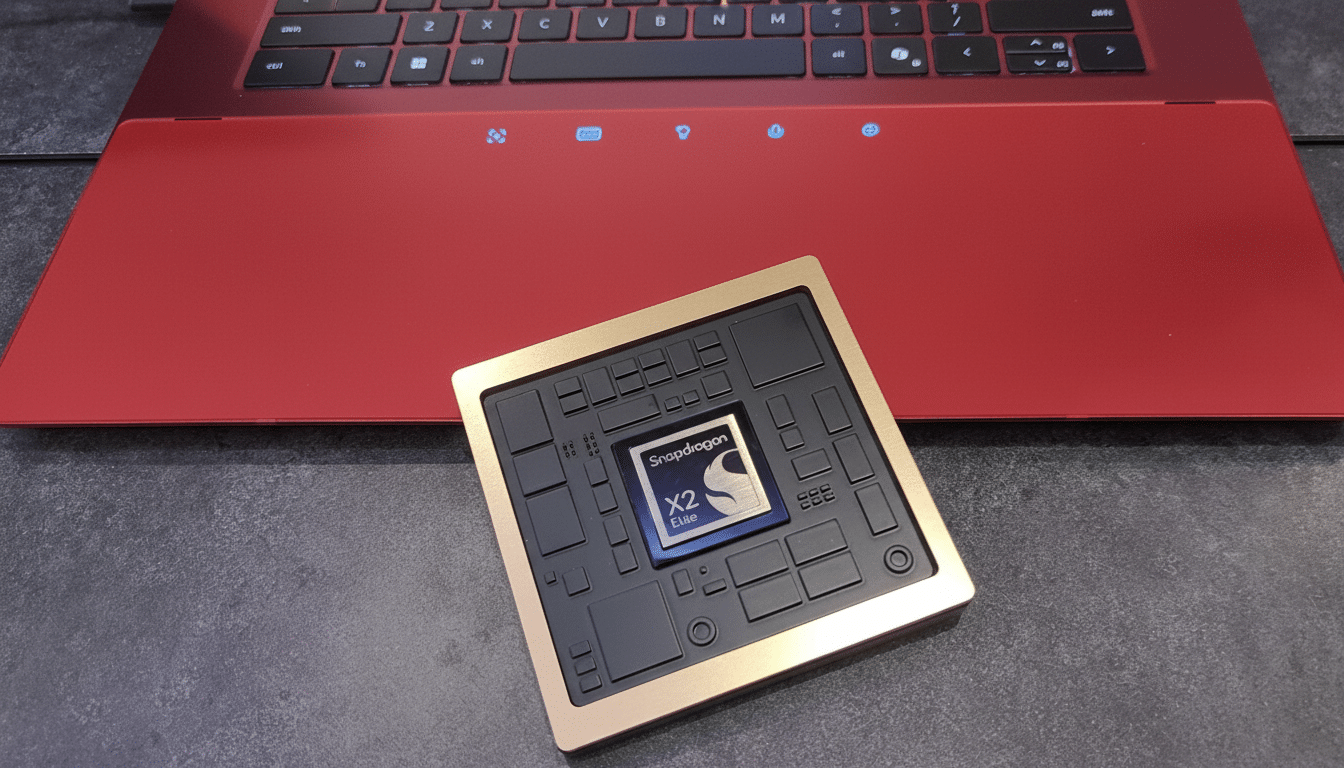
As Qualcomm’s most recent laptop silicon details itself, it looks like Windows laptops will eventually feel just as fast as Apple’s M4-based MacBook. The Snapdragon X2 Elite Extreme combines an 18-core Oryon CPU with a refreshed Adreno GPU and a next-gen 80 TOPS Hexagon NPU; early vendor benchmarks claim it can flex more multi-core compute than Apple’s latest SoCs, offer superior graphics, and on-device AI.
Why This Changes the Windows Performance Equation
Apple had for years led the way in this category when it moved from off-the-shelf Arm silicon to its own custom chips. The gap in performance between the top two solutions has been closed with Qualcomm’s second-generation X2 platform: more cores at higher frequency and larger, accelerated parameters without hitting power budgets out of the water. The third-gen Oryon CPU architecture also aims for high parallel throughput, and LPDDR5 memory keeps data flowing at power levels typical of mobile-first. That means the goal is straightforward: instead of desktop-replacing, big-ass laptops, get us some pro-class performance in a slim (friendly to fans) ultrabook design.
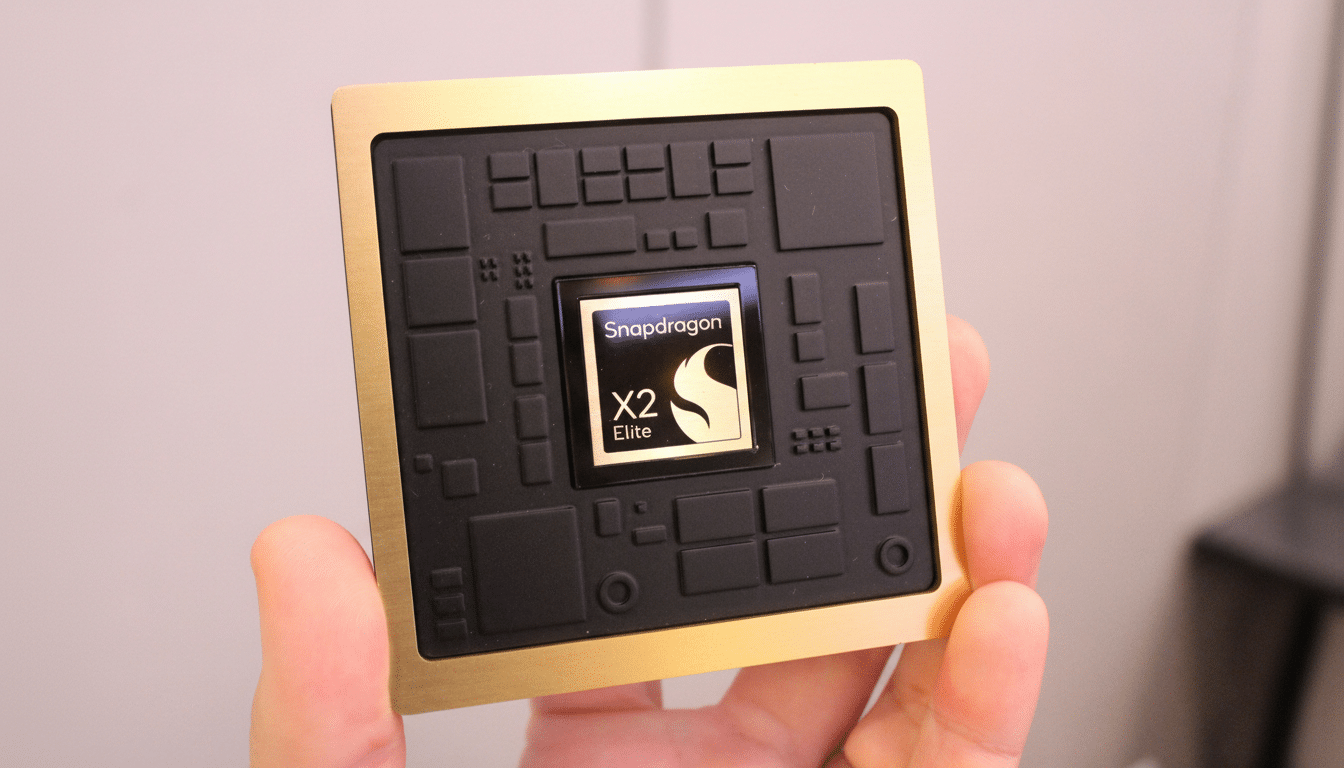
The 80 TOPS NPU also makes a difference outside of the marketing. Microsoft’s AI PC baseline is about 40+ TOPS here for on-device assistants, image generation and transcription without cloud round trips. Doubling that ceiling allows for heavier local models and multitasking — editing a 4K timeline while idly background-transcribing or super-resolving on a second screen.
The Benchmarks Qualcomm Is Citing for X2 Extreme
In Qualcomm-commissioned benchmarks, the Snapdragon X2 Elite Extreme scored 23,491 in Geekbench 6.5 multi-core, to Apple’s M4 posted results of 15,146. On the integrated side, Adreno’s score of 90.06 in Qualcomm’s comparison is ahead of M4 with its average result of 65.12. The company also posted a sizable NPU throughput gap, consistent with the X2’s 80 TOPS spec and Apple’s publicly disclosed NPU numbers in the high-30s TOPS.
Some context: these are pre-release numbers on tuned reference machines, not retail laptops. Of course, independent testing in thermally compromised cases will be the acid test. It is still the case that, if this all pans out as promised, multi-core and AI workloads should be significantly faster than on any previous Windows-on-Arm machines and with some headroom to take on Apple’s mainstream offerings.
Real-World Workflows That Could Benefit
Qualcomm is positioning the Extreme tier for “ultra-premium” PCs designed to handle data analysis, media creation and scientific workloads. That scales nicely with those jobs that can scale with cores and accelerators: multi-cam video edits, heavy code compiles, large Excel models, AI-assisted image pipelines. Assuming those benchmarks are accurate, that could mean even faster exports and smoother scrubbing without needing to push past a bigger discrete GPU.
Battery life is the X-factor. Apple’s lead is one of efficiency, not speed. The first-gen X-series laptops from Qualcomm already tested all-day stamina under mixed use; with the X2 Extreme, the additional TOPS and cores can’t be at the price of your unplugged time. I would anticipate OEMs are going to boast about “performance per watt” increases and even more assertive hybrid cooling to sustain top clocks under sustained loads.
Software Maturity Has (Finally) Caught Up
Good hardware is only as good as the native apps that make use of it. The Windows-on-Arm ecosystem has also expanded quickly: Microsoft’s Office suite, Edge and Teams are all optimized; Google Chrome is available with a native Arm build; Adobe fields Arm-native versions of key Creative Cloud applications on Windows. Pro developers like Blackmagic have been expanding native support as well, which should mean improved stability and plugin compatibility for creative pros.
For cases where native binaries don’t already exist, Microsoft’s Prism translation is also optimizing x86-64 apps, acting as a crucial safety net during a transition. Still, buyers leaning on niche plugins or drivers will want to check Arm support; Apple’s seamless transition with Rosetta showed the industry just how well translation layers work when they’re a bridge, not a forever solution.
How It Compares With Apple’s Integrated Playbook
Apple’s end-to-end integration is still the advantage here: silicon, OS and pro apps all fine-tuned under one roof. Qualcomm’s ace in the hole is diversity — many Windows OEMs can release thin-and-light machines, with different thermals, displays and prices, all using the same CPU/GPU/NPU base. If performance parity comes with competitive battery life — and all synced with the tip of a pen, no less — there’s finally some real choice again at the high end of the market.
Winners will be decided on thermals and drivers. Apple’s M-series laptops hold those high clocks quietly; Qualcomm-powered models require similarly robust cooling and GPU drivers to continue holding frame pacing and export times over long sessions. Be looking for reviews to examine sustained workloads, not just short sprints.
Bottom Line for Buyers Considering New Windows Laptops
If you’ve been on the long hunt for a Windows laptop that goes head-to-head against Apple’s M4-based machines, then Snapdragon X2 Elite processors are your first serious potential adversary. Headline numbers are good, NPU headroom is abundant, and the software side of the picture has finally started to come into focus with most major tools approaching in that time. Reserve final judgment for independent testing in shipping devices — but the direction of travel is that your next Windows PC might well be faster, smarter and just as portable as the MacBook you’ve had your eye on.