


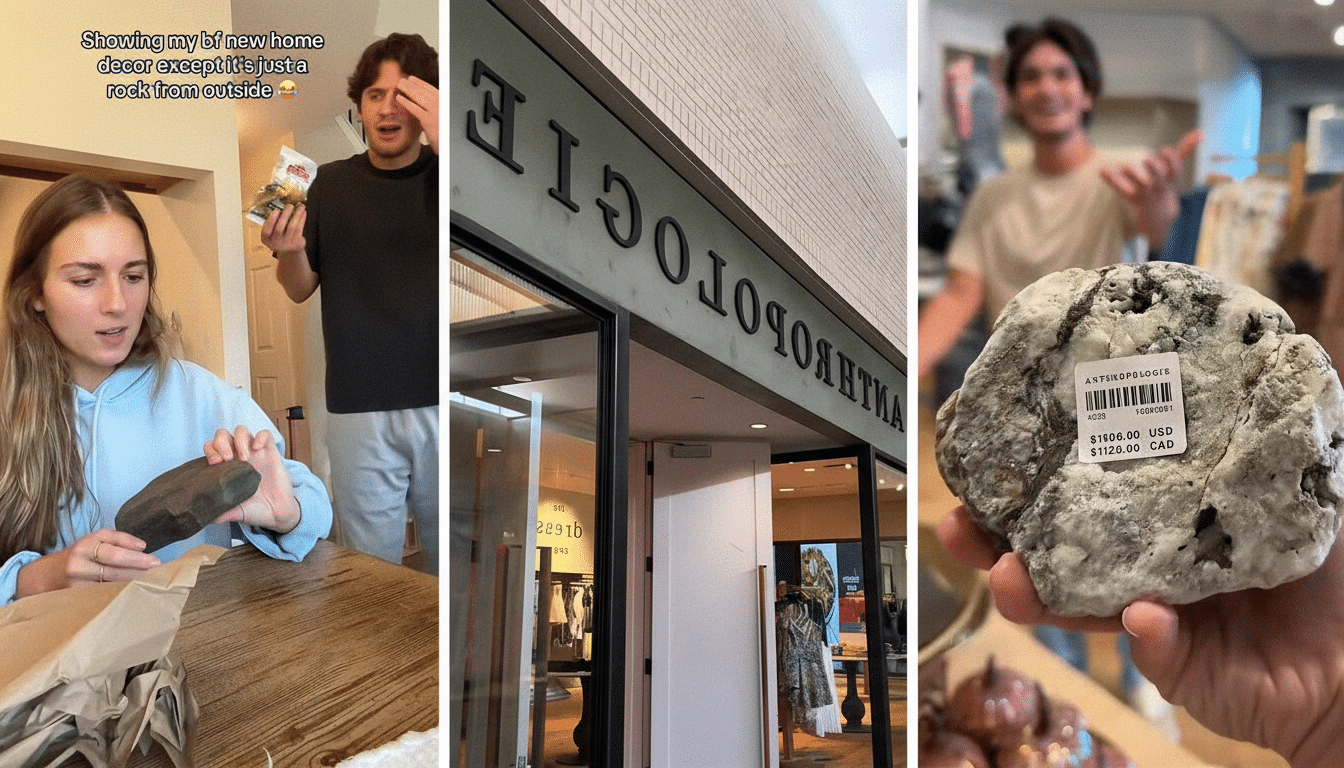
On TikTok and Instagram just about anything can be made into must-see spectacle. The latest object of obsession? “Anthropologie rocks,” listed at $1,000. What began as prank-like unboxings (and partner reactions) turned into a snowballing joke as the brand embraced its own bit, down to in-store theatrics. It’s a joke, but it’s also a felicitous case study of how short-form video, price outrage and brand self-awareness conspire to cultural currency.
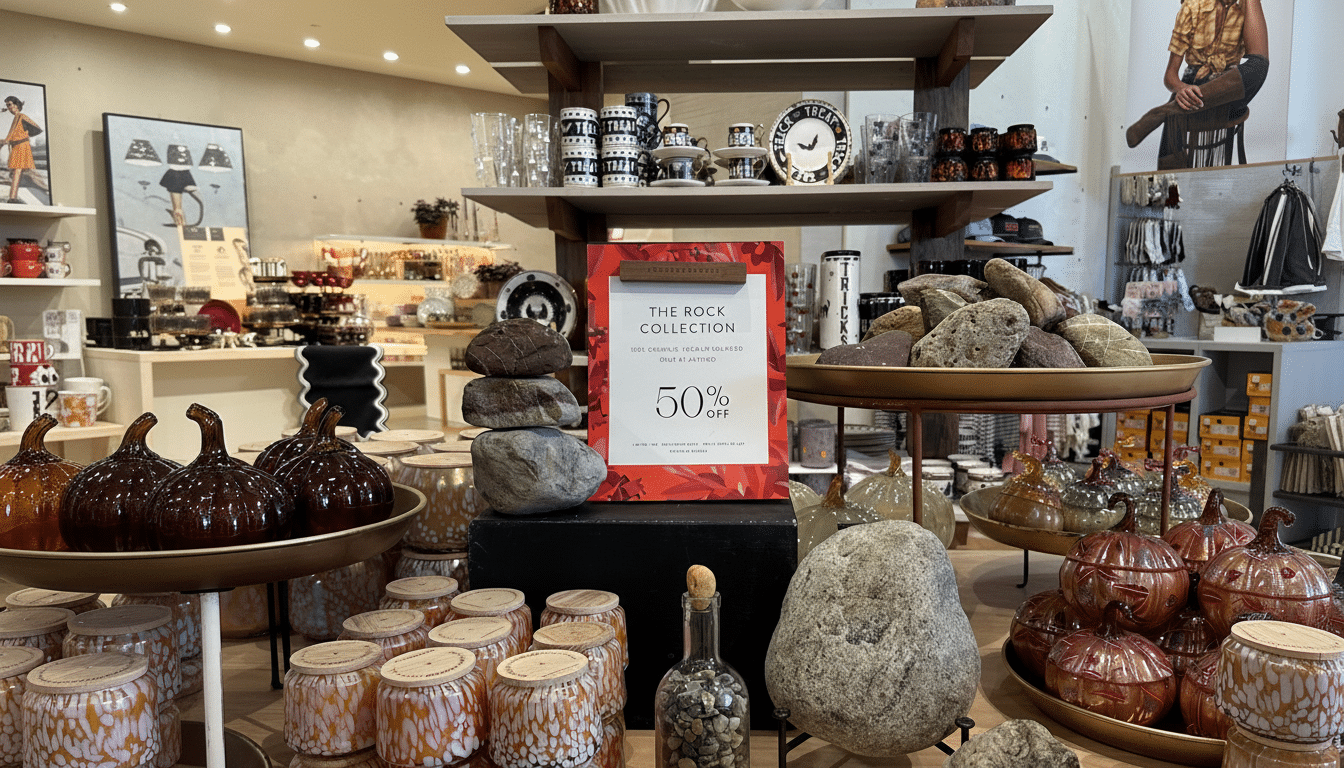
The spark: Its creator, Phoebe Adams, a former intern at The New Yorker, shared (in a tongue-in-cheek way) on social media an unboxing video of the rock she claimed to have purchased from Anthropologie, setting off a meltdown from her partner. A follow-up, taken in a store, clicked on tongue-in-cheek signs and stones with four-figure price tags. The gag was so believable that viewers willingly suspended disbelief — and then passed it along. The original clips captured well over 10 million views, and inspired all manner of copycats across TikTok and Reels.
A prank crafted around plausible pricing
(This one worked because it was real.) For years, Anthropologie has hawked high-markup decorative objects: geode bookends, petrified wood slabs, iron sculptures and “objet” pieces that can soar to the hundreds or more. That history set up the ideal price anchor: a $1,000 rock was laughable but not inconceivable, which is exactly why the punch line worked.
Retail analysts refer to this as the “plausibility gap” — and it’s a short enough reach from reality for viewers to buy into the act. Luxury and lifestyle brands do this all the time with pieces that telegraph taste more than they do utility. When a brand’s aesthetic is whimsical, the ceiling for “sure, why not?” pricing gets higher.
There’s also the wellness-adjacent backdrop. Mineral decor and crystals are still flowing through home feeds — the afterglow of trend cycles set in motion by celebrity wellness brands and design influencers. In that world, a fancy rock is practically a trope.
Why the bit plays so well on TikTok and Reels
Short-form algorithms favor content that gets comments and rewatches. A $1,000 rock (to throw, at least) presses five different buttons of engagement: surprise; humor; a dramatic reaction shot; and — bonus feature here — a clear call for debate (“Would you pay for this?”). It’s easily digestible suspense that leaves viewers sticking around through to the end and into the comments.
The format is inherently remixable. Pretty much anyone can find a stone, press record and pull off the reveal. That combination of low threshold to involvement and high novelty value is a classic recipe for virality. TikTok boasts upwards of a billion monthly users, and Meta has claimed that Reels increased the amount of time spent on Instagram by more than 20 percent after it was introduced — all followed by evidence that short-form is clearly where trends scale fastest.
Crucially, the trend obliterated the distinction between a store and online. And when staff members played along on camera — ushering a shopper to a “rock” display with cheeky markdown signs — it made the joke feel sanctioned. Brand-approved participation is a signal to viewers: this is fun, not cringe.
Earned media math: when brands lean into the joke
What appears to be chaos is actually savviness. With the co-sign of the meme, the brand turned potential mockery into reach. The measurement companies like CreatorIQ and Launchmetrics consistently find that creator-led, brand-participation moments result in six- to seven-figure earned media value when a concept goes from platform to platform. This one hits all the right notes: lots of user-generated content, cross-posting to Reels and an easily repeatable script.
There’s precedent. Companies like Duolingo, Ryanair and Scrub Daddy have built followings by embracing absurdist humor on TikTok. The lesson: In an attention economy in which authenticity and speed trump polish, being in on the joke can be more successful than a paid campaign.
The psychology behind the $1,000 sticker shock
Price angst is shareable. Social feeds are currently negotiating “quiet luxury” visuals with “loud budgeting” narratives — the push-pull, then, between desire and temperance. Much of that tension is crystallized in a single frame by the $1,000 rock: It’s both a status object and, at once, a spending sin. The comments reduce to an audience ‘comment pile-on’ in which the audience’s values are projected onto the film, and distribution is only fueled.
There’s also the trust test. People like catching a brand shamelessly overpricing and they also like when the brand has a sense of humor, too. That oscillation — outrage to relief — makes for a satisfying narrative arc in less than 30 seconds.
So, can you actually buy a $1,000 rock anywhere?
No. There’s no corporate listing for a four-figure pebble, as featured in the prank videos. The signage and tags are part of the joke. That said, similar mineral specimens are known to sell at specialty retailers and galleries for thousands (and even mainstream stores occasionally offer stone decor that fetches into the high hundreds). The sticker is not impossible; it simply isn’t real here.
The believability is the point. It’s what makes the satire feel like reportage and turns the comments into a running focus group on what consumers believe decor should cost.
What this trend means for retail and marketers now
“Attention is its own SKU.” A silly stunt went further than dozens of paid placements, not only driving foot traffic in the real world as people went to stores to “look for the rocks.” For marketers, the lesson is not to create phony products but rather to know where your brand’s persona generates a plausibility gap that could be worth exploring — then act quickly, invite participation and measure the upside.
For consumers, the saga makes a good media literacy lesson: if something seems outlandish, that’s perhaps because it is. But if it skews only a little wild, it could easily be sold out by the weekend.