


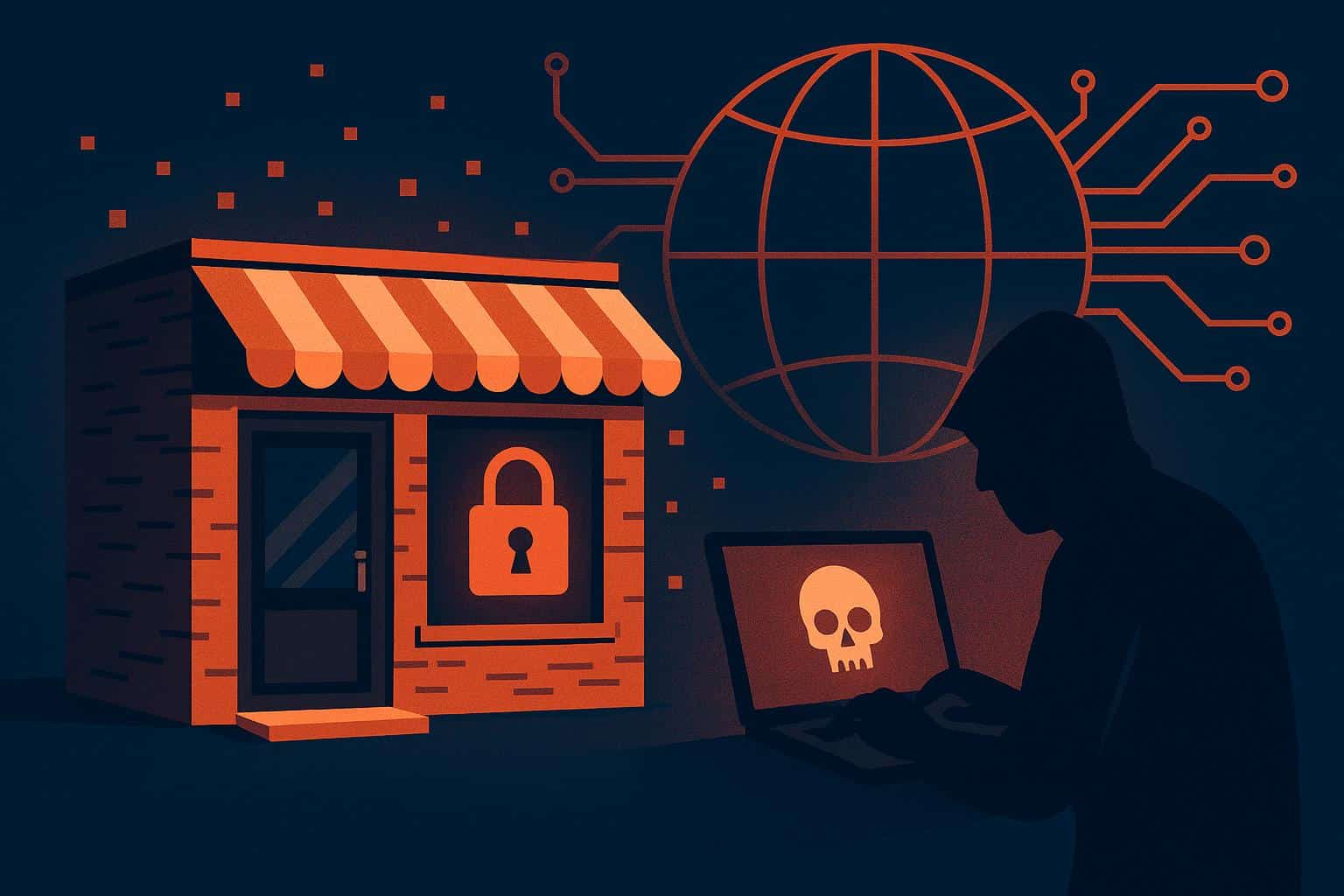
For years, small businesses operated under the assumption that cybercriminals focused primarily on large enterprises with deep pockets and vast amounts of data. That assumption no longer holds. Today, small businesses are among the most frequently targeted victims of cybercrime, facing growing risks that threaten their operations, finances, and long-term survival.
Cybercriminals are not necessarily chasing the biggest organizations. Instead, they are looking for the easiest ones to exploit.
- Small Businesses Are No Longer Overlooked
- Limited Security Resources Create Opportunity
- Phishing and Credential Theft Drive Many Attacks
- Ransomware Has a Disproportionate Impact on Small Firms
- Growing Digital Dependence Increases Exposure
- Why the Trend Is Likely to Continue
- Understanding Risk Is the First Step
- The Business Consequences of a Cyber Incident
- Supply Chain and Partner Risk
- The Importance of Preparedness and Planning
Small Businesses Are No Longer Overlooked
Industry research consistently shows that small and mid-sized organizations account for a significant share of cyberattack victims. The Verizon Data Breach Investigations Report has repeatedly shown that attackers frequently target smaller organizations because they often lack mature security controls and detect intrusions more slowly.
Limited Security Resources Create Opportunity
One of the primary reasons small businesses are attractive targets is the lack of dedicated cybersecurity resources. Many operate without in-house security teams, formal incident response plans, or regular risk assessments. The U.S. Small Business Administration has noted that many small firms underestimate cyber risk and delay security investments until after experiencing an incident.
Without continuous monitoring, patch management, and structured response processes, even basic attack techniques can be highly effective against smaller organizations.
As cyber risks continue to rise, many small businesses are reassessing how they manage technology and security on a day-to-day basis. Without dedicated in-house expertise, maintaining consistent monitoring, patching, and incident response can be difficult, particularly as IT environments grow more complex. In this context, Managed it services are often used as an operational support model to help organizations maintain baseline security controls, improve visibility across systems, and respond more quickly to emerging threats without significantly expanding internal staff.
Phishing and Credential Theft Drive Many Attacks
Phishing remains one of the most common entry points for cybercrime targeting small businesses. According to data published by the FBI’s Internet Crime Complaint Center, phishing and credential theft continue to rank among the leading causes of financial loss for small organizations.
Once credentials are stolen, attackers can escalate access, deploy ransomware, or exfiltrate sensitive data with minimal resistance.
Ransomware Has a Disproportionate Impact on Small Firms
While ransomware affects organizations of all sizes, small businesses often suffer the most severe consequences. IBM’s Cost of a Data Breach Report highlights that recovery costs driven by downtime, lost productivity, and response efforts often exceed ransom demands, particularly for smaller organizations.
Growing Digital Dependence Increases Exposure
Small businesses are more digitally connected than ever. Cloud services, remote work, online payments, and third-party platforms are now essential to daily operations. While these technologies improve efficiency, they also expand the attack surface.
Misconfigured cloud services, weak access controls, and unsecured remote access tools are commonly exploited during cyber incidents.
Why the Trend Is Likely to Continue
Cybercrime targeting small businesses is unlikely to slow down. Attack tools continue to become more automated and accessible, lowering the barrier to entry for attackers. At the same time, economic pressure and skills shortages make it difficult for small firms to prioritize cybersecurity investment.
As long as small businesses remain digitally dependent but under-protected, they will continue to represent attractive targets for cybercriminals seeking fast, scalable returns.
Understanding Risk Is the First Step
While small businesses face unique challenges, awareness is a critical first step toward resilience. Understanding why they are targeted helps business owners and leaders take informed steps to reduce exposure, improve preparedness, and protect their operations in an increasingly hostile digital environment.
The Business Consequences of a Cyber Incident
Beyond the immediate technical impact, cyber incidents often trigger long-term business consequences for small organizations. Data breaches can erode customer trust, disrupt supplier relationships, and expose businesses to regulatory scrutiny. For smaller firms that rely heavily on reputation and repeat customers, even a single incident can have lasting effects that extend well beyond the initial recovery period.
Financial strain is another major factor. Incident response, legal fees, customer notification requirements, and system restoration can quickly consume limited budgets. In many cases, these costs arrive unexpectedly and without the financial buffers available to larger enterprises. This financial shock can stall growth initiatives, delay hiring, or force businesses to divert resources away from core operations.
Supply Chain and Partner Risk
Small businesses are increasingly interconnected with larger organizations through digital supply chains. Vendors, contractors, and service providers often have access to sensitive systems or data. When a small business is compromised, the impact can ripple outward, affecting partners and customers alike.
This interconnectedness has drawn greater attention from regulators and larger enterprises, which are beginning to scrutinize the security posture of smaller partners more closely. As a result, cybersecurity is no longer just an internal concern for small businesses but a factor that can influence partnerships, contracts, and long-term viability.
The Importance of Preparedness and Planning
While resource constraints are real, preparedness remains one of the most effective ways for small businesses to reduce cyber risk. Basic steps such as defining incident response roles, backing up critical data, enforcing strong authentication, and educating employees can significantly limit damage when incidents occur.
Cybersecurity does not require perfection, but it does require intention. Small businesses that acknowledge their exposure and take incremental steps toward resilience are better positioned to withstand attacks and recover more quickly when incidents happen.