


The modern office sounds very different from the workplace many people knew a decade ago. Open-plan layouts, constant video calls, and flexible work patterns have increased interaction, but they have also introduced new challenges.
As you rethink how people use office space, managing sound now plays a much larger role in creating an environment where employees can work effectively and comfortably.
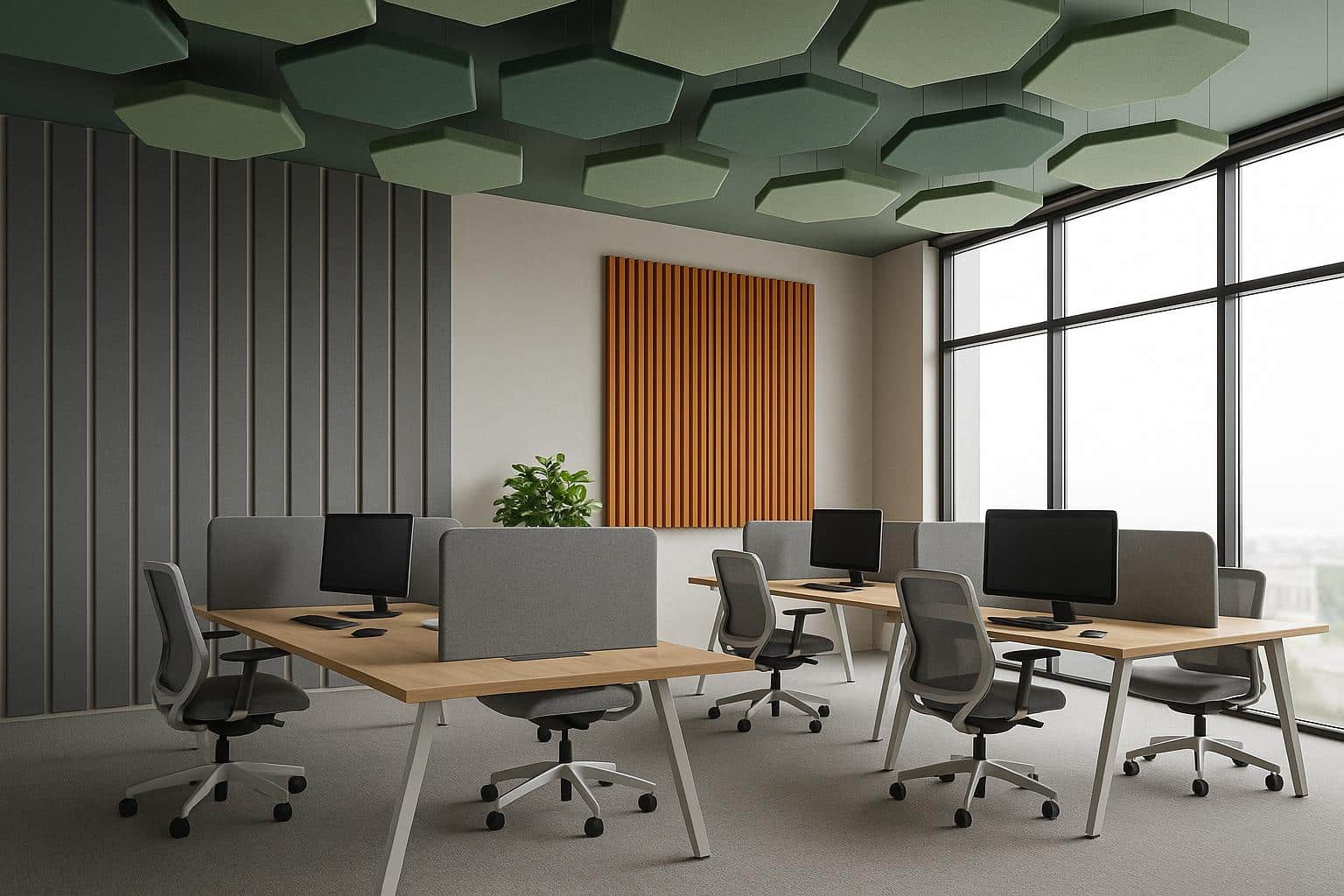
The growing impact of workplace noise on productivity
Noise affects more than comfort. Employees who struggle to hear conversations or block out distractions often lose focus and spend extra time returning to complex tasks. In an open office, a nearby discussion or a ringing phone can interrupt concentration repeatedly throughout the day.
Communication can suffer as well. Team members may misunderstand information when background sounds compete with conversations. Employees also tend to have higher frustration levels when they cannot find a suitable place for focused work or confidential discussions.
You can identify common noise sources by observing how different spaces function throughout a typical workday. This process helps reveal where sound-related issues create the greatest disruption.
Why hybrid work is changing acoustic requirements
Remote and hybrid work patterns have changed how people use the office. Employees increasingly visit the workplace for collaboration, meetings, and team activities while reserving individual tasks for quieter settings. As a result, offices must support both interaction and concentration within the same footprint.
Many organizations now create distinct zones for different activities. Collaborative areas encourage discussion and brainstorming, while dedicated focus spaces provide quieter environments for work that requires sustained attention. Private rooms also support virtual meetings without disturbing nearby colleagues.
Acoustic design as part of employee wellbeing and indoor environmental quality
Organizations increasingly evaluate workplaces through the broader lens of indoor environmental quality. Alongside lighting, air quality, and temperature, sound conditions influence how people experience a space each day.
Poor sound control can contribute to stress and mental fatigue. By contrast, a well-balanced environment allows employees to communicate clearly without constantly raising their voices or searching for quiet corners. For example, a customer service team may perform better when conversations remain intelligible without overwhelming the surrounding workspace.
Assess workplace conditions and include sound performance alongside other environmental factors rather than treating it as a separate concern.
Design strategies for creating better acoustic environments
Effective solutions combine the right materials, layout decisions, design elements, and technology. Sound-absorbing surfaces reduce echoes and help contain noise within specific areas. Products such as acoustic wall panels and ceiling tiles can significantly improve speech clarity in busy offices.
Space planning also matters. Designers often position collaborative zones away from focus areas and use enclosed rooms for private conversations. Some workplaces add sound masking systems that introduce low-level background noise, making nearby conversations less distracting.
The most successful workplaces do not eliminate interaction. Instead, they create conditions where employees can easily switch between teamwork and concentrated work without unnecessary disruption.