


When a jackknifed truck causes a multi-car pileup, the trucking company and its insurer may bear a significant share of the injury costs. However, other parties, such as a cargo loader, a repair shop, or another negligent driver, may also be held responsible, depending on their role in the crash.
Determining who pays for a pileup can be complicated because each collision in the chain may have a different cause. Insurers may dispute who triggered the initial crash, whether other drivers contributed to subsequent impacts, and how responsibility should be divided among the parties involved.
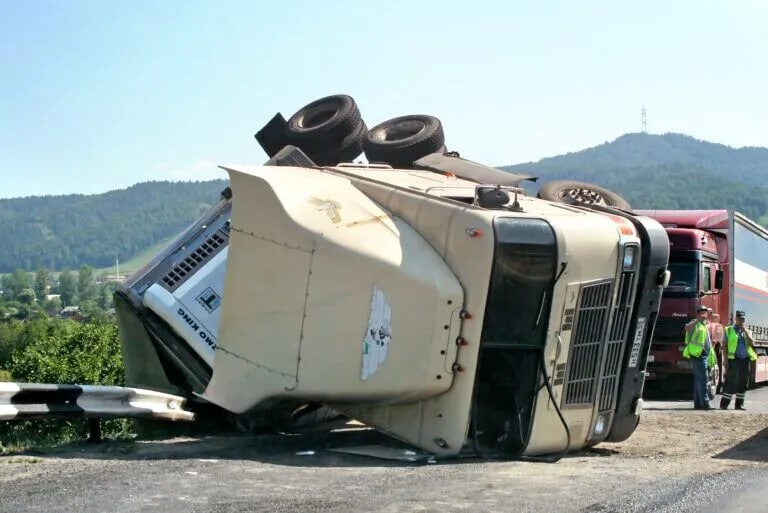
For anyone injured in a jackknife collision, the key question is how fault gets divided among everyone involved. That answer decides which insurance policies pay and how much each one covers.
What Makes a Jackknife Crash Different?
A jackknife happens when a truck’s trailer swings out and forms a sharp angle with the cab, like a folding pocketknife. The trailer can block several lanes at once.
Cars behind the truck often have no room to stop. This is how one jackknife becomes a pileup.
Common causes include:
- Hard braking at high speed
- Taking curves too fast
- Wet, icy, or slick roads
- Worn brakes or poor maintenance
- Unbalanced or poorly secured cargo
Who Can Be Held Responsible?
Several parties may share liability in a pileup. Each one usually carries its own insurance.
The Truck Driver and Trucking Company
A driver who was speeding, tired, or distracted is often at fault. In most cases, the trucking company is also responsible for a driver’s actions on the job under a rule called vicarious liability.
Federal rules hold commercial drivers to a high standard. Under 49 CFR 392.14, drivers must use extreme caution and reduce speed when snow, ice, fog, rain, or similar conditions affect visibility or traction.
Cargo Loaders and Shippers
A shifting load can throw a trailer off balance. Under 49 CFR 393.100, cargo must be secured so it does not shift in a way that hurts the truck’s stability, and a loading company that broke this rule may share the blame.
Repair Shops and Parts Makers
Faulty brakes, tires, or couplings can cause a driver to lose control. An outside repair shop or a parts manufacturer may be liable if a defect or poor repair caused the crash.
Other Drivers in the Pileup
Not every injury comes from the truck. A driver who was following too closely or speeding may be responsible for a second impact that caused added harm.
How Fault Is Divided Among Multiple Parties
Most states use some form of comparative fault. This means each party pays based on its share of the blame.
For example, a jury might find the trucking company 70% at fault and a speeding car driver 30% at fault. The injured person’s damages would then be split along those lines.
A few states bar recovery if the injured person was even slightly at fault.
How Much Insurance Do Trucks Carry?
Trucks carry far more coverage than passenger cars. Under 49 CFR 387.9, interstate carriers hauling general freight must carry at least $750,000 in liability coverage, and some hazardous loads require up to $5 million.
In a large pileup, that limit may be split among many injured people, so other policies often matter too.
Steps to Take After a Jackknife Pileup
The first days after a pileup can shape an injury claim. These steps help protect both your health and evidence.
- Get medical care right away, even if injuries seem minor.
- Request a copy of the police crash report.
- Photograph the scene, vehicles, road conditions, and injuries.
- Collect names and contact details for drivers and witnesses.
- Ask that the truck’s electronic data and driver logs be preserved.
- Keep records of medical bills, lost wages, and repair costs.
Common Mistakes That Weaken Injury Claims
Small errors can reduce or delay payment.
- Assuming only the truck driver can be responsible
- Giving recorded statements to insurers too early
- Accepting a first offer before knowing the full cost of injuries
- Missing legal filing deadlines
Key Takeaways
- The trucking company and its insurer often pay most injury costs in a jackknife pileup.
- Cargo loaders, repair shops, and other drivers may also share liability.
- Under 49 CFR 392.14, truck drivers must slow down in hazardous conditions.
- Most states divide payment based on each party’s percentage of fault.
- Interstate freight carriers must carry at least $750,000 in liability coverage.
- Quick action helps preserve key evidence like truck data and driver logs.