


Several parties can be held liable in a jackknifed truck accident, such as the truck driver, the trucking company, maintenance providers, cargo loaders, vehicle owners, manufacturers, and sometimes government agencies, depending on what caused the crash.
Truck accidents involving large commercial vehicles are rarely simple because many people and businesses play a role in keeping a truck safely on the road. When a trailer swings out of control and causes a serious collision, investigators look beyond just the person behind the wheel.
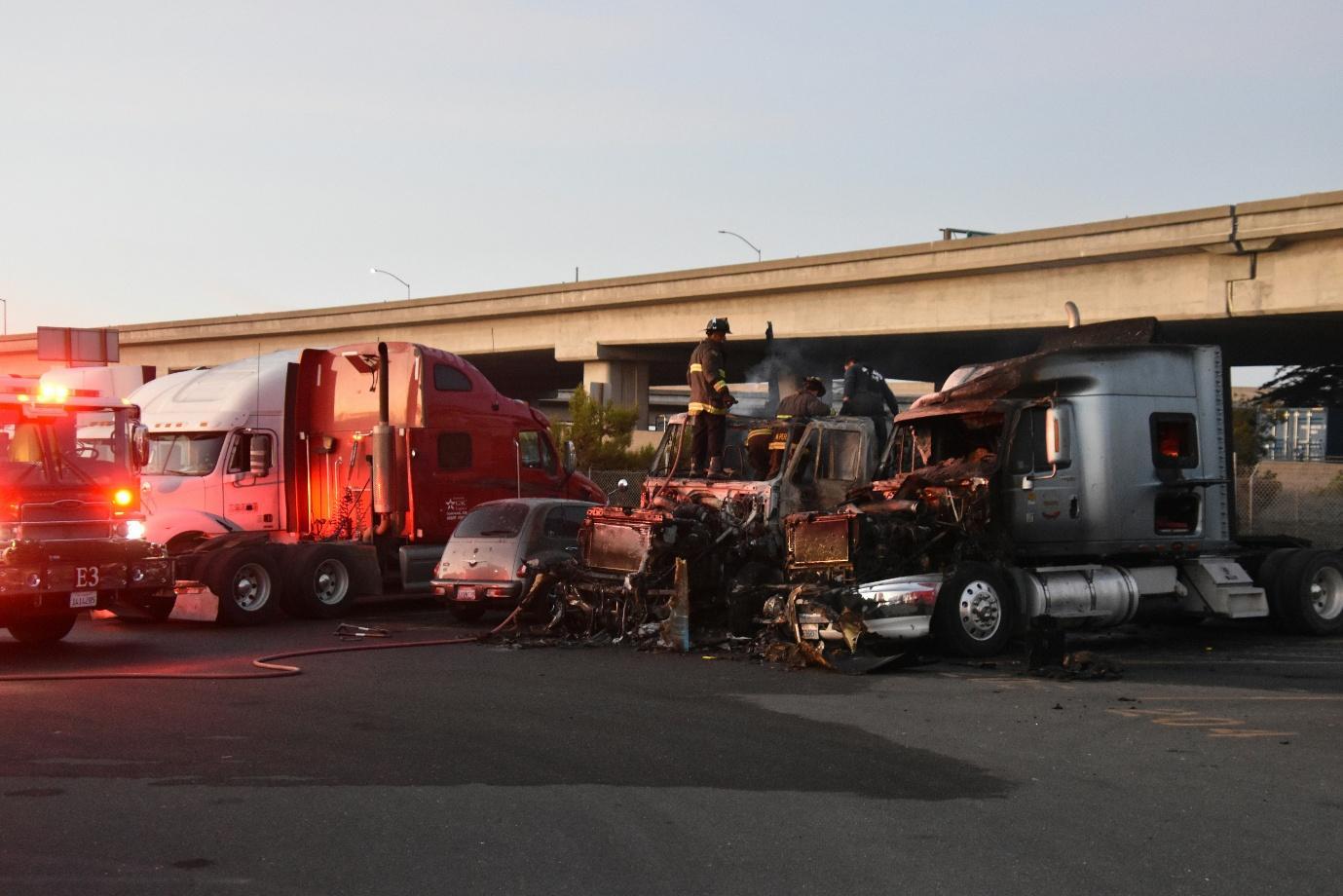
Understanding who may be responsible for a jackknife type of accident is important for victims seeking compensation after a devastating trucking accident.
What Is a Jackknife Truck Accident?
A jackknife accident happens when a large commercial truck’s trailer swings outward and forms an angle with the cab, similar to how a folding knife bends at its hinge. This loss of alignment often causes the driver to lose control, blocking multiple lanes of traffic and triggering serious multi-vehicle collisions.
Because these crashes can involve several vehicles at once and create widespread roadway hazards, they are considered among the most dangerous types of commercial truck accidents in the United States.
Parties That Can Be Liable
The Truck Driver
The truck driver is often the starting point of any investigation. Commercial drivers must operate massive vehicles safely under changing traffic and weather conditions.
A driver may be held liable if they
- Were speeding or driving aggressively
- Braked suddenly or improperly
- Drove while fatigued or exceeded hours-of-service limits.
- Used a phone or drove while distracted
- Operated the truck under the influence
Because jackknife accidents commonly occur during sudden braking or loss of traction, driver behavior is closely examined.
The Trucking Company
Trucking companies frequently share responsibility for accidents involving their drivers. Under U.S. legal principles, employers can be held accountable for actions taken by employees while performing job duties.
A trucking company may be liable if it:
- Failed to train drivers properly
- Encouraged unsafe delivery deadlines
- Ignored prior safety violations
- Allowed poorly maintained trucks to remain in service
- Failed to follow federal safety regulations
Sometimes company pressure or poor safety culture contributes more to the crash than driver error itself.
Truck Owners and Leasing Companies
In many cases, the company operating the truck does not actually own it. Leasing arrangements are common throughout the trucking industry.
If the vehicle owner neglected maintenance responsibilities, such as replacing worn brakes or unsafe tires, they may share liability for the accident. Mechanical failures are a major factor in many jackknife crashes.
Maintenance and Repair Providers
Commercial trucks require constant inspection and servicing. When third-party repair companies perform negligent work, they can become legally responsible for the accident.
Examples include:
- Brake systems failing after improper repair
- Tires installed incorrectly
- Missed safety defects during inspections
Maintenance records often provide critical evidence in trucking accident claims.
Cargo Loading Companies
Improper cargo loading is one of the most overlooked causes of jackknife accidents. An unbalanced trailer can shift weight suddenly during braking, causing the trailer to swing sideways.
Cargo loaders may be liable if they:
- Overloaded the truck
- Failed to secure freight
- Distributed weight unevenly
Federal cargo securement regulations exist specifically to prevent these dangerous situations.
Manufacturers of Trucks or Parts
Not every accident is caused by human error. Sometimes defective equipment plays a role.
Manufacturers may be held liable when:
- Braking systems malfunction
- Tires fail due to defects
- Steering or stability systems fail
These cases fall under product liability law, allowing injured victims to pursue claims against equipment makers.
Government Agencies
In certain circumstances, government entities responsible for roadway design or maintenance may also share fault.
Possible examples include:
- Poorly designed highway exits
- Missing warning signs
- Dangerous construction zones
- Roads left unsafe due to lack of maintenance
Claims against government agencies usually involve special legal rules and strict filing deadlines.
Key Takeaways
- Liability in a jackknife truck accident often involves multiple parties.
- The truck driver may be responsible for negligent driving actions.
- Trucking companies can be liable for unsafe policies or lack of supervision.
- Vehicle owners and maintenance providers may share fault when equipment failure contributes to the crash.
- Cargo loading errors frequently lead to loss of trailer control.
- Manufacturers can be held responsible for defective truck parts.
- Government agencies may be liable when unsafe road conditions play a role.