


I spent a whole day living inside Meta’s new Vibes feed, the company’s infinite-scrolling feed of AI-generated videos from creators. It is slick and searchable, bingeable in the way only algorithmic video can be. It’s also the most pronounced iteration yet of the “infinite slop machine” critique of the internet: hypnotic motion, minimal meaning.
What Vibes Is and Why It Hooks You So Quickly
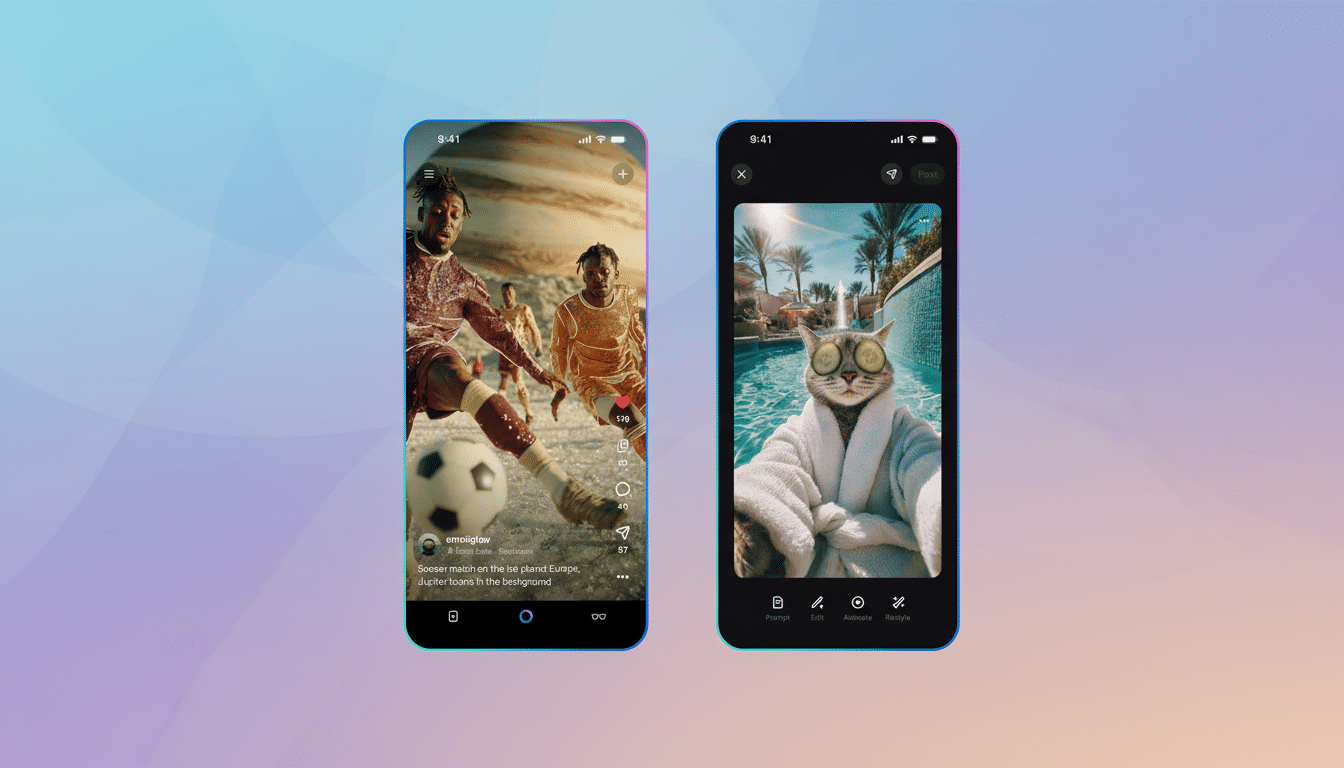
Vibes is a curated, mobile-first collection of short AI clips you swipe through at velocity. Many of them are dreamy vignettes assembled from text prompts, paired with licensed tracks and a recognizable interface reminiscent of Reels or TikTok. Think pastel pets in impossible rooms, neon cityscapes swooshing across the camera or photoreal road trips that evaporate mid-turn.
- What Vibes Is and Why It Hooks You So Quickly
- Eye Candy With No Backbone in Meta’s Vibes AI Video Feed
- The Tech Is Sound, but Its Visual Logic Still Falls Short
- The Attention Economy Remains Keen on Algorithmic Slop
- Where Vibes Leaves Creators: Opportunity and Trap
- Safety, Provenance, and Trust Will Decide Vibes’ Future
- The Verdict After One Long Scroll Through Vibes
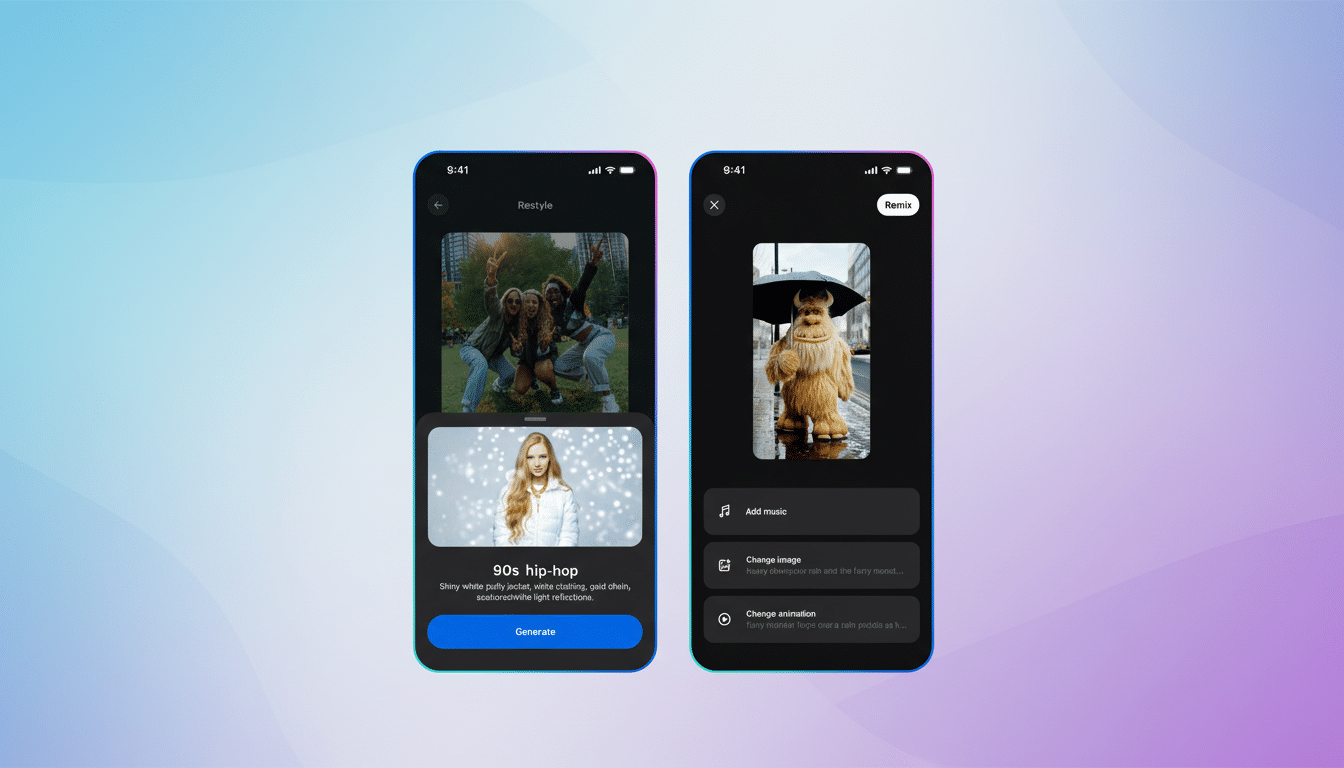
The loop is intentional. Swipe, get a hit of dopamine, swipe again. Meta has spent years honing this cadence; the company says Reels tops hundreds of billions of plays a day across its apps, and Vibes borrows that cognitive muscle memory. The more you consume, the finer a feed becomes that can keep you consuming.
Eye Candy With No Backbone in Meta’s Vibes AI Video Feed
What is remarkable here is just how fast novelty plateaus. The footage is often stunning, yet its narrative element is scant. The best music videos, even the most abstracted, establish a thread — tension or causality or payoff. A lot of Vibes clips are like one-off auditions for stories that never materialize.
Cognitive science can help explain why that’s important. As human beings, we encode and remember information more effectively if it’s formatted as a story, with a plot, goals and obstacles. Scholars like Jerome Bruner argued decades ago that narrative is a fundamental mode of cognition. For now, Vibes is a flood of moments with nothing to tether those memories.
The Tech Is Sound, but Its Visual Logic Still Falls Short
It’s also obvious the distance AI video has traveled. The overt tells — extra fingers, twisted faces — are less common in this curated collection. The skin textures, reflections and camera movements are significantly better than last year’s generation of models.
But motion logic itself cannot hold up under scrutiny. Liquids move irregularly, occlusion shatters once characters have walked through it, and continuity winks on and off between frames. These are the hard problems — causality and persistence — that model families like Runway’s Gen-3, Luma’s Dream Machine, and OpenAI’s Sora are taking on: The last had longer, more coherent scenes in its research demos.
The other tension is resemblance. Some clips rely on lookalikes of public figures or iconic scenes. Meta has pledged to label AI-produced media, and it endorses industry provenance standards such as C2PA’s Content Credentials, but attribution and consent get complicated when models are capable of merely synthesizing a style or face with the gentle telescoping of prompt engineering.
The Attention Economy Remains Keen on Algorithmic Slop
Short-form video is the heavyweight champion of the attention market. Data.ai writes that TikTok is the leader in time spent per user worldwide, and both Instagram and YouTube have reorganized their surfaces around quick clips. According to Pew Research Center, around a third of U.S. adults regularly see news on Facebook, and TikTok has emerged as a fast-growing source of news among younger adults.
AI turbocharges this in that it drives costs of production to zero. But if anyone can cut as much decent-looking footage as they want, the bottleneck becomes discovery. Feeds skew in the direction of whatever helps to maximize watch time, which … usually translates to safe spectacle over risky storytelling. That’s the formula for “slop”: high gloss, low stakes, nothing after.
Where Vibes Leaves Creators: Opportunity and Trap
Vibes is opportunity and trap for creators. It’s a new storefront and an on-ramp, perhaps, to Meta’s huge distribution. But if the ranking system promotes clip-level novelty, creators are going to pursue prompts that pop for two seconds rather than arcs that land at 20 or 60.
And the antidote is not more parameters; it’s structure. Multi-shot timelines, character memory between shots and across scenes, and basic beat sheets would elevate Vibes from gallery wall to storyboard. Some competitors are inching there. Dream Screen on YouTube is testing out generative backgrounds for Shorts and research models are integrating scene graphs and editing knobs that preserve cohesion between cuts.
Safety, Provenance, and Trust Will Decide Vibes’ Future
The provenance of these feeds will decide whether they scale responsibly. Strong adoption of Content Credentials, visible “made with AI” disclaimers, and consistent regulation around deepfakes are table stakes. Regulators in the U.S. and Europe are pressuring platforms to show their work on transparency and risk mitigation; Vibes will be a test case for how that plays out in a hyper-visual format.
The Verdict After One Long Scroll Through Vibes
Vibes is a Hall of Mirrors — technically stunning, emotionally ephemeral, endlessly refillable. If Meta intends to maximize idle minutes, then mission accomplished. If the aim is to make AI video an essential part of the mix, it needs narrative scaffolding that encourages you to stick around for just one more beat — not just one more swipe.
Artists can relax, for now. The machine can deliver moments. The human part — the hard part — is meaning.