


Mobile water supply depends on more than the capacity of the tank fitted to your vehicle. Every litre of water adds weight, and that weight must remain within the vehicle’s legal and mechanical limits. If you overlook payload, you can reduce vehicle stability, increase wear and potentially exceed permitted operating weights. Understanding payload therefore helps you choose an appropriate water volume while keeping the vehicle practical and safe to operate.
Payload Limits How Much Water You Can Carry
Your vehicle’s payload capacity is the maximum weight it can carry in addition to its own unladen weight. That allowance has to cover the water, tank, mounting equipment, pumps, hoses, tools and anything else carried on the vehicle.
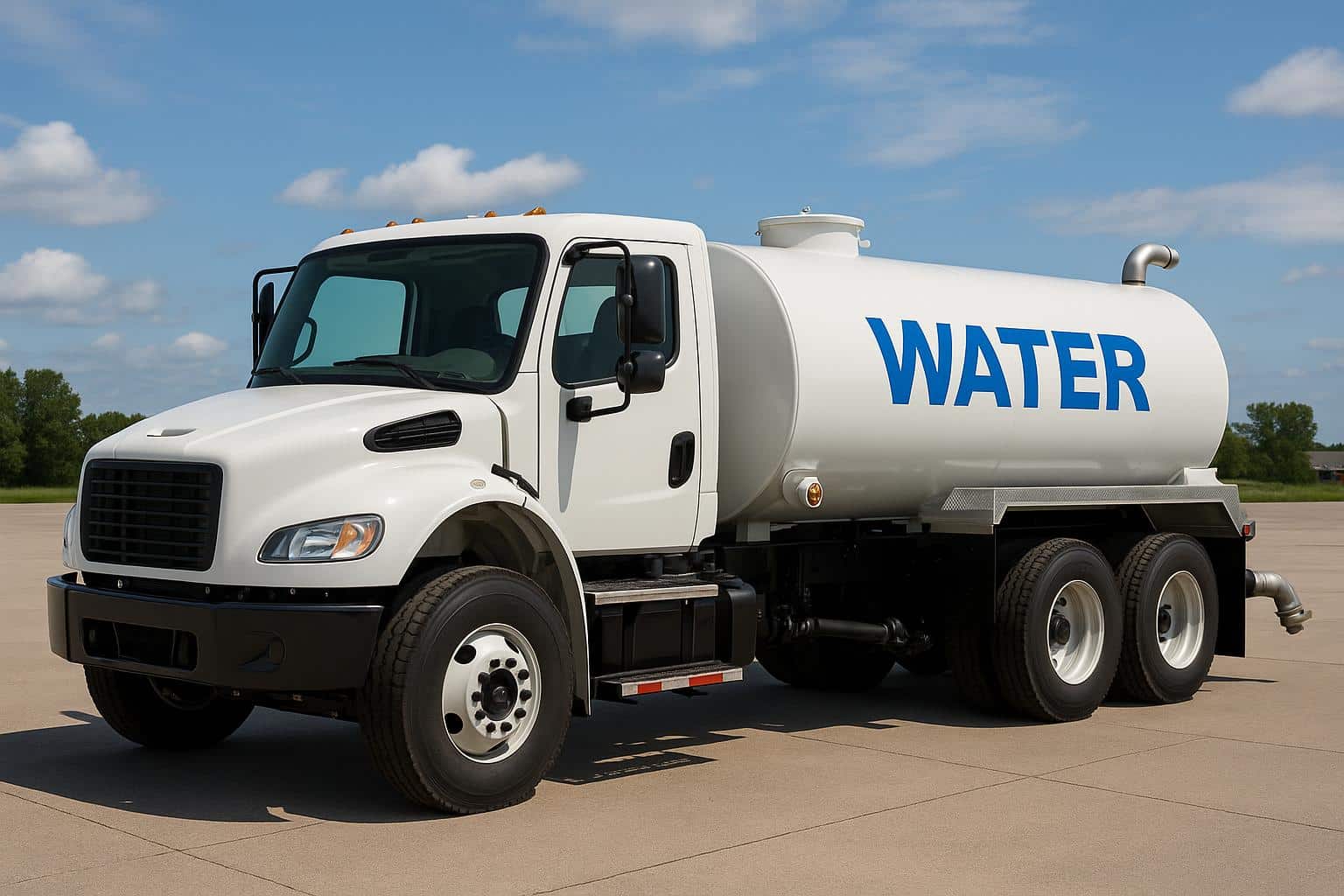
Because one litre of fresh water weighs approximately one kilogram, water volume quickly becomes a major part of the payload calculation. When selecting plastic water cartage tanks for transport and storage, you therefore need to consider the tank’s filled weight rather than looking only at its nominal litre capacity. A larger tank is not necessarily useful if filling it would push the vehicle beyond its allowable weight.
Gross Vehicle Mass Sets the Overall Weight Limit
The Gross Vehicle Mass, commonly abbreviated to GVM, is the maximum permitted operating weight of the vehicle when loaded. Your vehicle’s actual loaded weight includes its kerb weight plus the driver, passengers, tank, water and other equipment.
For example, fitting a 1,000 litre tank does not automatically mean you can safely transport 1,000 litres. You first need to calculate how much payload remains after accounting for the tank itself and every other item on board. The permitted water load may be considerably lower than the tank’s maximum capacity.
Axle Loads Affect Where the Tank Can Sit
Total vehicle weight is only part of the calculation. Vehicles also have maximum axle load ratings, which determine how much weight the front and rear axles can support.
Tank position therefore matters. Placing a heavy water load too far towards the rear can overload the rear axle even when the total vehicle weight remains below GVM. It can also alter steering response and braking behaviour. Positioning the tank correctly helps distribute the load more evenly across the chassis and keeps axle weights within their specified limits.
Water Movement Changes Vehicle Handling
Water is a dynamic load, meaning it can move inside the tank while the vehicle accelerates, brakes or turns. A partly filled tank can allow water to surge from one side or end to another, temporarily shifting the vehicle’s centre of gravity.
This movement can make handling less predictable, particularly on uneven agricultural roads, mine sites or during sudden manoeuvres. Tank design, internal baffling, mounting position and driving speed all influence how strongly this movement affects the vehicle. Payload planning should therefore consider how the load behaves in motion, not simply how much it weighs when stationary.
Payload Influences Braking and Component Wear
Additional water weight affects more than the vehicle’s total payload. Once the vehicle is moving, the water itself becomes part of a dynamic load that can influence how the vehicle responds during braking, cornering and changes in speed.
A study of road tankers used for drinking water distribution found that partially filled tanks can experience significant liquid sloshing, with the movement of water shifting the load and contributing to vehicle instability during sudden stopping and turning. The researchers examined tank designs and baffling arrangements intended to control that movement and improve the effectiveness of mobile water distribution. For operators, this reinforces the importance of considering tank capacity, fill level and load behaviour alongside the vehicle’s stated payload limit.
Matching Water Capacity to the Vehicle
The most practical mobile water supply is not always the largest tank that physically fits the tray or chassis. You need a system whose full operating weight remains compatible with the vehicle’s payload, GVM and axle ratings while still providing enough water for the intended task.
Before choosing capacity, calculate the combined weight of the tank, water and associated equipment, then compare it with the vehicle manufacturer’s specifications. Doing so gives you a clearer picture of how much water the vehicle can realistically transport without compromising its operating limits.
Safe Water Cartage Starts With Weight Planning
Vehicle payload determines how much water you can transport, where the tank should be positioned and how the vehicle will behave once loaded. By considering water weight alongside GVM, axle ratings, load movement and equipment weight, you can specify a mobile water supply that meets operational needs without exceeding the limits of the vehicle carrying it.