


Off-road motorcycles were once seen mainly as machines for experienced riders or serious outdoor enthusiasts. Today, electric technology is changing that perception. More everyday users are becoming interested in electric off-road bikes because they feel more approachable, easier to understand, and better suited for recreational riding.
This does not mean every rider is looking for extreme performance. Many people simply want a practical way to explore trails, campsites, private land, and light outdoor routes. For first-time buyers, the key is not to chase the biggest number on the spec sheet, but to understand whether a bike fits their real riding needs.
- Speed Should Not Be the Only Factor
- Power Response Shapes the Riding Experience
- Compact Models Can Make More Sense for Beginners
- Range Depends on Real Riding Conditions
- Wheels and Suspension Matter More Than Many Buyers Think
- Safety Should Always Come Before Performance
- Promotion Seasons Can Lower the Starting Cost
- The Best Bike Is the One That Fits the Rider
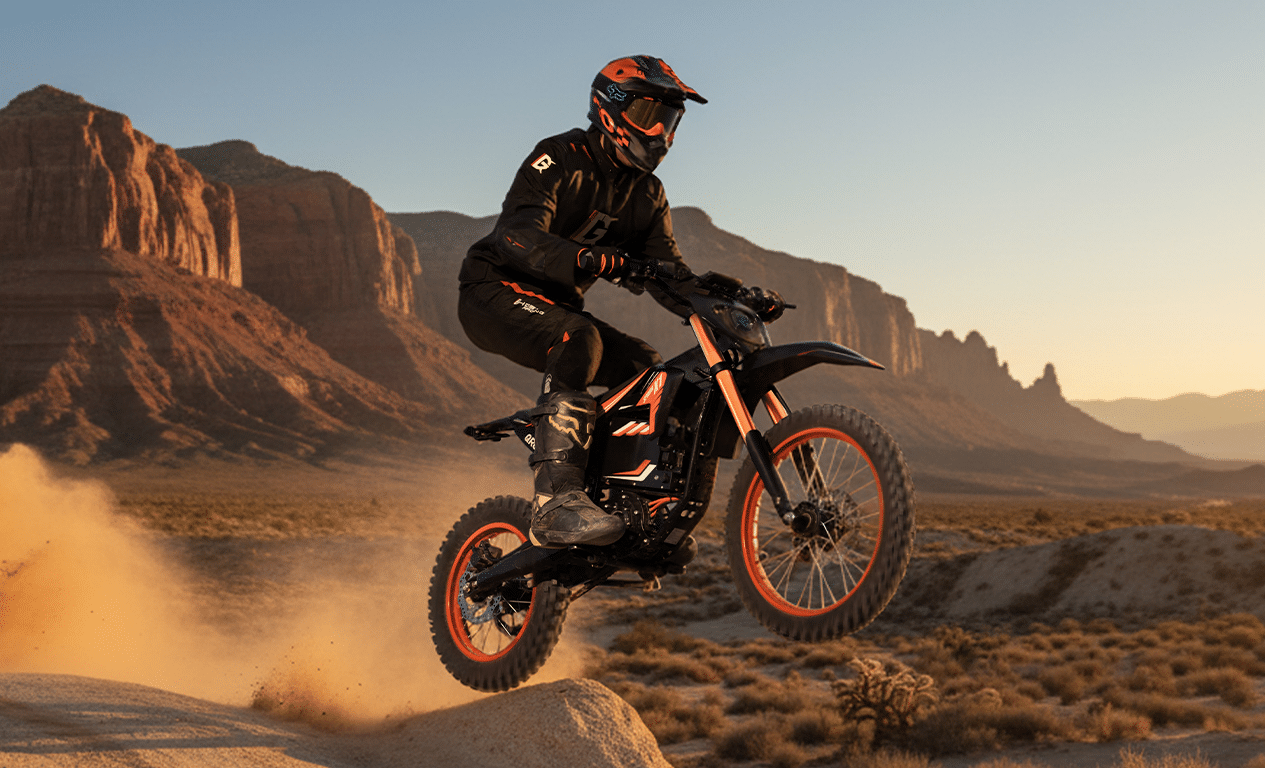
Speed Should Not Be the Only Factor
Many buyers look at top speed first. Speed matters, but it is only one part of the riding experience.
A good electric dirt bike should also offer smooth power delivery, stable handling, useful range, and confidence across different terrains. For newer riders, a bike that feels predictable and easy to manage is often more valuable than one that only focuses on maximum speed.
The better question is how the bike behaves when starting, accelerating, climbing, turning, and moving through uneven ground.
Power Response Shapes the Riding Experience
One major advantage of electric off-road bikes is direct power response. Riders do not need to manage the same shifting process found on many traditional machines. Instead, they can focus more on balance, terrain, braking, and body position.
For beginners, this can make the first riding experience less stressful. Smooth throttle response helps riders build confidence during low-speed control, turns, and hill climbs.
Motor power still matters, but it should not be viewed alone. Riding modes, torque delivery, and overall tuning all affect how usable that power feels in real conditions.
Compact Models Can Make More Sense for Beginners
Not every rider needs a full-size off-road motorcycle. For many beginners, younger riders, or weekend users, a compact platform can feel more natural and easier to control.
Smaller bikes are often more agile, easier to maneuver, and better suited for trails, campsites, private land, and light off-road riding. The Qronge X1 Spark M is one example of a mini electric dirt bike that brings together a 4500W peak mid-drive motor, 14″/12″ wheels, a 60V 28.8Ah battery, and 283Nm of torque in a compact body.
Its value is not simply about large specifications. It is about delivering usable power and flexible handling in a size that feels easier to manage.
Range Depends on Real Riding Conditions
Range is another important point for buyers, but it should be understood realistically. A bike’s riding range can change depending on terrain, riding mode, rider weight, speed, and surface conditions.
For many recreational users, the goal is not just to achieve the longest possible distance. It is more important that the battery supports a complete riding session without frequent charging interruptions.
That is why buyers should compare range numbers with their actual use case. A rider who mainly uses the bike for weekend trails or campsite riding may need a different setup from someone planning longer outdoor routes.
Wheels and Suspension Matter More Than Many Buyers Think
New riders often focus on motor power and speed while overlooking wheels and suspension. However, these parts strongly affect real off-road comfort and control.
Wheel size influences stability, traction, and maneuverability. Suspension helps absorb bumps, gravel, uneven ground, and light trail impacts. If a bike has strong power but lacks balanced support from its wheels, brakes, and suspension, the riding experience may feel less controlled.
A well-rounded electric off-road bike should balance power, frame size, braking, wheel setup, and suspension rather than relying on one impressive specification.
Safety Should Always Come Before Performance
No matter how capable a bike is, safety should always come first. Electric off-road bikes may feel easier to operate than some traditional machines, but they still require proper riding habits.
New riders should begin with lower riding modes, learn throttle response gradually, and practice braking before moving into more challenging terrain. Helmets, gloves, protective gear, and proper riding footwear should be part of every ride.
Riders should also check local rules before riding. Regulations for electric off-road bikes can vary by state, region, land type, and trail access policy.
Promotion Seasons Can Lower the Starting Cost
Budget is often a major factor for first-time buyers. High-performance outdoor equipment can be expensive, so seasonal offers may make the first purchase easier.
Events such as Prime Day deals can help new riders explore electric off-road bikes with a lower starting cost. For buyers still comparing options, a promotion can make the decision feel more practical and less risky.
The Best Bike Is the One That Fits the Rider
Choosing an electric off-road bike is not about finding the most extreme model. It is about finding the one that matches the rider’s skill level, environment, budget, and riding goals.
For users who care about easy control, compact handling, weekend fun, and light outdoor exploration, a smaller high-torque model with a stable range and direct operation can be a smart place to start.
Electric off-road riding is not only about speed. It is about making outdoor riding more accessible, more flexible, and easier for new riders to enjoy with confidence.