


Waymo’s driverless ride-hailing service is officially open to the public in Miami, marking the company’s newest commercial market and one of its most complex. Service begins inside a 60-square-mile geofence spanning the Design District and Wynwood down to Brickell, with coverage reaching Coral Gables and other high-demand neighborhoods. Early access goes to people on Waymo’s waitlist, which the company says has drawn close to 100,000 sign-ups.
Where You Can Ride Today Across Miami’s Service Zone
The initial service area targets corridors where nightlife, dining, and office traffic overlap—dense zones that stress-test everything from lane changes to pedestrian-rich intersections. Waymo says it plans to extend the service to Miami International Airport, a crucial link for travelers and hospitality workers, once operational metrics and routing are dialed in. As in other cities, trips are booked through the Waymo app, with dynamic routing constrained to the geofence for reliability.
- Where You Can Ride Today Across Miami’s Service Zone
- Rolling Onboarding And Fleet Support For Miami Launch
- Built For Sun Glare And Sudden Downpours
- Recent Hiccups Frame The Stakes For Driverless Rides
- How Miami Fits Into Waymo’s Map And Growth Plans
- Policy Tailwinds And Public Sentiment In Florida
- What Riders Should Expect From Waymo In Miami
- The Bottom Line For Miami’s Driverless Rollout
Rolling Onboarding And Fleet Support For Miami Launch
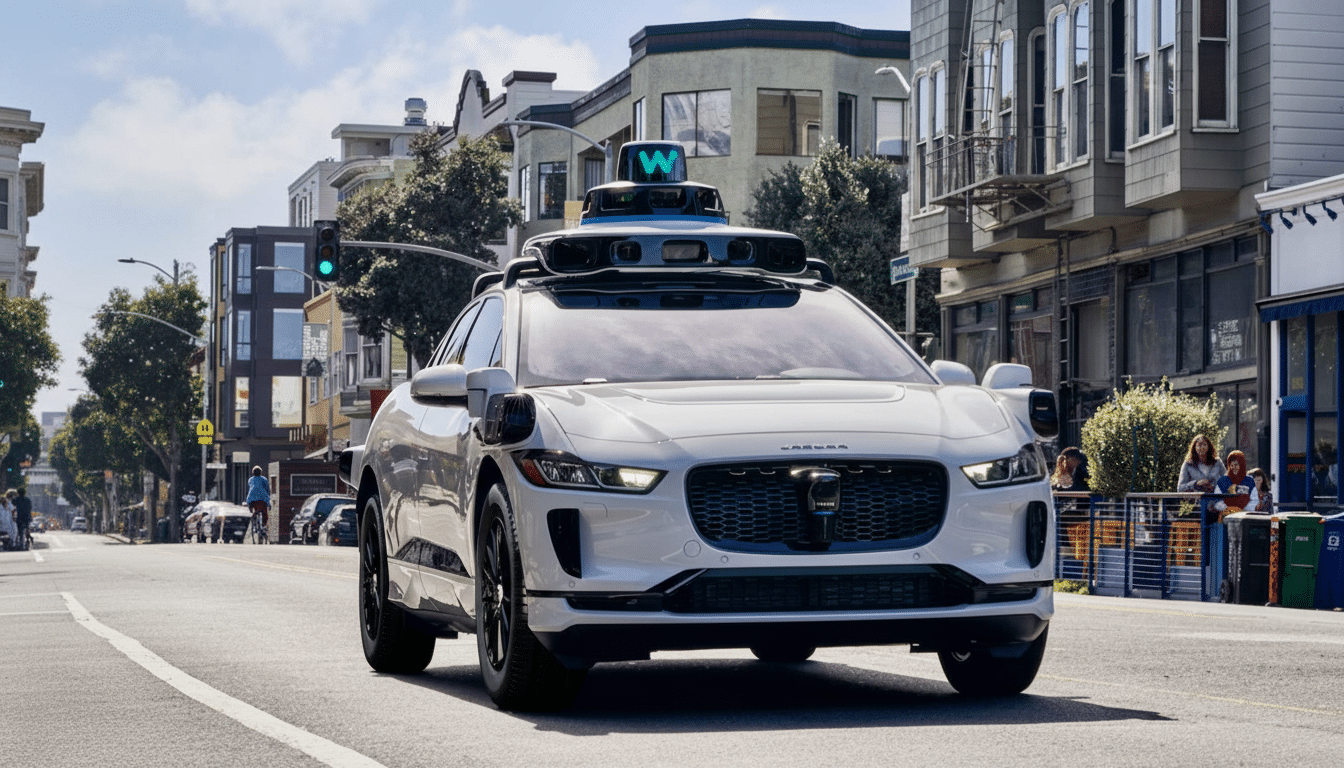
With nearly 100,000 people on the list, new riders will be invited in waves to avoid demand spikes and maintain short wait times. Behind the scenes, mobility company Moove is handling vehicle charging, cleaning, and repairs—logistics that often determine ride availability more than mapping or perception do. Expect the invite cadence to ramp as fleet utilization stabilizes and out-of-service time drops.
Built For Sun Glare And Sudden Downpours
Miami’s streets are a different proving ground than the wide grids of Phoenix or the hills of San Francisco. Waymo began weather-specific testing here years ago, refining how its sensors and planning stack handle searing midday glare, slick pavement, and tropical cloudbursts that can collapse visibility in minutes. The company says its system now adapts to these shifts—modulating speed, increasing following distances, and rerouting as needed to keep trips on schedule.
Recent Hiccups Frame The Stakes For Driverless Rides
Waymo’s expansion follows a series of well-documented challenges for driverless fleets. In San Francisco, a power outage that darkened traffic signals left multiple autonomous cars stalled at intersections until they were removed. The company also pushed a software update after vehicles failed to stop for school buses in Atlanta and Austin—an edge case that illustrates why rapid over-the-air remediation matters.
Federal oversight is ongoing. The National Highway Traffic Safety Administration has an open evaluation into Waymo’s driverless operations after reports of low-speed impacts and unusual maneuvers—part of a broader review of automated driving systems. Independent researchers and safety engineers have pushed for more city-level performance data so the public can compare crash rates, intervention frequency, and response times across markets.
How Miami Fits Into Waymo’s Map And Growth Plans
Miami joins Los Angeles, Phoenix, San Francisco, Austin, and Atlanta on Waymo’s commercial roster, with additional markets on the horizon. Industry watchers estimate the service now completes hundreds of thousands of trips weekly across all cities; recent briefings have cited roughly 450,000 rides each week. The Miami rollout is expected to precede further moves into Sun Belt metros such as Dallas, Houston, Orlando, and San Antonio.
Policy Tailwinds And Public Sentiment In Florida
Florida’s permissive autonomous vehicle framework, enacted several years ago, allows fully driverless operation without a human behind the wheel—one reason Miami has emerged as a priority market. But public acceptance remains a variable. Surveys from organizations like AAA consistently show a majority of U.S. drivers feel uneasy sharing the road with self-driving cars, underscoring the need for transparent safety reporting and predictable street behavior.
What Riders Should Expect From Waymo In Miami
Trips will feel familiar to anyone who has used ride-hailing: curbside pickup, in-app routing, and autonomous-only driving from start to finish. In other Waymo markets, fares have generally tracked with standard ride-hail prices, though fees can vary by city and time of day. The company typically ramps service hours and coverage as it gathers local driving data, fine-tunes pickup zones, and validates performance during peak traffic and heavy rain.
The Bottom Line For Miami’s Driverless Rollout
Waymo’s Miami debut is less a pilot and more a scaled rollout with guardrails: a sizable but bounded map, phased rider onboarding, and a clear focus on weather resilience. If the system holds up under sun, storms, and nightlife surges, expect rapid expansion to the airport and adjoining neighborhoods. For now, waitlist members get first dibs—one more reason Miami’s streets are about to become a marquee test of driverless mobility in real-world conditions.