


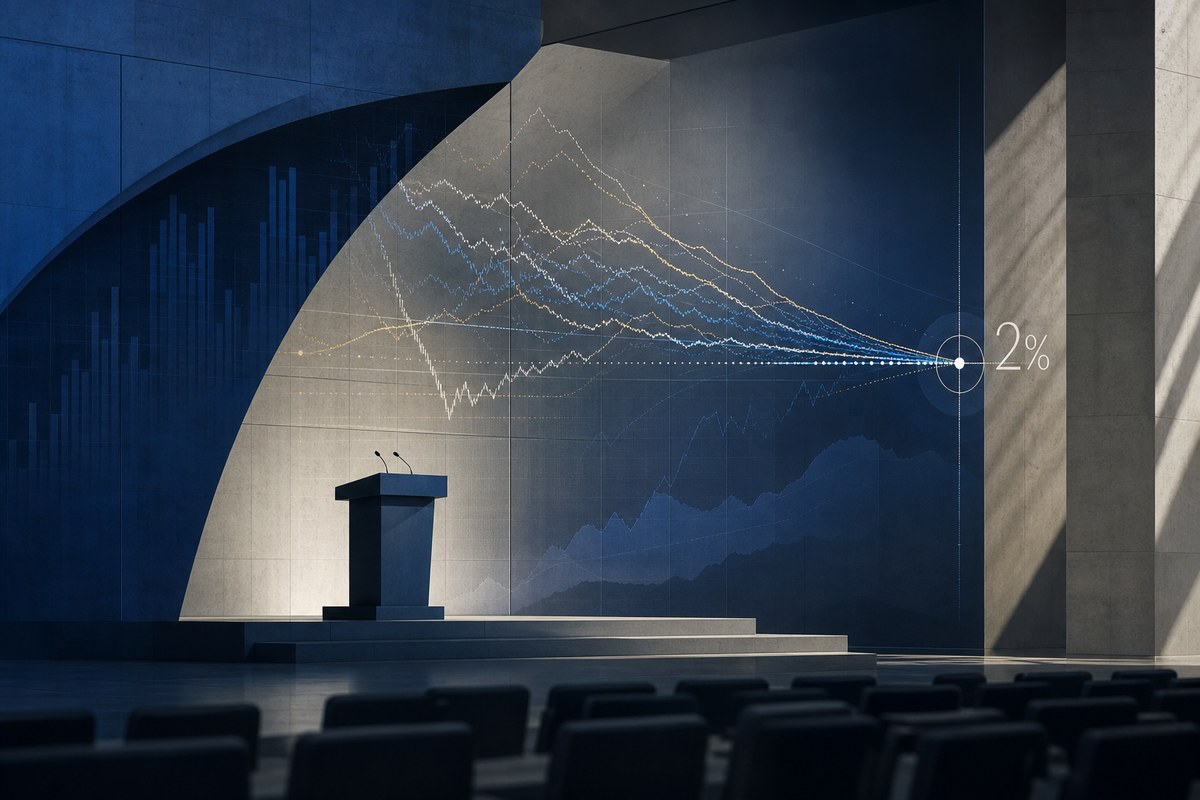
Federal Reserve Chair Kevin Warsh used his Aug. 28 Jackson Hole address to put a sharper condition around the case for future monetary-policy action: officials must be confident that underlying inflation is returning to the central bank’s 2% objective clearly and sufficiently quickly. If they are not, Warsh said in his prepared remarks, policymakers still have work to do.
The formulation stopped short of a commitment to raise rates at the Federal Open Market Committee’s Sept. 15-16 meeting. But it gave investors a more explicit view of the chairman’s inflation threshold while he simultaneously argued against routinely mapping out the future path of rates. Reuters analysis published by Yahoo Finance said markets read the speech as raising the likelihood of an increase at that meeting. The Fed’s official calendar confirms that the September gathering includes a scheduled press conference.
A conditional standard, not a promised rate path
Warsh’s argument rests on a distinction with immediate consequences for bond and equity markets. Forward guidance generally means communicating how policymakers expect rates to move over time, sometimes subject to stated economic conditions. A reaction function instead identifies the economic evidence that would lead policymakers to alter their stance without committing them to a particular decision or date.
Warsh advocated what he called a quieter, more purposeful Fed in normal conditions. His concern is that regular guidance can lead market participants to treat central-bank projections as promises, potentially distorting prices and dulling the committee’s willingness to respond when the data change. Independent coverage by Banking Dive similarly described the address as a continuation of his push against routine guidance rather than an announcement of a September move.
Yet the speech supplied more than a general preference for discretion. Warsh said the price-stability target is firm and fixed, measured through the personal consumption expenditures price index. He also said policymakers should not be satisfied merely because inflation is moving in the right direction; the return toward target must be sufficiently clear and sufficiently prompt. That is the condition investors and Reuters-cited observers treated as relevant to the next policy decision.
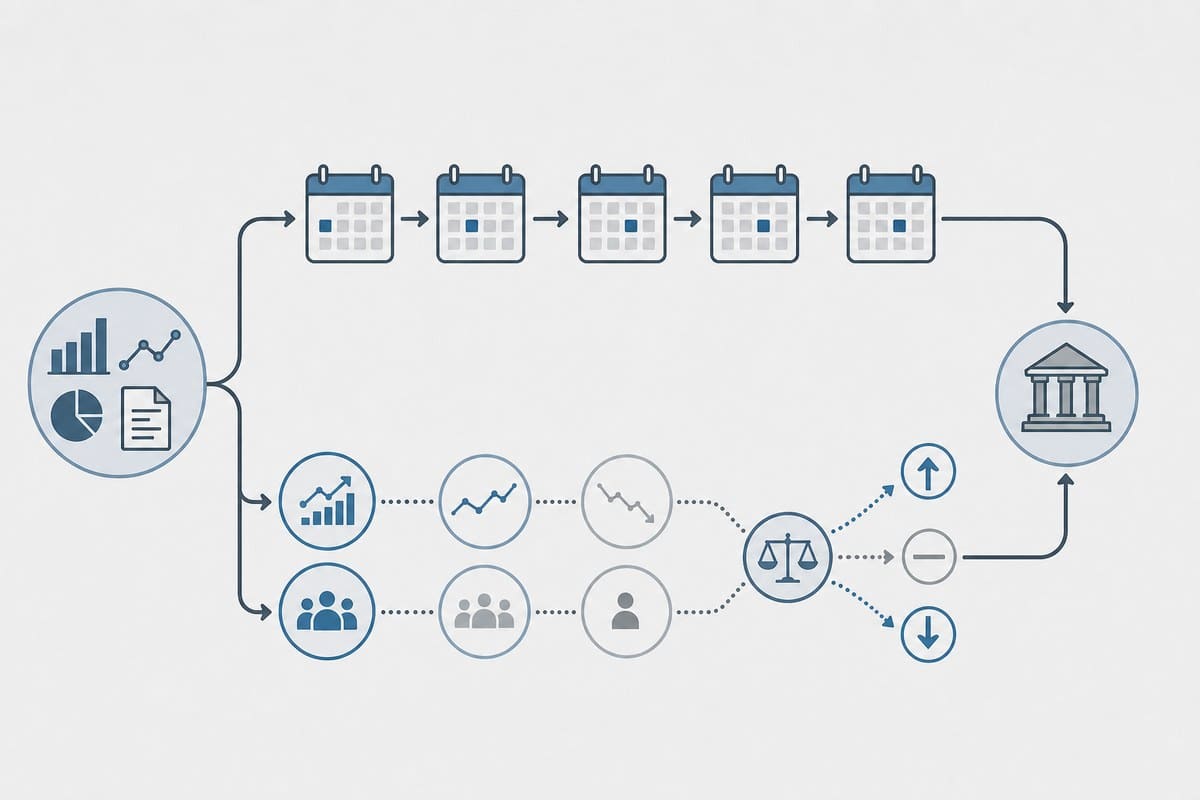
The practical effect is a narrower message than a rate forecast but a clearer one than a generic pledge to remain data dependent. It directs attention toward incoming inflation readings, evidence about underlying price pressures and the speed of disinflation before the mid-September meeting. It does not establish what readings would meet Warsh’s test, nor does it say how other members of the committee will weigh those data.
July minutes show a committee still waiting for information
The speech also needs to be read against the committee’s most recent formal record. At its July 28-29 meeting, the FOMC unanimously maintained the interest rate paid on reserve balances at 3.65%, effective July 30, according to the official July meeting minutes. That implementation rate should not be confused with a statement of the full federal-funds target range.
Warsh told the Jackson Hole audience that the committee had agreed labor markets were stable and output solid, even as inflation remained too high. He said a good majority of colleagues preferred to receive more information between meetings before deciding whether a change in interest-rate policy would be advisable, while remaining prepared to act as circumstances warranted.
Those points reconcile two signals that can otherwise look inconsistent. The July decision did not itself signal a preordained tightening move, and the minutes are not evidence of a September outcome. The Aug. 28 speech, however, made Warsh’s own tolerance for persistent inflation more visible. Reuters reported that Nathan Sheets, Citigroup’s global chief economist, viewed the chairman’s economic diagnosis as more constructive than the account conveyed after the July meeting.
The timing leaves the committee with roughly 18 calendar days between the Jackson Hole speech and the opening of the Sept. 15 meeting. That interval will determine whether Warsh’s conditional language remains primarily a communications marker or becomes part of the case for an actual policy adjustment.
Why communication policy has become a market issue
Central-bank guidance can lower uncertainty when policy is constrained by unusual conditions, such as a crisis or a period in which rates are near a practical lower bound. Warsh’s case is that ordinary conditions require less scripted communication. He said policy communications should serve the objective of making correct decisions, rather than becoming an objective in themselves.
Critics of that approach see costs as well as benefits. Reuters quoted Robert Tetlow, a former senior Fed staff economist, as saying Warsh’s concern that guidance distorts market prices was overstated, even while calling the economic explanation useful and conventional. The disagreement is not simply semantic: less explicit guidance may preserve flexibility for the FOMC, but it can also make the market’s interpretation of individual speeches more consequential.
For borrowers, companies and investors, the near-term issue is not whether Warsh has issued formal guidance; he has argued the opposite. It is whether forthcoming information can demonstrate a sufficiently fast and credible return of underlying PCE inflation toward 2%. The FOMC’s meeting schedule places the next decision, and the committee’s opportunity to explain it, on Sept. 15-16.