


A viral AI doomsday column tore through tech circles this week with a familiar refrain: white-collar work is next on the chopping block. It made me look back at my own liberal arts degree and realize something counterintuitive. The very skills that were once dismissed as impractical are fast becoming the ballast that keeps knowledge jobs stable in the age of generative AI.
The hot take claimed that coding, document drafting, and routine analysis are now handled well enough by machines that many office roles will thin out. That alarm isn’t baseless. But it also misses the quieter story unfolding inside companies: as AI eats tasks, the premium shifts to people who can frame problems, question assumptions, make trade-offs, and communicate decisions across messy, real-world contexts.
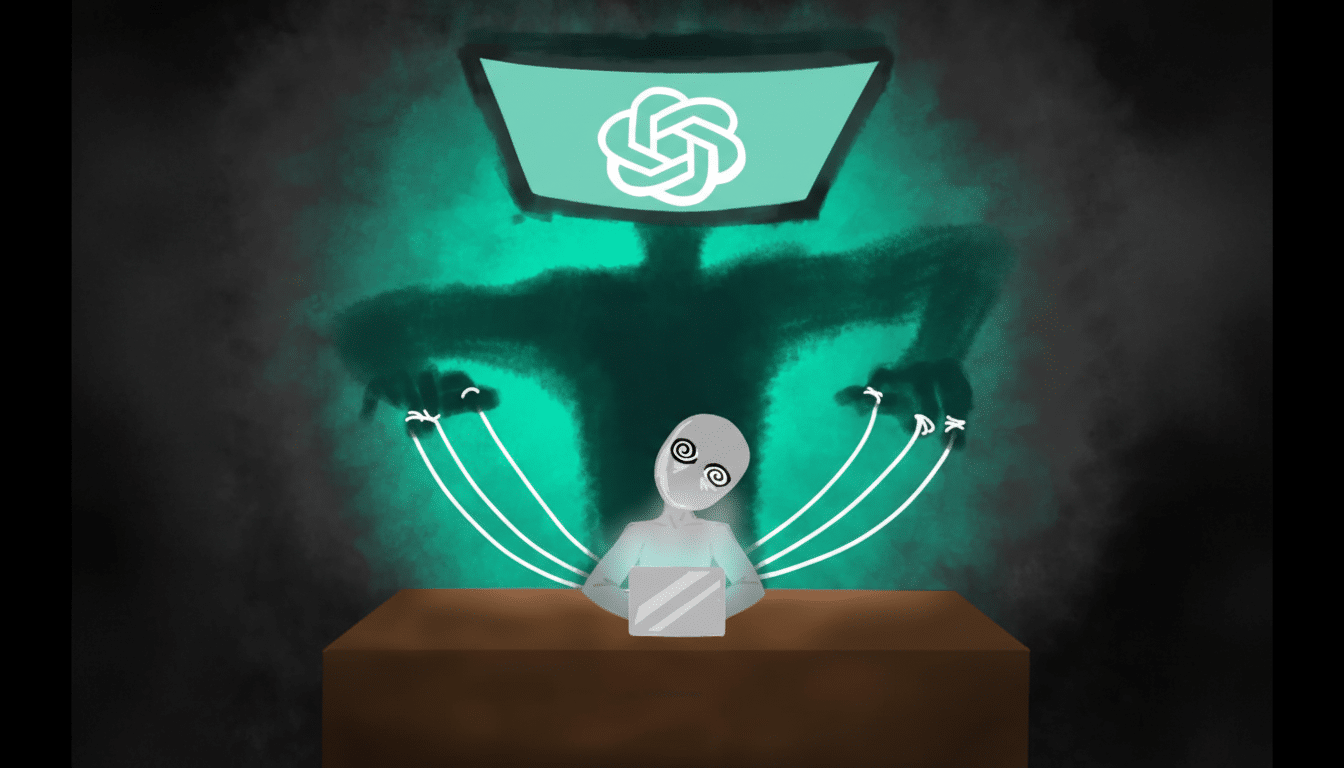
What the Viral Column Gets Right and Misses
The post came from a startup CEO who admitted that AI now performs much of his technical work and warned that law, finance, medicine, accounting, consulting, writing, design, analysis, and customer service will follow. High-profile founders have echoed variants of that claim, with some predicting sweeping automation inside a handful of product cycles.
But rapid capability demos are not the same as durable labor-market change. AI excels at pattern replication and summarization. It struggles with contextual judgment, ambiguity, incentives, and ethics—the very things liberal arts cultivate. The question isn’t whether AI reduces keystrokes; it’s who sets objectives, verifies outputs, and takes responsibility when trade-offs bite.
The Numbers Paint a Nuanced Picture of AI’s Impact
Major institutions see exposure, not inevitability. A Goldman Sachs analysis estimated that AI could automate or augment around 18% of tasks globally, with wide variation by occupation and region. OECD research finds roughly 27% of jobs have high exposure to task automation, yet notes that roles blending technical and social skills are more resilient.
The World Economic Forum reports that analytical and creative thinking top employers’ priority lists, and that 44% of workers’ skills will be disrupted, underscoring a reskilling imperative. IBM’s Institute for Business Value estimates that about 40% of the workforce will need retraining due to AI. The Burning Glass Institute has tracked a surge in “hybrid” roles that combine domain knowledge with communication and data literacy, growing more than 20% faster than average.
Where Liberal Arts Thrive in AI Workflows
AI shifts the frontier of value toward problem framing, not button pushing. Philosophy’s logic helps teams define success criteria. History’s causal reasoning keeps correlation from masquerading as explanation. Rhetoric turns insight into persuasion. Ethics catches model bias before it becomes policy. Sociology and anthropology surface user needs that dashboards miss.
These capabilities are now operational, not ornamental. Safety and policy teams “red team” systems for misuse. Product managers arbitrate trade-offs between accuracy, latency, and fairness. Editors and analysts verify machine summaries against primary sources. Even prompt engineering—already morphing into tooling and retrieval design—depends on the ability to decompose ambiguous problems and test assumptions.
Real-World Evidence From the Office Floor
Field data backs the pattern. A Stanford and MIT analysis of a large customer support operation found generative tools lifted productivity by 14% overall, with the biggest gains—35%—among the least-experienced workers. Senior agents still mattered most for complex, emotionally charged cases that required negotiation, empathy, and improvisation.
Newsrooms are using AI for transcript cleanup and backgrounders, but editors safeguard sourcing, tone, and legal risk. Law firms deploy models to triage discovery, while associates handle strategy, precedent selection, and client counseling. Consultancies report faster first drafts, yet warn that nonexperts can be confidently wrong without structured oversight. In each case, the needle moves toward human judgment, not away from it.
What to Learn Now If You Studied the Humanities
A liberal arts foundation becomes formidable when paired with pragmatic layers. Add data literacy, basic statistics, and spreadsheet fluency. Learn how retrieval-augmented generation works at a high level. Practice adversarial testing of AI outputs and maintain a reproducible fact-check workflow. Get comfortable with lightweight scripting or no-code automation so you can pilot ideas without waiting for engineering bandwidth.
On the soft-skills side, double down on structured thinking and stakeholder communication. Employers consistently rank communication, leadership, adaptability, and collaboration among their most in-demand attributes in LinkedIn’s hiring data. Package your background as “T-shaped”: deep in reasoning and ethics, broad across product sense, UX, data, and policy. The hybrid is the hedge.
A Better Reading of the AI Doomsday Moment
The viral column is right to call time on rote, template-driven office work. It’s wrong to conclude that makes the humanities obsolete. If anything, AI makes liberal arts scarcer and more valuable, because someone still has to decide what problem we’re solving, for whom, and at what cost.
That is why I value my liberal arts degree more today. It’s not a shield against change; it’s a compass inside it—one that keeps pointing to the work only humans can do: discerning truth, weighing trade-offs, and building trust when the machine’s answer isn’t the final word.