


Moltbot, the personal AI assistant that went viral under the name Clawdbot, has officially rebranded after a legal dispute with Anthropic. Beyond the lobster-themed memes, the project has become a lightning rod for the emerging wave of agentic AI — software that doesn’t just chat but takes actions on your behalf — and it is forcing a serious conversation about utility, safety, and where consumer-grade assistants go next.
What Moltbot Actually Does as an Actionable AI Assistant
Built by Austrian developer Peter Steinberger, Moltbot aims to be the “AI that actually does things.” In practice, that means connecting to your apps and services to handle real tasks: scheduling meetings, sending messages, checking in for flights, sorting files, or spinning up quick automations across multiple tools. Early users treat it like a universal operator that can read context, decide what to do, and execute the next step without micromanagement.
- What Moltbot Actually Does as an Actionable AI Assistant
- Why Moltbot Went Viral and Drew Massive Developer Interest
- Setup and How Moltbot Works for Real-World Automation
- Security Risks and How to Stay Safe with Agentic AI
- The Rebrand and Trust Signals After the Name Dispute
- Who Should Use Moltbot Now and Who Should Wait for Safety
- Why Moltbot’s Rise Matters for the Future of AI Agents
The assistant is open source and designed to run on your own hardware or a server you control, with support for multiple AI models. That flexibility is part of the appeal: tinkerers can choose the model they trust, customize action permissions, and extend Moltbot with new skills.
Why Moltbot Went Viral and Drew Massive Developer Interest
Two things supercharged adoption: visible competence and visible code. The repository quickly amassed more than 44,000 stars on GitHub, a signal that the developer community sees promise in its approach to real-world action. The attention even spilled into public markets. Cloudflare shares jumped roughly 14% in premarket trading amid social buzz linking Moltbot’s developer workflows to Cloudflare’s infrastructure — a reminder that genuinely useful AI agents can move more than just mindshare.
Steinberger’s track record matters, too. As the founder behind PSPDFkit, he’s known for shipping production-grade developer tools, and his candid building-in-public posts attracted a swarm of contributors. Compared with earlier “agent” experiments that dazzled in demos but disappointed in daily use, Moltbot feels refreshingly pragmatic: start with a narrow set of actions, wire them to the apps people actually use, and iterate.
Setup and How Moltbot Works for Real-World Automation
At a high level, Moltbot pairs a reasoning model with a growing catalog of actions that interface with calendars, messaging apps, files, and web services via APIs and local commands. Users configure credentials and permissions, then let the assistant plan and execute multi-step tasks. Because it’s local-first and open source, developers can inspect the code path for each action, adjust scopes, and add guardrails.
That control comes with friction. Installing Moltbot is still a power-user move that may involve command-line setup, environment variables, and hosting choices such as a virtual private server. The reward is customizability; the cost is responsibility for security and maintenance.
Security Risks and How to Stay Safe with Agentic AI
Agentic AI turns intent into action — and that’s the risk. As investor Rahul Sood noted, “actually doing things” translates to the power to execute commands on your machine. The scariest vector is prompt injection: a malicious message, document, or webpage that quietly instructs the assistant to take harmful actions, from exfiltrating files to changing configurations.
Security professionals have been blunt about best practices. Treat Moltbot like untrusted code:
- Run it on a separate device or a VPS.
- Use throwaway accounts and minimize privileges.
- Segment sensitive data and tighten API scopes.
- Add rate limits and require explicit user confirmation for destructive or high-risk actions.
- Choose models and configurations with strong adversarial resistance, and use content filters to strip hidden instructions from untrusted inputs.
- Apply network egress rules, filesystem sandboxes, and hardware security keys for access-critical workflows to reduce blast radius.
None of this eliminates risk, but it shifts Moltbot from “toy with teeth” to a testable tool. Expect the ecosystem to coalesce around standard permission prompts, tamper-resistant action manifests, and operating-system-level guardrails aligned with guidance from organizations like NIST as agent frameworks mature.
The Rebrand and Trust Signals After the Name Dispute
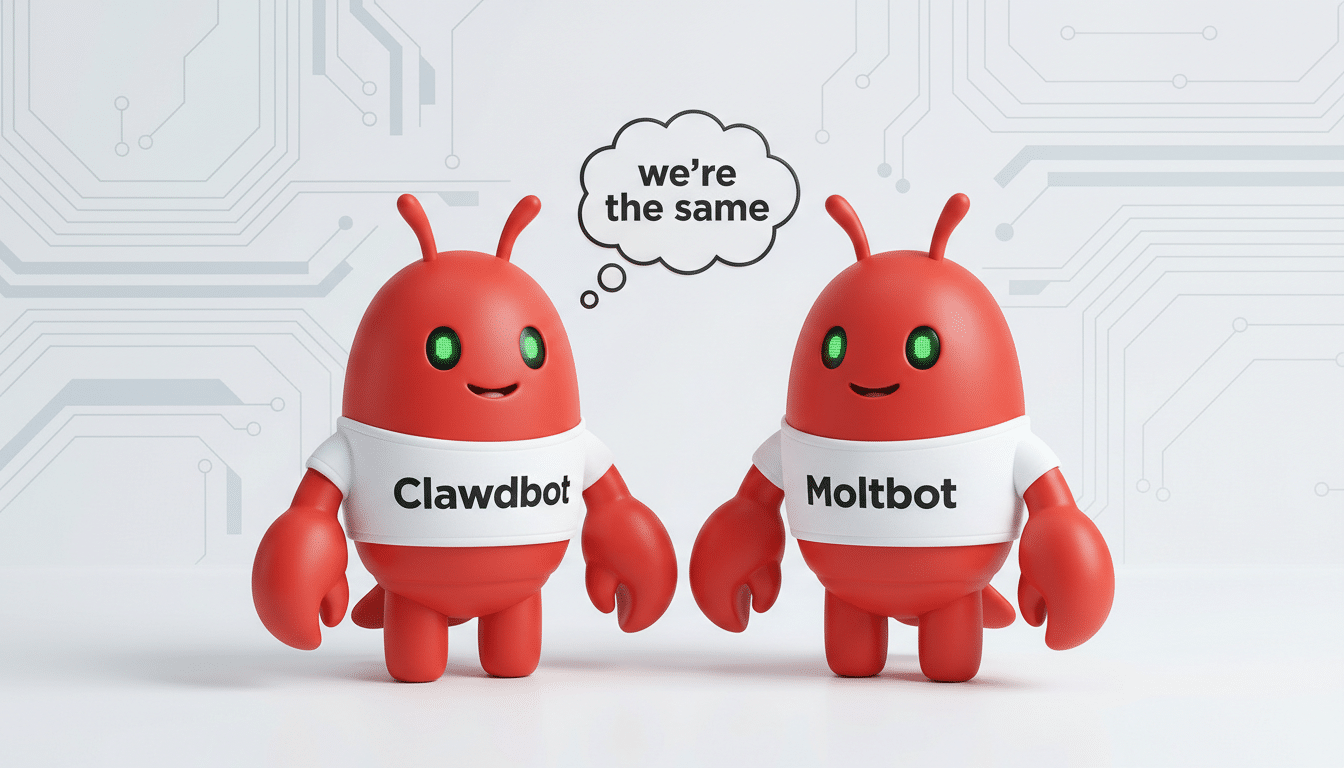
The rename from Clawdbot to Moltbot followed a legal challenge from Anthropic, whose Claude assistant has phonetic overlap. The episode underscored a second risk vector: social engineering. During the transition, impersonators attempted to hijack identities and spin up fake crypto tie-ins. Steinberger publicly warned users to verify official accounts and ignore token schemes claiming affiliation. For an open-source project that can trigger real-world actions, clear provenance and signed releases will be critical trust signals.
Who Should Use Moltbot Now and Who Should Wait for Safety
Developers and security-savvy early adopters will get the most value today, especially those willing to sandbox the assistant and live with a conservative permission model. If you’re unfamiliar with VPS hosting, API scopes, or system isolation, it’s wise to wait for safer defaults — think built-in sandboxes, granular consent flows, and audited action libraries — before handing an agent the keys to your digital life.
Why Moltbot’s Rise Matters for the Future of AI Agents
Moltbot’s surge is a proof point for AI that works beyond the chat box. It shows there’s real demand for assistants that close the loop from intention to outcome — and that the winning products will blend model quality with robust execution layers and safety by design. Whether Moltbot becomes that end product or catalyzes the one that does, the takeaway is clear: the agent era isn’t theoretical anymore. It’s here, it’s useful, and it needs guardrails.