


Vic Michaelis, the host and executive producer of Dropout’s Very Important People, pulled back the curtain on how the character-forward improv series is built, why surprise is the engine of the show, and how a single camel-colored suit quietly became part of the mythology. Their insights trace the show’s evolution from a scrappy experiment to a breakout staple of character improv.
How The Characters Come Together Through Design
In pre-production, Michaelis is deeply involved. They review mood boards, reference images, and early sketches from the costume, hair, and prosthetics teams to ensure each concept aligns with a guest’s comedic sensibilities. The goal is precision casting-by-transformation: pairing a look with an improviser’s strengths so the character invites bold choices rather than boxing them in.
- How The Characters Come Together Through Design
- How Surprise By Design Shapes What Happens On Set
- Host As Head Of Talent, Fostering Safety On Set
- From Three-In-One To Standalone Episodes
- The Camel Suit That Became Canon For The Host
- Why The Look Might Change In Future Seasons
- Why The Very Important People Format Works So Well
This collaboration is unusually tight for an improv show, where wardrobe is often an afterthought. Here, it’s the ignition. Teams build wigs, facial appliances, and wardrobe that can instantly communicate status, world, and premise—tools that help guests like Paul F. Tompkins, Nicole Byer, Bobby Moynihan, Jeremy Culhane, and Anna Garcia hit the ground running.
How Surprise By Design Shapes What Happens On Set
Once shooting begins, Michaelis deliberately avoids the reveal room. They do not see finished prosthetics or costumes until the performer walks onto the set. The reason is creative elasticity: if a guest sparks on a different idea in the first moments, the show can pivot without anyone feeling committed to a reveal-room riff.
That restraint preserves the show’s core commodity—spontaneity. It mirrors longform improv best practices taught at institutions like Upright Citizens Brigade and The Second City: protect discovery, prioritize the present beat, and let the first truly funny thing dictate direction.
Host As Head Of Talent, Fostering Safety On Set
Michaelis describes their on-set role as the show’s “head of talent,” focused on psychological safety and momentum. They want performers to feel comfortable taking big swings, reversing choices, or upending an approach if something more fun emerges. That is especially crucial when guests are acting under new physical constraints—heavy wigs, facial prosthetics, or cumbersome wardrobes.
Research highlighted by Harvard Business Review has long connected psychological safety to creative risk-taking; VIP operationalizes that in real time. The result is a space where performers are empowered to chase the most promising game without worrying about “breaking” the plan.
From Three-In-One To Standalone Episodes
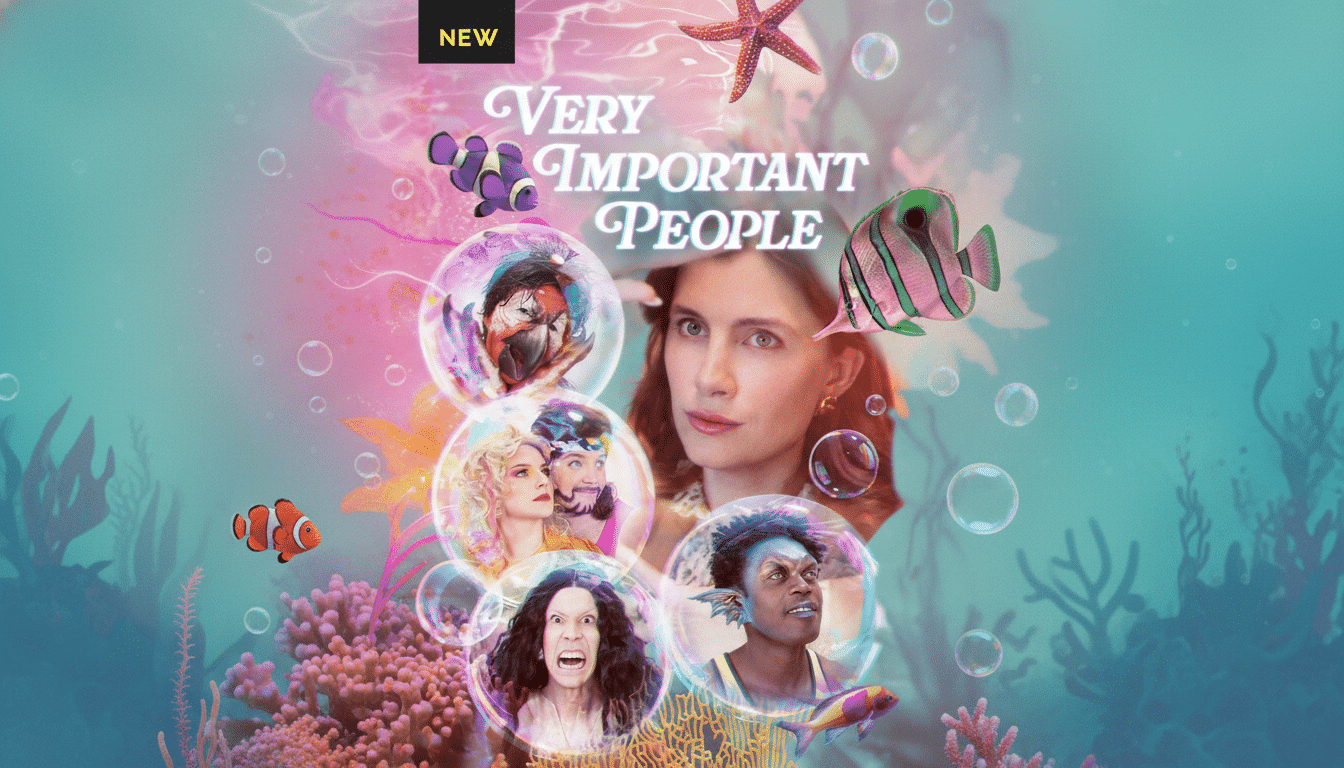
Early on, Very Important People was conceived as a three-in-one format, stitching multiple interviews and characters into each episode. In practice, the team captured so much usable improv that the edits breathed better as standalone spotlights. That shift turned individual arcs—like Anna Garcia’s “Princess Emily,” Zac Oyama’s “Tommy Shriggly,” and Jacob Wysocki’s “Marionette Conqui and Zonton de la Doll”—into fully realized half-hours rather than compressed compilations.
It is an editor’s dream problem: an abundance of material strong enough to justify more screen time. The pivot also aligns with audience behavior on comedy streamers, where focused episodes with a single conceit tend to drive rewatchability.
The Camel Suit That Became Canon For The Host
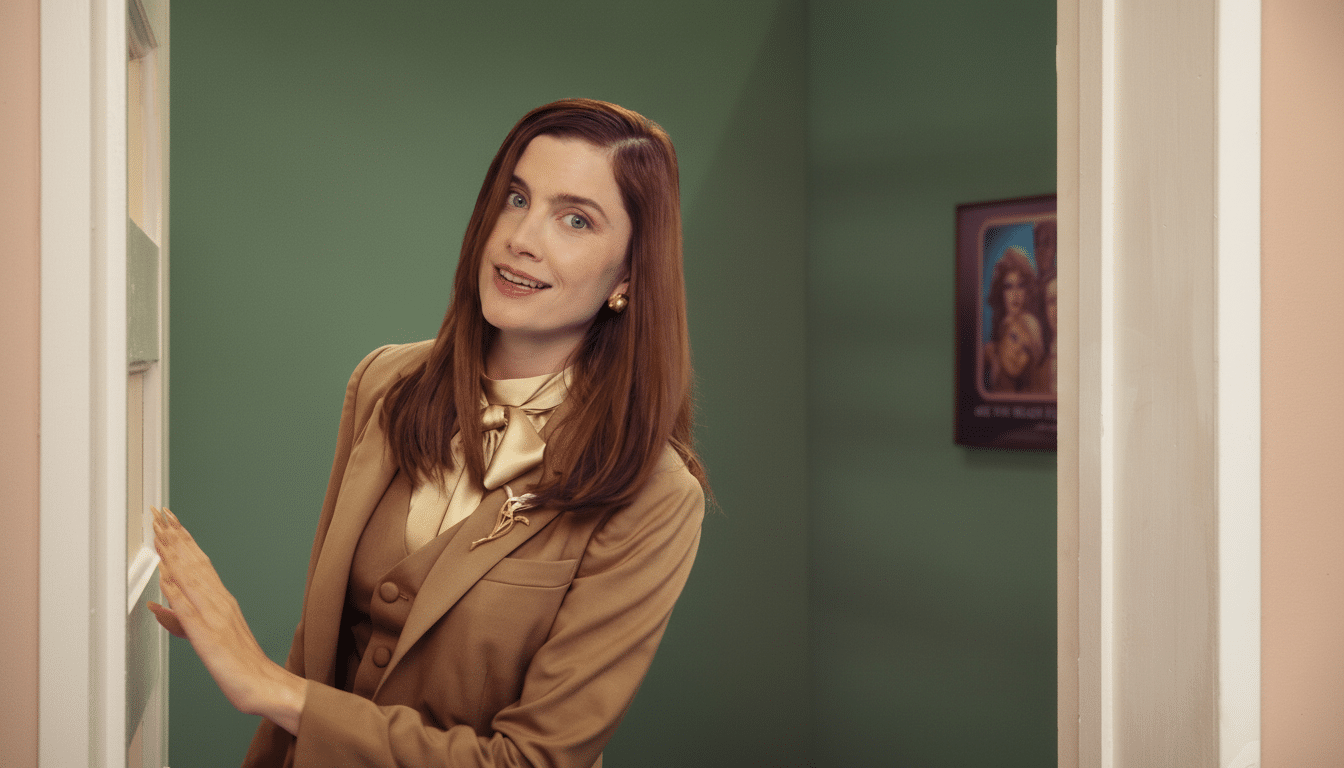
While guests show up as rock monsters, ’90s alt icons, or slime-soaked oddballs, Michaelis has been a constant in one camel suit across Seasons 1, 2, and 3. The outfit began as a simple hosting uniform and quietly transformed into a character choice—what “Vic the interviewer” believes a consummate professional looks like.
The suit’s history is pure production lore: after Season 1, Michaelis took it home; when the look proved essential to the show’s identity, the same suit returned for Season 2 and beyond. Pieces even moonlit elsewhere—Michaelis wore the pants in a Smartypants taping—cementing the getup as part of the extended VIP universe.
Why The Look Might Change In Future Seasons
Each season, the team reopens the wardrobe question: keep the signature suit or evolve the host’s silhouette. Comfort, continuity, and branding pull one way; the show’s appetite for surprise pulls the other. Michaelis is open to a refresh if it serves the bit—but they also know the suit functions like a neutral frame, letting the guest’s transformation command attention. Expect Season 4 to answer whether tradition or reinvention wins out.
Why The Very Important People Format Works So Well
VIP marries disciplines—bespoke prosthetics and wardrobe from scripted TV with the live-wire responsiveness of improv. That hybrid is rare outside sketch institutions like Saturday Night Live. It lets a performer’s first glance in the mirror dictate status, backstory, even vocal timbre, turning technical craft into a narrative springboard.
For Dropout, it is also a smart production strategy: a contained set, a small crew, and an edit that prizes density over spectacle. As the platform’s other hits—Game Changer and Dimension 20—have shown, strong concepts plus trusted performers can outperform bigger-budget comedy when the creative environment is built for play.
Very Important People is streaming on Dropout. Based on Michaelis’s blueprint—protect the surprise, prioritize the performer, and keep the world-building tactile—the next run should only get sharper.