


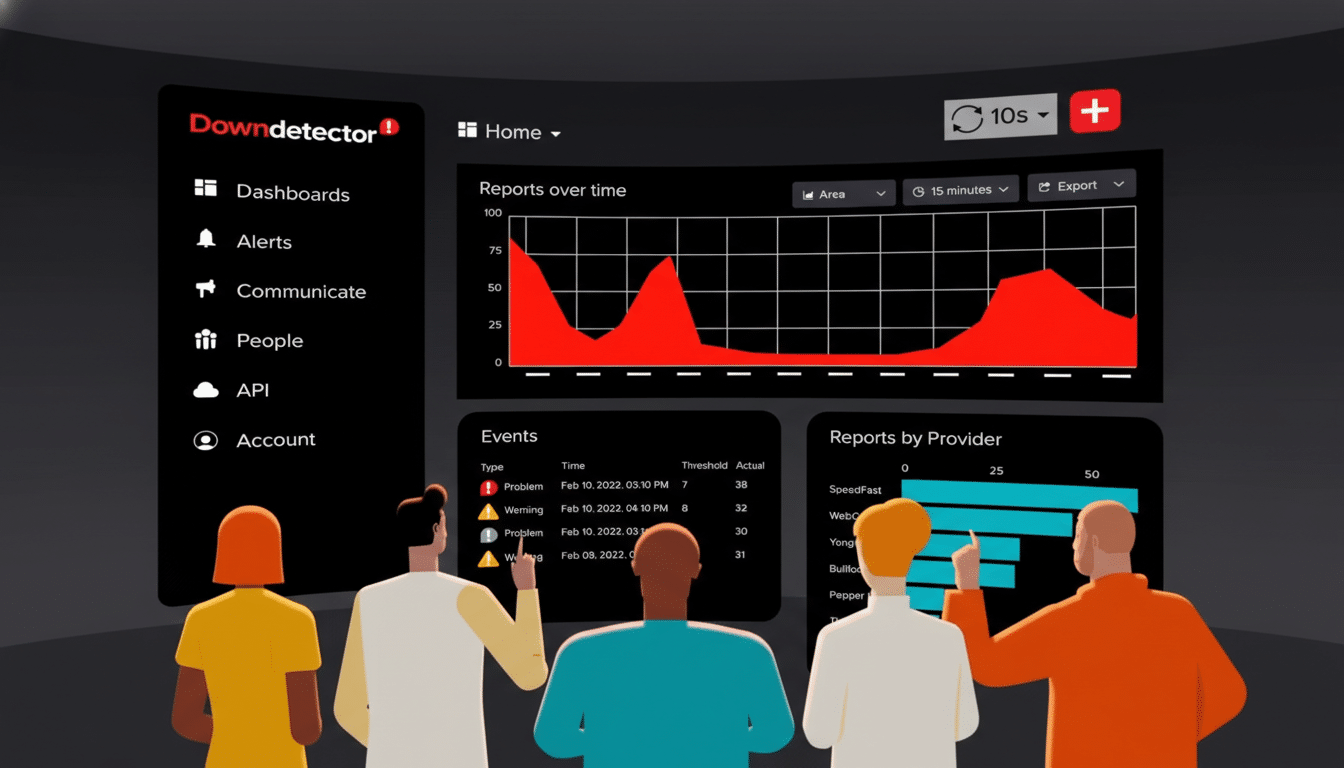
Verizon says it has fully resolved a large-scale wireless outage that disrupted voice, text, and data service for customers across the United States. Real-time monitoring service Downdetector logged a surge of reports that approached 200,000 at the height of the incident. The carrier confirmed that connectivity is back and pledged account credits for those affected, adding that a simple device restart may be required to reconnect cleanly to the network.
What Happened and Who Was Affected by the Outage
Customers in multiple regions reported their phones displaying an SOS indicator in place of bars, a sign that the device could reach emergency services but not the primary network. Reports came in from coast to coast, suggesting a centralized issue rather than an isolated tower or regional fiber cut. Several Verizon-managed online tools also became difficult to access during the disruption, a common symptom when core systems are under strain.
The outage likely impacted users of mobile virtual network operators that rely on Verizon’s infrastructure, including brands such as Visible, Xfinity Mobile, Spectrum Mobile, and certain prepaid providers. In many cases, customers could not place regular calls or send messages, though emergency calling remained available. According to guidance from the National Emergency Number Association, modern phones can attempt 911 over any reachable network, which aligns with the SOS indicator many users observed.
What Verizon Says and What to Do Next to Recover
Verizon states the outage has been resolved and advises customers who still experience issues to power cycle their devices or toggle Airplane Mode to trigger a fresh network registration. It may also help to check for a carrier settings update or, if problems persist, perform a network settings reset after backing up Wi-Fi passwords and eSIM details. The carrier says it will issue account credits and will communicate eligibility and amounts directly to impacted users.
Some services can take time to fully normalize after a major disruption. If calls and texts are working but visual voicemail, Wi-Fi Calling, or RCS chat remain inconsistent, give the network a bit of time to rebalance before attempting advanced troubleshooting. Business customers should verify that critical IoT endpoints—such as payment terminals, fleet trackers, and sensors—have reattached to the network.
Why Large Networks Fail and How They Recover
Carriers rarely disclose root causes immediately, but industry patterns offer clues. Modern voice and messaging ride on IP-based systems like IMS and VoLTE across 4G and 5G. If a core component such as authentication (HSS/UDM), session control, or DNS routing stumbles, customers can lose service even when cell sites and radios are functioning. A misconfigured software update, a faulty route advertisement, or a signaling storm can ripple nationwide within minutes.
Scale amplifies the impact. CTIA reports that U.S. mobile networks handle billions of text messages and many billions of voice minutes each month. Even short-lived issues can translate into millions of failed connection attempts. After a fix, carriers typically stage traffic back onto the network, which can lead to brief performance fluctuations as systems clear backlogs and reestablish sessions.
When outages are broad or touch emergency services, carriers are expected to notify the Federal Communications Commission’s Public Safety and Homeland Security Bureau. Federal agencies such as CISA often coordinate with providers on resilience, while state utility commissions may review service quality issues. These processes can surface details later, including whether the trigger was software, hardware, or an upstream interconnection problem.
Customer Takeaways and Next Steps After the Outage
If your line is back but still glitchy, try a reboot, confirm roaming is enabled if traveling, and ensure Wi-Fi Calling is on as a fallback in weak-signal areas. eSIM users who continue to struggle may need to re-download their profile through the carrier app. Keep an eye on your account for credit notifications and review your bill to ensure adjustments post correctly.
For critical communications, consider layering redundancy. Enabling Wi-Fi Calling, keeping an offline map, and maintaining a secondary messaging app that can fall back to data can help during rare network incidents. Most importantly, remember that SOS mode indicates emergency services remain reachable, which is the design goal of modern cellular standards even during broader outages.
With service restored, the focus shifts to stability and transparency. Customers want two things after an outage: reliable connectivity and a clear explanation. Verizon’s credit commitment is a start; a detailed post-incident report would complete the picture and help rebuild confidence that the underlying issue has been addressed for good.