


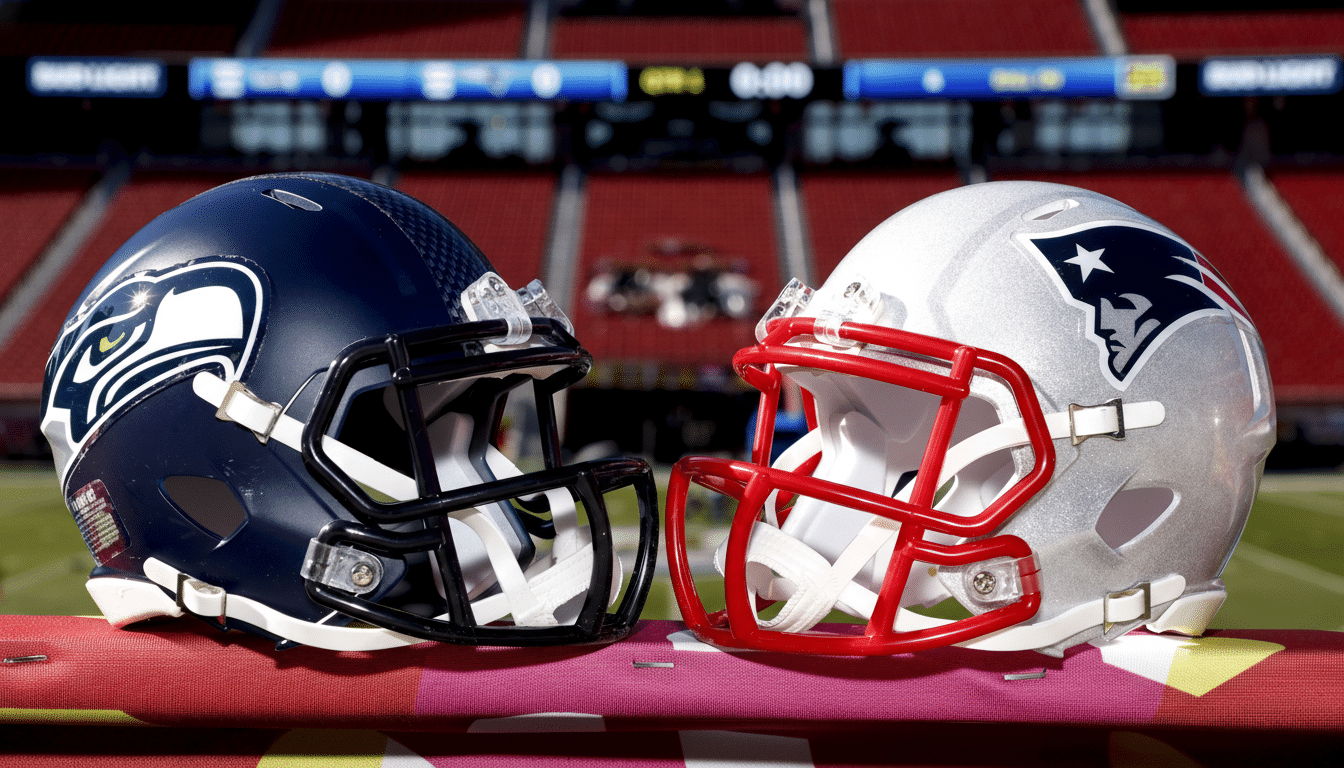
Headed to Levi’s Stadium for Super Bowl LX and wondering which carrier will keep your videos uploading and streams humming? Independent testing points to Verizon as the frontrunner for in-venue 5G performance, delivering the fastest downloads, uploads, and lowest latency among the big three carriers inside the stadium.
Why Verizon Tops the Stadium Speed Charts at Levi’s
According to Ookla’s latest stadium analysis, Verizon’s advantage isn’t an accident. The carrier’s 10-year partnership with the NFL, announced in 2021, has driven a dense buildout of 5G infrastructure at league venues—think upgraded distributed antenna systems, clusters of mmWave small cells for short-range capacity, and tuned mid-band coverage to fill the gaps. The result is a network engineered for the most demanding, high-density environment in sports.
At Levi’s Stadium, Verizon posted a blistering median download speed of 1,464.38 Mbps, nearly double its closest rival. AT&T registered 796.61 Mbps, while T‑Mobile delivered 768.01 Mbps. Uploads told a similar story: Verizon led at 244.06 Mbps, with T‑Mobile at 101.04 Mbps and AT&T at 76.71 Mbps. Latency—a key measure for responsiveness—came in at 17 ms for Verizon, compared with 24 ms for AT&T and 34 ms for T‑Mobile.
The contrast between stadium and street is stark. Ookla notes that nearby San Jose users averaged 167.57 Mbps across all carriers over the last half-year—fine for daily use, but nowhere near the multi-gigabit bursts you’ll see when carriers concentrate capacity inside a venue built for crowd surges.
What That Means for Fans on Game Day at Levi’s Stadium
In practice, those numbers translate to instant photo uploads, ultra-fast highlights sharing, smoother multi-angle streaming in team apps, and more reliable betting and fantasy updates. Lower latency helps with live app responsiveness, from AR activations to mobile concessions ordering, when tens of thousands of phones are hammering the network at once.
Your device still matters. Phones that support mmWave 5G in the US—recent iPhone models, flagship Samsung Galaxy devices, and current Google Pixels—will see the biggest top-end gains on carriers that deploy mmWave heavily in the bowl and concourses. Mid-band 5G (like C‑band) boosts coverage and consistency for everyone, but the very highest bursts usually come from mmWave nodes when you’re near one.
Pro tips to maximize speeds:
- Make sure 5G is enabled in settings.
- Update your device and carrier software before you arrive.
- Toggle airplane mode briefly if your phone gets “stuck” on a congested band.
- If uploads lag, try stepping onto a concourse or near an open section where small cells are often mounted.
How AT&T and T‑Mobile Compare on 5G at Levi’s Stadium
Both AT&T and T‑Mobile have quietly improved their stadium game, with near‑gigabit median downloads in Ookla’s testing at Levi’s Stadium—strong results by any measure. AT&T has ramped C‑band deployments and venue upgrades under its 5G+ branding, while T‑Mobile leans on its extensive 2.5 GHz mid‑band spectrum and targeted mmWave in select hot zones.
Outside of stadium settings, national reports from network testers frequently show T‑Mobile leading overall median download speeds across US cities thanks to broad mid‑band coverage. But inside NFL venues, Verizon’s heavier mmWave density and NFL-focused engineering give it a measurable edge when 65,000+ fans hit the network at once.
Using Last Year’s Super Bowl as a Performance Baseline
The trajectory is up. During last year’s Super Bowl in New Orleans, Ookla clocked Verizon at a 1,190.53 Mbps median download, with AT&T at 683.13 Mbps and T‑Mobile at 562.95 Mbps. Levi’s Stadium’s current figures show continued upgrades across the board, suggesting fans should expect faster performance year over year—though real‑time conditions, seat location, and device mix will always influence what you see on your screen.
Bottom line: Expect the fastest in‑stadium 5G with Verizon
If your top priority is the fastest possible in‑stadium 5G at Super Bowl LX, Verizon is the pick, backed by independent tests and a venue-first buildout strategy. AT&T and T‑Mobile users should still experience markedly better speeds than in years past, but for posting those 4K touchdown clips in seconds, Verizon customers will have the clearest lane.