


The United States and China said they will establish a communication mechanism for AI-related incidents, extend their trade truce by two months and pursue more favorable tariff treatment for roughly $30 billion in non-sensitive goods in each direction after the Trump-Xi summit in Washington. The package creates new channels for managing friction between the world’s two largest economies, but it does not amount to a comprehensive settlement of their trade or technology disputes.
For businesses, the immediate significance is less the announced framework than the details still missing. Government statements described in Associated Press reporting did not identify the goods covered by the tariff arrangement, the tariff rates involved, the legal mechanism for any change or an effective date. Nor have the governments publicly set out operating rules for the AI channel, including which agencies would participate or what kinds of incidents would trigger its use.
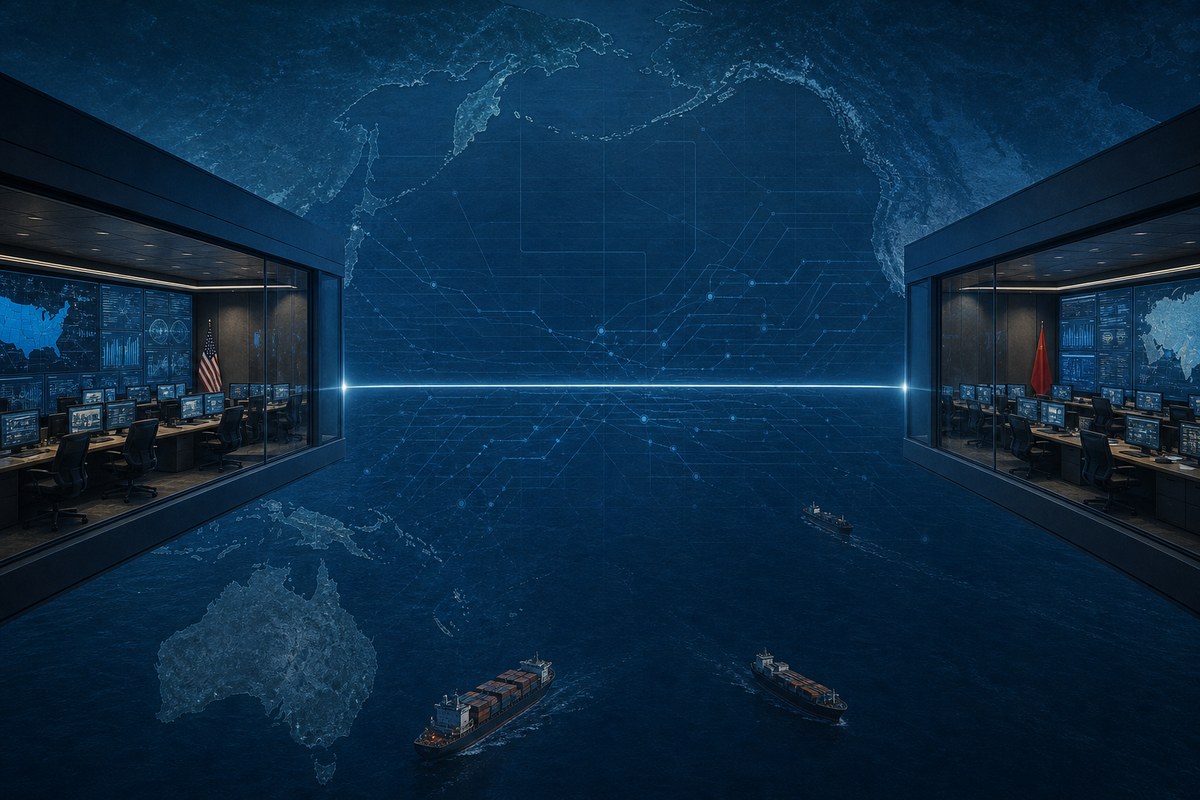
Several limited arrangements, not one broad deal
The summit’s reported outcomes cover separate tracks that have often moved unevenly: trade, military communications and advanced technology. The White House said the countries would open a channel for AI-related incidents and hold an AI-specific dialogue in November. Al Jazeera’s account described the initial White House announcement as a step toward discussing the risks and benefits associated with AI.
The mechanism should not be confused with a broad agreement on AI development, export controls or access to advanced chips. It appears to be a crisis-management and communications arrangement. Public accounts do not define whether it would cover failures involving commercial systems, military uses of AI, cyber incidents, misinformation or some narrower category. Those distinctions will determine whether the channel becomes a practical contact point or remains largely diplomatic.
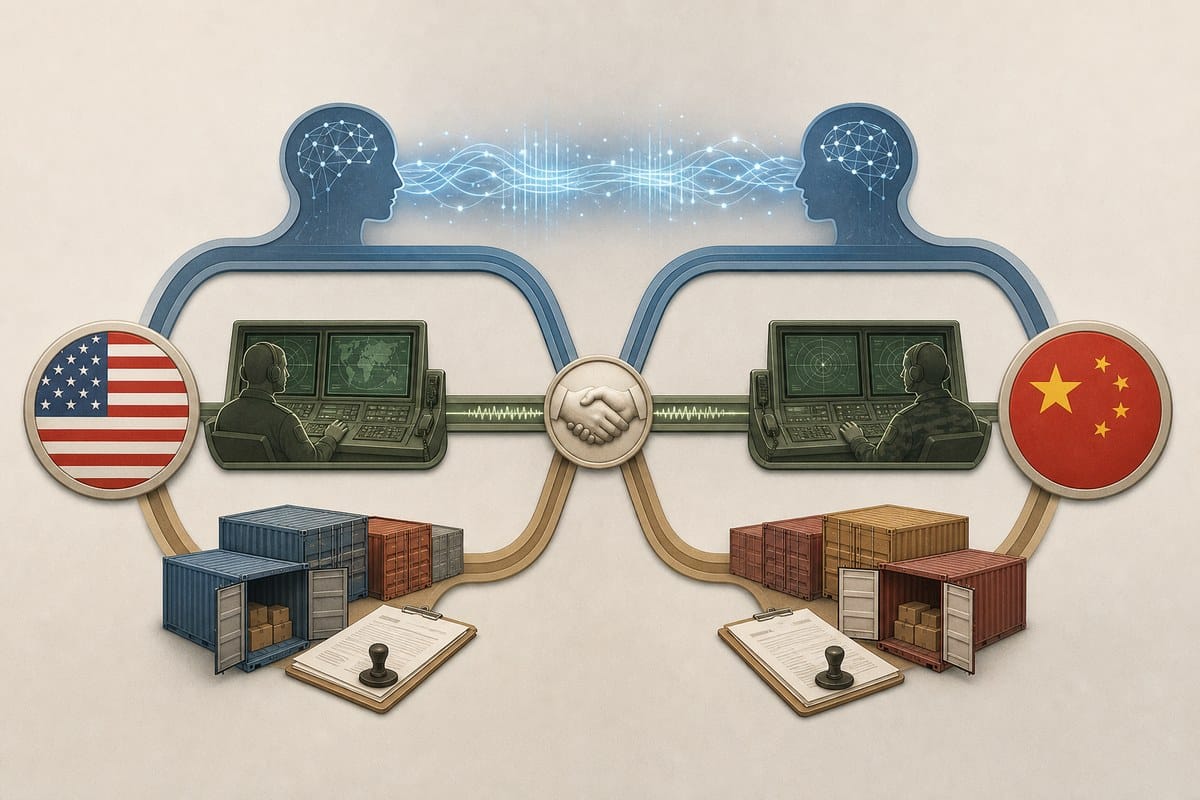
China’s Foreign Ministry, according to the AP report, also said the two sides would sign a memorandum of understanding aimed at strengthening military crisis communications and crisis prevention between their armed forces. That is related to, but separate from, the AI arrangement. Building both tracks suggests the governments see technology risks and conventional military contacts as overlapping areas of potential escalation, yet the reported announcements offer no timetable for implementation of the military memorandum.
Chinese state media later confirmed the AI communication arrangement, according to wire reporting carried by AOL. That followed an earlier period in which Beijing had not immediately commented publicly on the White House statement, illustrating how the two governments’ disclosures did not arrive in a fully synchronized fashion.
Tariff language leaves the commercial effect unresolved
The trade component likewise requires careful reading. The reports describe an agreement to provide more favorable tariff treatment, or a pledge to reduce reciprocal tariffs, on about $30 billion of non-sensitive goods in each direction. That supports neither a claim that a defined tariff cut has already taken effect nor a calculation of savings for importers and exporters.
A $30 billion figure on each side would cover approximately $60 billion in two-way goods trade if the amounts are separate and fully implemented. But without product lists, tariff schedules or rate changes, it is not possible to determine which industries would benefit, whether coverage is symmetrical or how much customs costs might fall. The designation of goods as non-sensitive also points to the limits of the move: the accounts do not suggest that the countries resolved restrictions tied to strategically important technologies or other contested sectors.
The countries also extended their trade truce by two months, moving the reported deadline from November to January. That extension gives negotiators time to work through the announced arrangements and preserves a pause in a period when businesses face uncertainty over cross-border sourcing and pricing. It does not remove the possibility that tariff disputes could re-emerge once the new deadline approaches.
In a separate trade commitment attributed to the White House, China would buy at least 10 million metric tons of U.S. coal over 2027 and 2028. The reports did not specify pricing, buyer entities, grades of coal or enforcement terms. Such details matter because commodity purchase targets can signal political intent while leaving commercial execution to negotiations among buyers, sellers and logistics providers.
November and December meetings will test the framework
The next substantive checkpoint is the planned November AI dialogue, alongside a reported meeting between President Donald Trump and President Xi Jinping at the Asia-Pacific Economic Cooperation summit in Shenzhen. The leaders are also expected to meet at the Group of 20 gathering in Miami in December, according to CBS News’ report.
Those meetings give both governments repeated opportunities to convert broad language into procedures: named contacts for AI incidents, rules for military crisis communication, covered tariff lines and an implementation schedule. They also allow negotiators to separate areas where limited coordination is feasible from disputes that remain fundamental to economic competition.
Trump characterized the United States as ahead of China in AI and said Washington would not broadly integrate its AI efforts with Beijing, a political assessment reported by CBS rather than an independently established benchmark. That position underscores the narrow scope of the new channel. The countries are creating a means to communicate about risks while continuing to compete over the technology itself.