


United Airlines says more than a quarter of its daily departures now offer free, high-speed Starlink Wi‑Fi, a milestone that translates to roughly 1,200 flights each day. The rapid expansion underscores how quickly SpaceX’s low-Earth-orbit (LEO) network is reshaping in-flight connectivity on U.S. carriers.
A Quarter Of Departures Now Online With Starlink
United reports that Starlink is already available on “most” of its two-cabin regional jets, including Embraer E170/E175 and Bombardier CRJ-550/700 aircraft. The airline says more than 300 planes have been upgraded in about 10 months, dramatically improving the odds of getting fast Wi‑Fi on smaller jets that previously relied on older air-to-ground systems.

Early usage suggests strong adoption. United says over 7 million travelers have flown on Starlink-equipped aircraft across more than 129,000 flights, with 3.7 million devices connected aloft. Unlike many legacy offerings, United’s Starlink access is free; passengers log in with a MileagePlus account and view a brief ad before going online.
Regional Fleet Leads The Rollout Of Starlink Wi‑Fi
United focused first on regional workhorses that were stuck with slower, higher-latency connectivity or none at all. The airline notes that the smallest regional types—Embraer E145 and Bombardier CRJ-200—still fly without onboard Wi‑Fi or power outlets, but the new installs target the larger two-cabin jets that handle a big share of business-heavy routes and hub feeders.
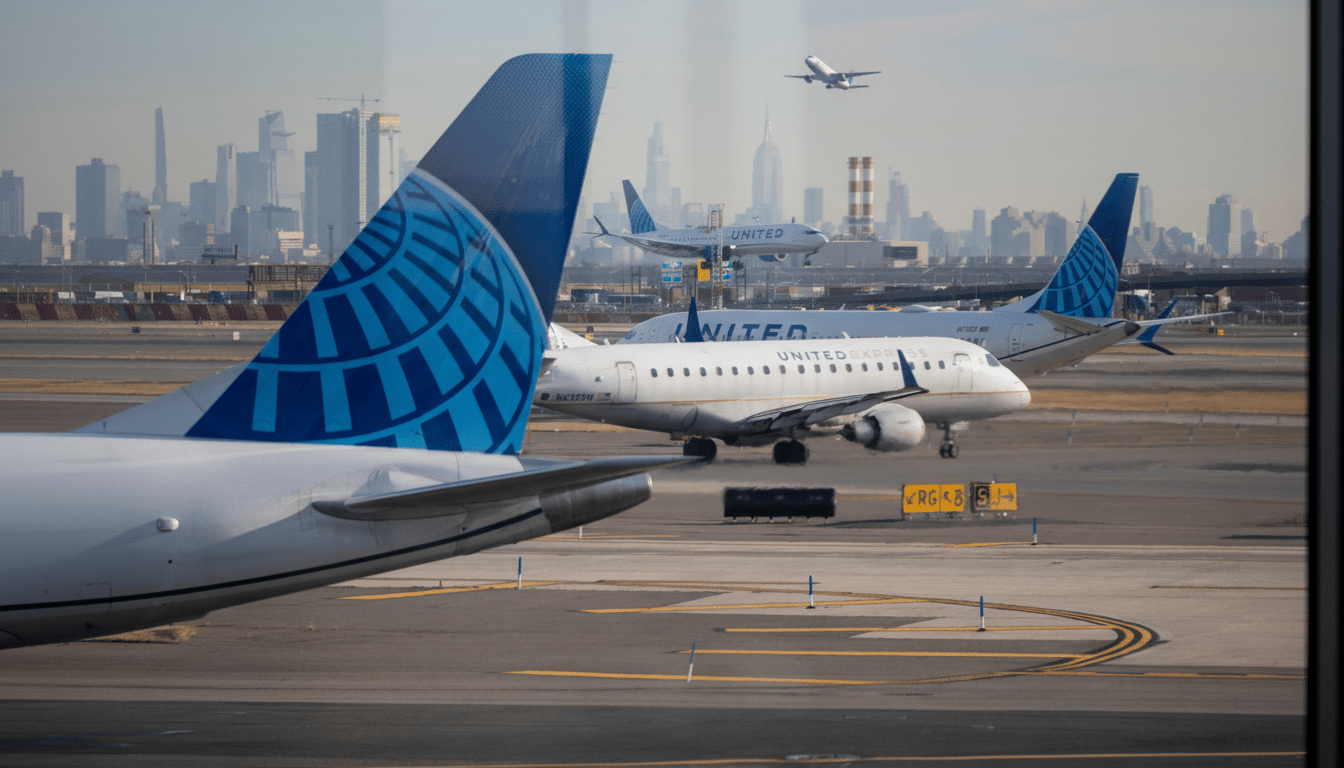
Aviation enthusiast fleet trackers indicate near-complete coverage on some subfleets, particularly the E175 and CRJ-550. On the ground, United’s app and website list Starlink availability during booking and check-in. In person, look for the low-profile, flat antennas mounted atop the fuselage—a telltale sign a jet carries LEO hardware.
What Passengers Can Expect In The Air With Starlink
Starlink’s LEO architecture is built for lower latency and higher throughput than traditional geostationary (GEO) satellite services. With satellites orbiting much closer to Earth, LEO generally cuts lag to a fraction of GEO’s typical hundreds-of-milliseconds round trip. The result is smoother VPN sessions, clearer video calls, and faster cloud app performance—use cases that often frustrate travelers on older systems.
United’s decision to make access free and ad-supported mirrors broader industry trends toward removing paywalls. Trade groups and industry trackers such as APEX and ATPCO’s Routehappy have documented increasing availability of “good” and “better” Wi‑Fi tiers, with airlines using connectivity as a loyalty driver. Requiring a MileagePlus login adds a customer-data bonus for United while keeping friction low for passengers.
Rivals Chart Different Connectivity Paths
United is the largest U.S. airline publicly committed to a broad Starlink deployment, while its biggest domestic competitors—Delta Air Lines, American Airlines, and Southwest Airlines—continue to lean on GEO-based providers. Those systems can deliver strong downlink speeds, but uploads and latency often lag LEO performance, which can matter for collaboration tools and live streaming.
Elsewhere, Alaska Airlines and its Hawaiian Airlines subsidiary are also moving to Starlink, signaling a wider shift among carriers that prize low latency on long overwater or remote routes. JetBlue, meanwhile, plans to adopt Amazon’s Project Kuiper LEO service once it’s operational, positioning competition among LEO networks as a new chapter in the in-flight internet race.
What’s Next For United’s Fleet And Starlink Rollout
United says the program will expand beyond regional jets, with a target of equipping more than 500 mainline aircraft as the rollout matures. That scale-up will put pressure on installation capacity, supply chains, and certification schedules, but the airline’s pace so far suggests momentum is on its side.
To reinforce the message, United has promoted the milestone with high-profile marketing, positioning Starlink as a generational upgrade for in-flight Wi‑Fi. The pitch is straightforward: connectivity that works more like home broadband than an airborne novelty, without a checkout page stopping you at pushback. For travelers, the bottom line is simple—on more than 25% of United departures, the internet is finally catching up to the rest of the cabin experience.