


Unlock hidden frequencies with our comprehensive guide on Spectrum Analyzer! A must-read for tech enthusiasts! #SpectrumAnalyzer
Spectrum Analyzer
A spectrum analyzer is an electronic device that measures and displays the strength, or amplitude, of signals across a range of frequencies. For engineers and technicians looking to manage costs without sacrificing performance, the option to shop high-quality used spectrum analyzer equipment provides a practical and reliable solution. Instead of showing how a signal changes over time, it presents the signal in the frequency domain, allowing users to see which frequencies are present and how strong they are. This makes it possible to detect interference, analyze signal quality, identify noise, and study how different signals behave. Spectrum analyzers are widely used in telecommunications, broadcasting, electronics testing, research, and many other fields where signal performance matters.
- Spectrum Analyzer
- Invisible Frequencies
- Unfolding the Invisible Frequencies
- Evolution of Spectrum Analyzers
- Basic Components and Operational Structure of a Spectrum Analyzer
- Spectrum Analyzer Working Principle
- Characteristics and Parameters Measured by a Spectrum Analyzer
- Spectrum Analyzer Features and Capabilities
- Breakdown of Its Unique Capabilities
- Practical Guide on Using a Spectrum Analyzer
- Pre-Operational Checks and Set-Up
- Steps for Analysing and Interpreting Results
- Common Missteps in Using Spectrum Analyzers
- Advice on How to Avoid Them
- Conclusion

Invisible Frequencies
Invisible frequencies play a major role in everyday life, even though we cannot see or hear them. Radio waves allow mobile phones to communicate, Wi-Fi enables internet access, and microwave frequencies heat food. Medical technologies such as MRI scanners rely on invisible electromagnetic waves to produce detailed images of the human body. Understanding these frequencies helps engineers design better systems, improve safety, and drive innovation. When people understand how these unseen forces work, they gain a deeper appreciation of the technology that supports modern living.
Unfolding the Invisible Frequencies
Invisible frequencies belong to the electromagnetic spectrum, which includes radio waves, microwaves, infrared, ultraviolet, X-rays, and gamma rays. While humans can only see a small portion of this spectrum known as visible light, the rest plays a critical role in communication, healthcare, industry, and science. These frequencies travel through space at the speed of light and can carry information, energy, and data across vast distances. Understanding their nature helps professionals design systems that use these frequencies efficiently and safely.
Evolution of Spectrum Analyzers
Spectrum analyzers were first developed in the mid-20th century as large, analog devices used mainly in laboratories and research facilities. Early models relied on mechanical tuning and analog displays, which limited their accuracy and speed. As digital technology advanced, spectrum analyzers became smaller, faster, and more versatile. Modern instruments now feature digital signal processing, touchscreen interfaces, and real-time analysis capabilities, enabling users to analyze complex signals with greater precision and ease.
Basic Components and Operational Structure of a Spectrum Analyzer
A typical spectrum analyzer consists of several core components, including an input stage, mixer, local oscillator, filter, and display system. The input signal is first conditioned and then mixed with a known frequency to convert it into a lower, more manageable frequency. This signal is filtered and processed to extract frequency information, which is then displayed visually. The result is a graph showing frequency on the horizontal axis and amplitude on the vertical axis, allowing users to see the signal’s spectral composition.
Spectrum Analyzer Working Principle
The working principle of a spectrum analyzer is based on converting time-domain signals into frequency-domain representations. Instead of observing how a signal changes over time, the analyzer reveals which frequencies are present and how strong they are. This transformation allows users to understand signal behaviour, detect unwanted interference, and evaluate performance.
Characteristics and Parameters Measured by a Spectrum Analyzer
Spectrum analyzers measure several important signal characteristics, including frequency, amplitude, bandwidth, and signal-to-noise ratio. They can identify harmonics, spurious emissions, distortion, and interference. These measurements help engineers assess signal quality, verify compliance with regulations, and optimize system performance. By analysing these parameters, users gain valuable insights into how signals behave and how they can be improved.
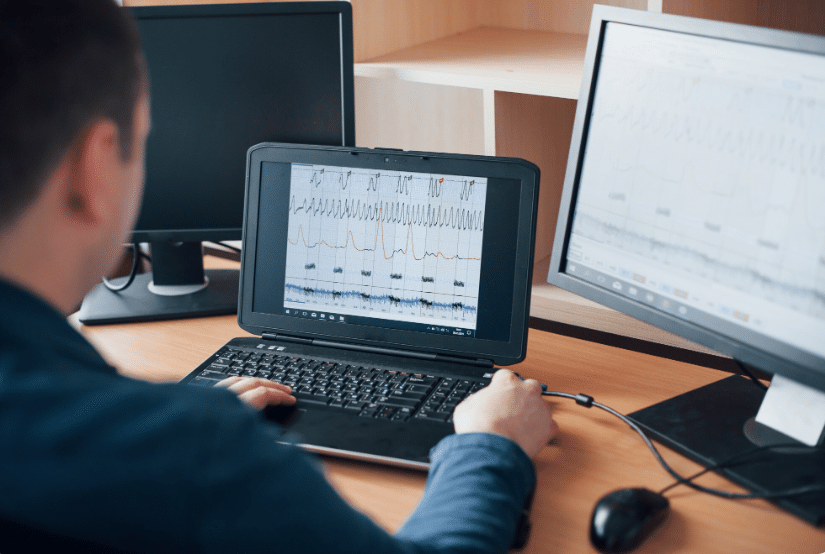
Spectrum Analyzer Features and Capabilities
Modern spectrum analyzers offer a wide range of features designed to enhance usability, accuracy, and efficiency. These features support advanced analysis, simplify complex tasks, and improve overall productivity.
Breakdown of Its Unique Capabilities
Spectrum analyzers stand out because they provide a clear visual representation of frequency content, making complex signals easier to understand. They can detect weak signals in the presence of noise, identify sources of interference, and support troubleshooting and system optimization. Their ability to analyze a wide range of frequencies with high precision makes them indispensable in fields such as telecommunications, broadcasting, aerospace, and research.
Practical Guide on Using a Spectrum Analyzer
Using a spectrum analyzer effectively requires preparation, understanding of settings, and proper interpretation of results. A structured approach ensures accurate measurements and meaningful insights.
Pre-Operational Checks and Set-Up
Before using a spectrum analyzer, it is important to inspect the equipment and ensure it is properly calibrated. Check all cables, connectors, and power supplies to confirm they are in good condition. Set the frequency range, reference level, and resolution bandwidth according to the signal being analyzed. Proper setup minimises errors and ensures reliable results.
Steps for Analysing and Interpreting Results
Once the spectrum is displayed, users should identify key features such as peaks, noise floor, and harmonics. Compare measured values with expected or standard levels to assess performance. Look for unusual signals or interference that may indicate problems. By interpreting these results carefully, users can diagnose issues, optimize systems, and make informed decisions.
Common Missteps in Using Spectrum Analyzers
Even experienced users can make mistakes when using spectrum analyzers. Understanding common pitfalls helps prevent errors and improve measurement accuracy.
Advice on How to Avoid Them
To avoid mistakes, users should follow proper setup procedures, verify calibration, and understand the analyzer’s settings. Taking time to review the displayed spectrum carefully and cross-checking results with known values improves accuracy. Continuous learning and practice help users develop confidence and proficiency in spectrum analysis.
Conclusion
Spectrum analyzers play a critical role in understanding and managing invisible frequencies that shape modern technology. Visualizing signals in the frequency domain helps engineers detect problems, optimize systems, and ensure reliable communication. From wireless networks and medical equipment to research laboratories and industrial systems, spectrum analyzers are indispensable tools that support innovation and progress.
By learning how these instruments work, how to use them effectively, and how to interpret their results, users gain valuable skills that enhance their technical knowledge and practical capabilities. As technology continues to evolve, spectrum analysis will remain a cornerstone of signal measurement and management, helping professionals unlock the full potential of invisible frequencies in an increasingly connected world.