


UC San Diego loaned 517 donated bodies from its body-donation program between April 2024 and December 2025, including 273 to the U.S. Department of Defense, according to university committee records described in an October 25 report by Times of San Diego. The disclosures have renewed questions about whether people who donate their remains, and their families, receive sufficiently specific information about possible military-associated uses.
The new report includes the account of relatives of Niranjana Anandpura, who said they were not told her remains could be sent to a military cadaver laboratory. The family said she would not have agreed to donation under those circumstances. There is no evidence in the available reporting establishing whether Anandpura’s remains were ever used in military-associated training, and the records do not show which version of UCSD’s donor disclosures she received.
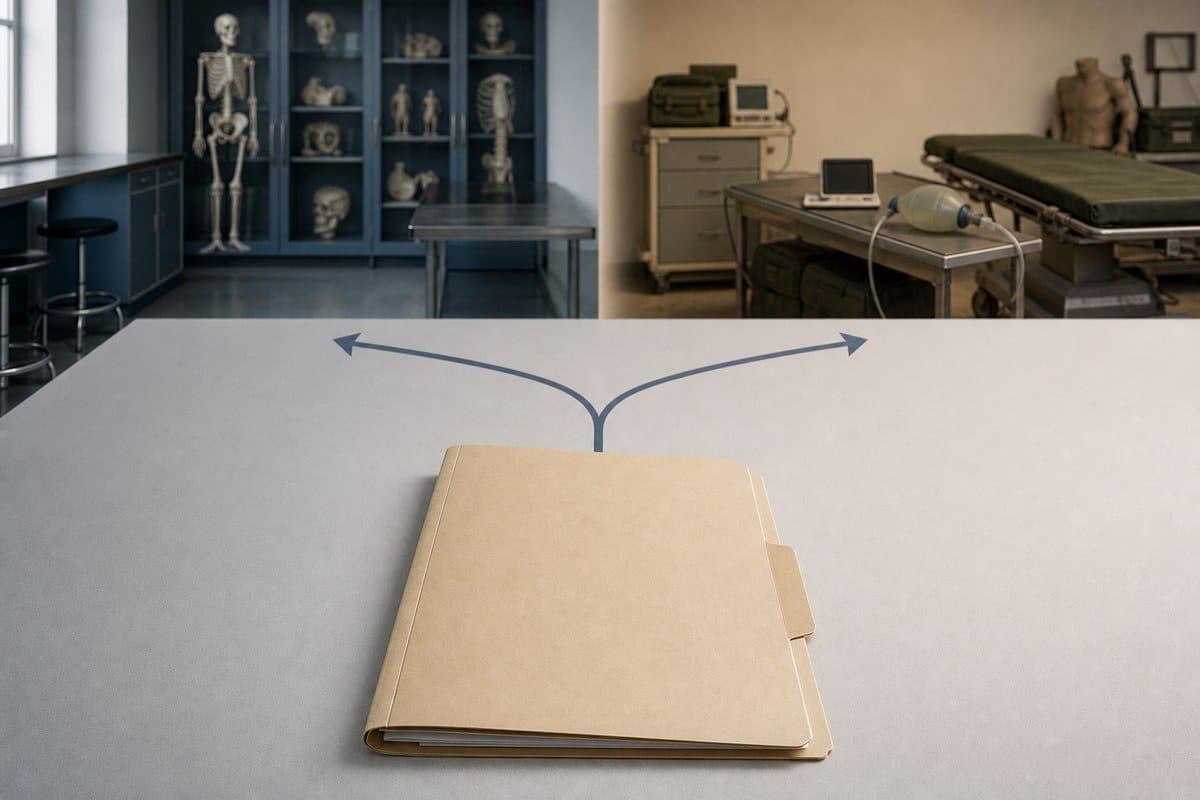
The issue is not a clinical or scientific finding. It is a medical-ethics and informed-consent question involving anatomical donation, the oversight of transfers between institutions and the language used to explain downstream educational uses of donated remains.
What the reported records show
Times of San Diego reported that UCSD’s Anatomical Materials Review Committee recorded 517 donor-body loans over the 21-month period. Of those, 273 were listed as going to the Department of Defense. The outlet reported that 250 cadavers and 20 body parts went to a department manager at Naval Medical Center, with listed purposes that included emergency medicine, general surgery, orthopedic procedures, surface and special warfare training, and tactical combat casualty courses.
Those figures should not be read as a count of bodies sent to the Israeli military. The 273 figure concerns Department of Defense transfers. A separate route involved transfers from UCSD to the University of Southern California, whose program had supplied cadavers under a Navy arrangement involving Israeli military medical personnel, according to a June investigation by Al Jazeera.
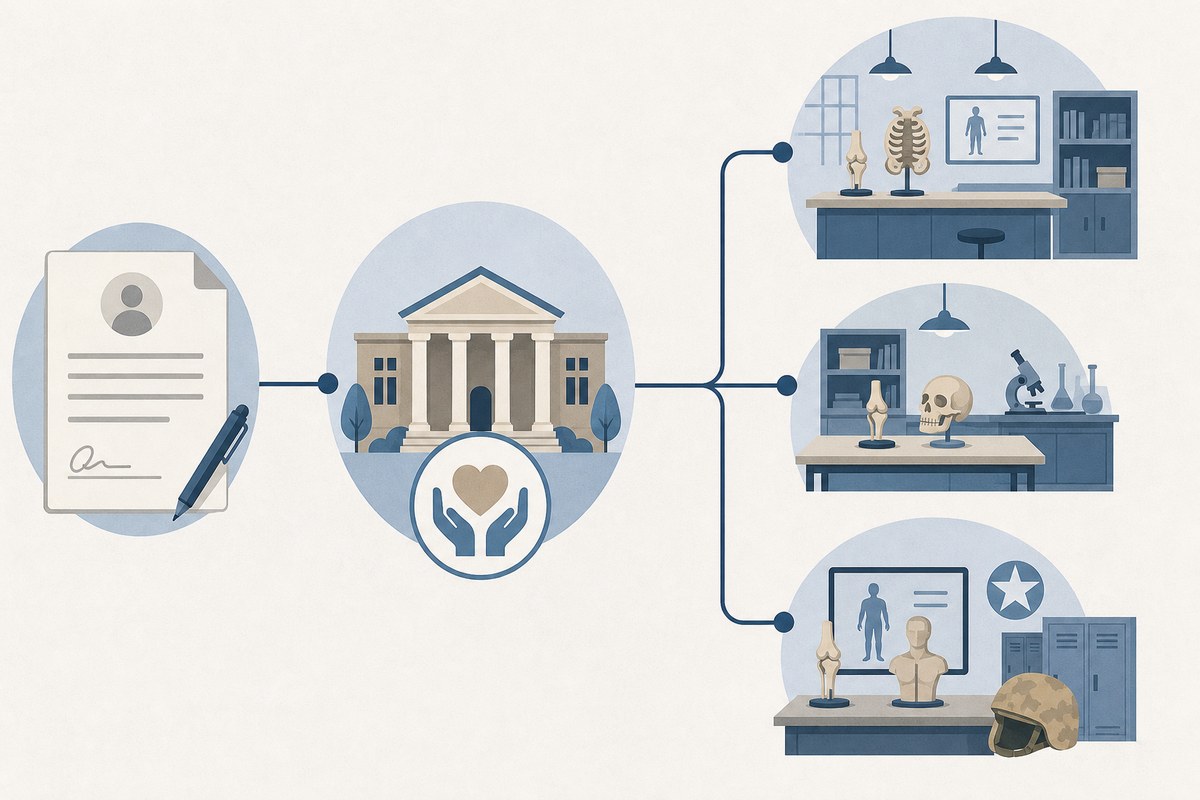
The scope of UCSD-to-USC transfers is not fully resolved by the available reports. Al Jazeera reported 124 bodies transferred from UCSD to USC between 2024 and early 2026. Times of San Diego reported 41 cadavers loaned from UCSD to USC from April 2024 through December 2025, including 23 it said were sent to the Israel Defense Forces for training. The different totals may reflect different date ranges, categories of transfers or underlying records, but neither report provides enough documentation to reconcile them conclusively.
Loans, training and contested terminology
UC Health spokesperson Heather Harper told Times of San Diego that UCSD treats the transfers as loans, not sales, and does not sell donated bodies. Harper said the university supports medical education for U.S. military health professionals and described the use of anatomical remains as practical skill-building for health-care personnel.
UCSD previously objected to Al Jazeera’s characterization of a USC-linked course as military training. The university said that label mischaracterized the course, while the Navy told the outlet that surgical tools were used to recreate complex injury patterns in a high-fidelity training environment. At the same time, the UCSD committee records reported by Times of San Diego list uses explicitly associated with special warfare and tactical combat casualty instruction.
The apparent disagreement is partly about terminology, but the records establish a more concrete point: donated remains were transferred for Defense Department-associated medical education and training. They do not, by themselves, settle how each course should be classified or whether every participant’s role was military, medical or both.
Disclosure questions remain central
Earlier reporting found that UCSD and USC donors could not direct the precise uses of their bodies or learn those uses after the fact. Before Al Jazeera published its June investigation, UC Health updated a body-donation frequently asked questions page to say that remains could be shared with other institutions and used to train military medical personnel.
That revision is significant because it indicates that military medical training and transfers to other institutions were later acknowledged in public-facing donor information. It does not establish what any particular donor had been told previously. The available reporting does not include the full sequence of donor forms, dates when each version was used or evidence that every family read the same materials.
For anatomical donation programs, broad consent can cover a range of educational and research uses. But the reports raise a narrower transparency question: whether a general authorization for medical education adequately conveys that remains could travel to outside institutions or be used in courses linked to military medicine, special warfare or combat-casualty care. That question is especially salient when donors or relatives might view those uses differently from conventional medical-school instruction.
A changing relationship with USC
Times of San Diego reported that USC said in September it would not renew its military cadaver contract. UCSD subsequently said it would no longer supply USC because changes to USC’s laboratory no longer met UC requirements. The reporting does not identify a public finding by an ethics board or regulator concluding that UCSD violated a consent rule.
Advocates have pressed for outside scrutiny. In an October 2025 statement, the Greater Los Angeles office of the Council on American-Islamic Relations called for disclosure and an independent ethics review of USC’s reported arrangements, though its allegations and policy demands are not independent verification of the underlying contracts. The organization’s public statement also illustrates how the issue has become tied to wider debate over the Israeli military’s role in the training program.
For UCSD donors and their families, the unresolved practical questions are more immediate: what potential uses were disclosed at the time of consent, what options existed to limit transfers, and whether institutions will make those answers available before—not after—a donation is made.