


Uber approved thousands of drivers who should have been disqualified because of crime and other safety issues, a new investigative report found, and the ride-hailing company implemented a system for vetting that is “all grease and no glue.” Companies offering security screening for tens of millions of passengers across Michigan issued meaningless reports, assumed identities that were obviously faked, or carried on without state approval. The company has defended its approach as a way to strike a balance between safety and second chances, but the findings detail gaps that critics argue leave riders — particularly women — vulnerable.
What the investigation found about Uber’s screening
It would do so even if the applicant had violent felonies on his or her record — assault of a child, among other charges — as long as the convictions were older than seven years, according to The New York Times. The company has long had a permanent ban on murder, kidnapping, sexual assault and terrorism, but the investigation found approvals for a series of other violent crimes beyond that seven-year period.

The Times also pinpointed a systemic blind spot: in 35 states, background checks usually looked for places where a driver lived, not convictions elsewhere. That can let records slip through the cracks in a system designed for speed and scale, rather than comprehensive cross-state screening.
The seven-year rule and its exceptions explained
Its seven-year lookback, Uber says, “strikes the right balance,” echoing those made by advocates of fair-chance employment and state laws that restrict how far back consumer reporting agencies can search. But safety experts say the importance of an offense can be more significant than its age, and that people-based checks are only as potent as their source databases.
Uber has fought fingerprint-based checks for years, contending that they are slower, more expensive and give an incomplete picture because federal rap sheets can be fraught with errors. Cities such as Houston and regulators for traditional cab companies have mandated fingerprinting for years, while ride-hailing apps rely mostly on commercial vendors that access multi-jurisdictional databases and court records. The Times reported that Uber considered more than 20 other safety steps over the past few years — such as fingerprint screening — but rejected many of them in the face of resistance regarding cost and onboarding speed.
Sexual misconduct reports and rider risk factors
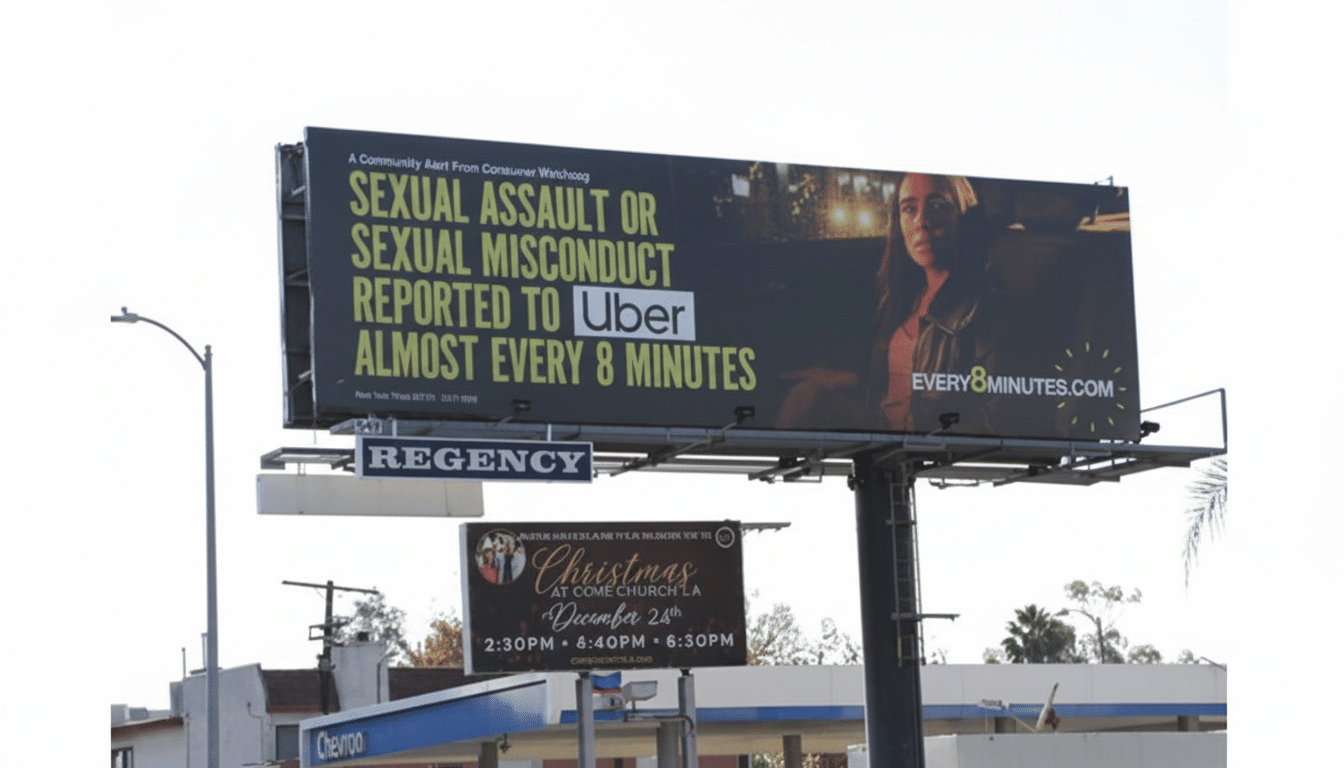
The Times’ investigation aligns with Uber’s own safety disclosures and internal data. Between 2017 and 2022, the company received reports of rider sexual assault or misconduct, on average, approximately every eight minutes. Uber said about 75 percent of them were put in less severe categories (like an explicit remark or an unwanted flirtation), a claim that nonetheless suggests that one serious report was lodged roughly every 32 minutes over that period.
Context from the U.S. Department of Justice underscores what is at stake: Nearly a third of those arrested for rape have at least one felony on their record. The Times found numerous cases in which drivers with previous violent felonies were later charged with rape — including some in California, where a state law requires lifetime bans from gig-driving platforms for certain violent crimes.
State oversight and rejected drivers in Massachusetts
The most detailed evidence of screening gaps may come from Massachusetts. State regulators conducted their own reviews in 2017 of drivers already operating on ride-hailing platforms, disqualifying about 8,000 — most having been approved by Uber. That audit indicated that, depending on the state, riders had between a 1-in-4 and 1-in-10 probability of being matched with a driver who would be disqualified under more rigorous regulatory requirements.
Transportation safety officials say the difference underscores disparate rules and uneven data access across the United States. Even though it has established continuous criminal monitoring through third-party vendors and evolved its deactivation criteria in recent years, Uber’s background checks still exhibit serious legacy gaps and state-by-state inconsistencies that betray passengers’ trust and cause concern over safety.
The policies that Uber and Lyft offer on safety
Uber contends that people with older convictions can safely be reintegrated into the workforce, and that its screening, which is done in multiple layers — initial checks combined with ongoing monitoring of driver records — reduces risk.
Lyft has a tougher stance on violent histories, saying it does not accept applicants with violent convictions even if the crime is old. Lyft has also added features that allow riders to block particular drivers after awkward rides, indicative of a different approach to prevention and control.
Survivor advocates counter that ride-hailing companies ought to default to the most conservative violence-related record standard and be more public with how they deactivate drivers and handle disputes. Labor groups and reentry advocates say blanket bans can lock in inequality, pushing for individualized evaluations that would weigh factors like the type of offense, time since it was committed and rehabilitation.
What riders need to know now about staying safe
Riders can also use safety features in the app, including trip sharing, emergency assistance and audio recording pilots that operate in some markets.
- Verify the license plate and driver photo before entering.
- Sit in the back seat for more space and an easier exit.
- Keep trip details visible to a trusted contact.
The bottom line from the latest investigation is stark: screening policies — particularly the seven-year threshold and cross-state data gaps — have pushed people with violent felony histories onto the platform in extensive swaths of the country. Unless Uber tightens its eligibility requirements and standardizes checks across the map, pressure from regulators, lawmakers and the public is likely to grow.