


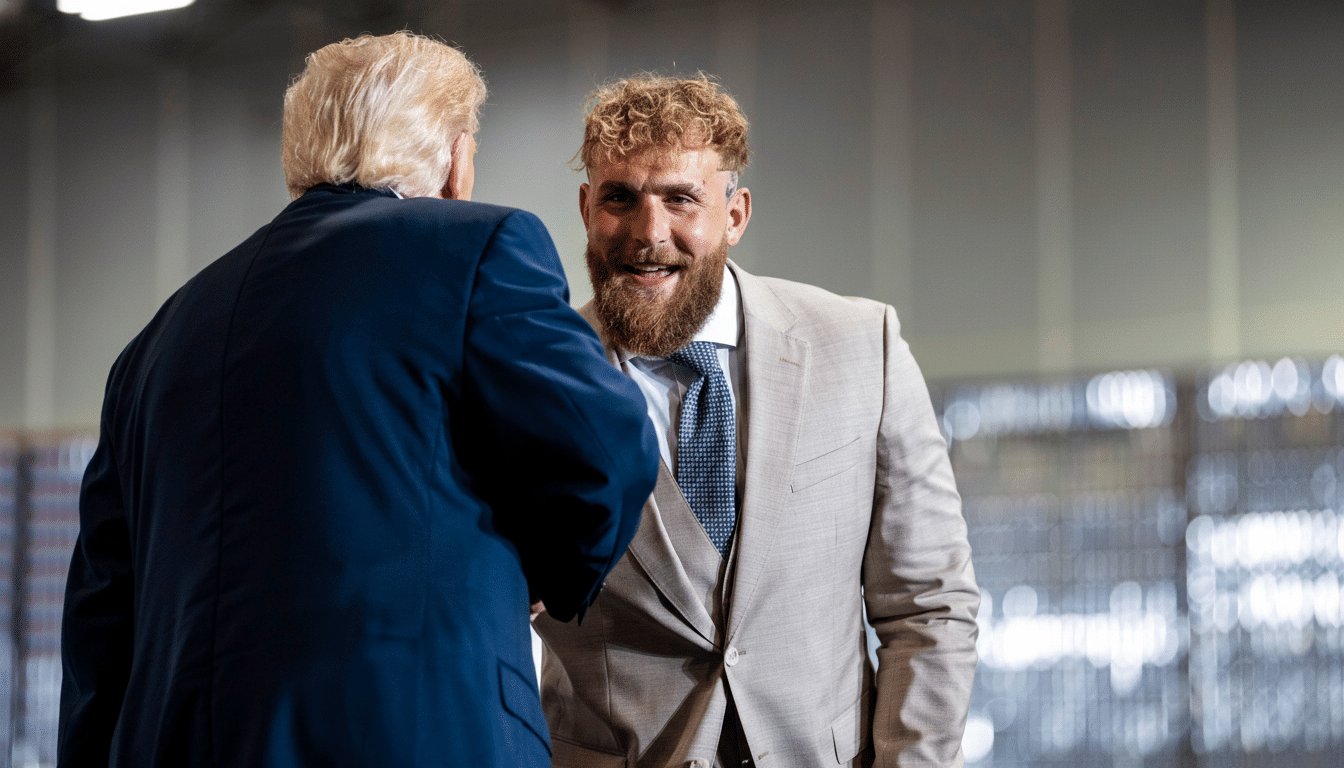
At a Kentucky rally, President Donald Trump spotlighted creator-turned-boxer Jake Paul, telling supporters he expects the influencer to seek elected office and signaling his full endorsement if that happens. Paul briefly addressed the crowd alongside the candidate Trump was backing, nodding to American manufacturing and positioning himself as a fighter in and out of the ring.
What Trump Said and Why It Could Matter for Politics
Trump praised Paul’s toughness and cultural reach, then predicted the YouTuber would “soon” run for office. The remarks came as Trump worked to boost a congressional challenger and needle one of his GOP critics, a reminder that celebrity surrogates remain a key part of his political toolkit.
Endorsements from Trump have proven consequential in Republican primaries, according to Ballotpedia tracking, where name recognition and partisan enthusiasm can overwhelm traditional résumés. Signaling support for a creator with a massive following also underscores how both parties increasingly court voters who live online as much as they do on Main Street.
From Viral Star to Potential Political Candidate
Paul rose from Vine and YouTube sketch fame to one of the internet’s most recognizable figures, with a YouTube audience topping 20 million and social feeds that regularly generate millions of interactions. He has parlayed that reach into headline boxing bouts on Showtime and DAZN and a stake in combat-sports promotion, while stepping into MMA through a deal with the Professional Fighters League.
His public life has also been marked by controversy. Federal agents searched his California home in 2020 during an inquiry tied to unrest at an Arizona mall; he was not charged. In 2021, a TikTok creator accused him of sexual assault, allegations Paul denied. Any campaign would have to anticipate renewed scrutiny of those episodes alongside the advantages of colossal name ID.
The Creator Effect on Politics and Voter Behavior
Influencers can move audiences in ways traditional campaigns struggle to match. Pew Research Center reports that younger Americans increasingly encounter political news via social platforms, and creators often serve as the on-ramp. When Taylor Swift urged voter registration on Instagram, Vote.org reported more than 35,000 sign-ups within a day, illustrating how a single post can translate into measurable civic action.
That matters because youth participation remains uneven. CIRCLE at Tufts estimated youth turnout around 23% in the last midterms, a level that leaves significant room for mobilization. A Paul candidacy could test whether entertainment-era engagement—clicks, streams, pay-per-view buys—converts to votes, volunteers, and small-dollar donations in a sustained way.
What a Run Would Require from Jake Paul Politically
For federal office, basic thresholds apply: age 25 for the House and 30 for the Senate, plus citizenship and residency requirements. Beyond eligibility, serious campaigns must build a policy platform, assemble an experienced team, and comply with Federal Election Commission rules on fundraising and disclosures. Online reach helps, but ballot access, field operations, and local media matter just as much once the race begins.
Celebrities have successfully crossed into government, from Arnold Schwarzenegger to Jesse Ventura, while others fizzled when fame couldn’t substitute for coalition-building. Paul’s business ventures and sports résumé offer compelling branding; converting that into a district- or state-specific case on jobs, public safety, and infrastructure is the heavier lift.
Signals to Watch Next if a Jake Paul Campaign Emerges
Early tells include the formation of an exploratory committee, hiring seasoned operatives, and showing up at civic events beyond campaign rallies. Policy-heavy interviews—especially with outlets outside the creator ecosystem—and appearances with local stakeholders would signal a move from persona to program.
Trump’s nod gives Paul instant credibility with parts of the GOP base and spotlights a broader trend: politics is being reframed by personalities who command their own distribution channels. If Paul acts on the tease, he’ll offer a high-profile case study in whether the influencer era can deliver not just attention, but electoral power.