


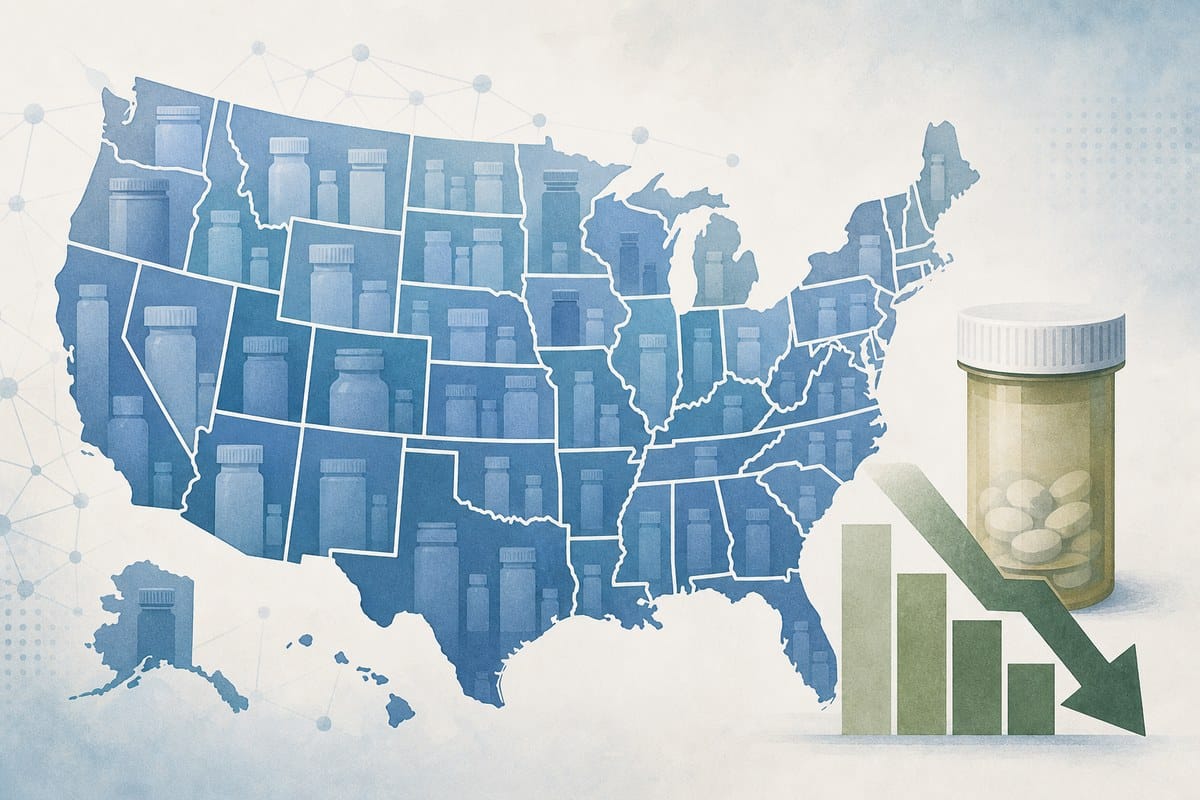
President Donald Trump said Sept. 18 that all 50 states will participate in, or benefit from, a new Medicaid prescription-drug pricing initiative intended to reduce the net cost of selected brand-name medicines. The program, called the Medicaid GENEROUS model, is built around drugmaker rebates that the administration says will bring Medicaid’s final prices in line with a “most-favored-nation” benchmark tied to prices in other developed countries.
The announcement could carry substantial consequences for Medicaid budgets because the jointly financed federal-state program pays for medicines used by millions of low-income Americans, older adults and people with disabilities. But the practical effect remains difficult to measure: the administration has not publicly released the agreements with pharmaceutical companies, the rebate amounts, a complete list of covered medicines or state-specific implementation terms. Without those details, the projected savings cannot be independently calculated.
How the model is supposed to work
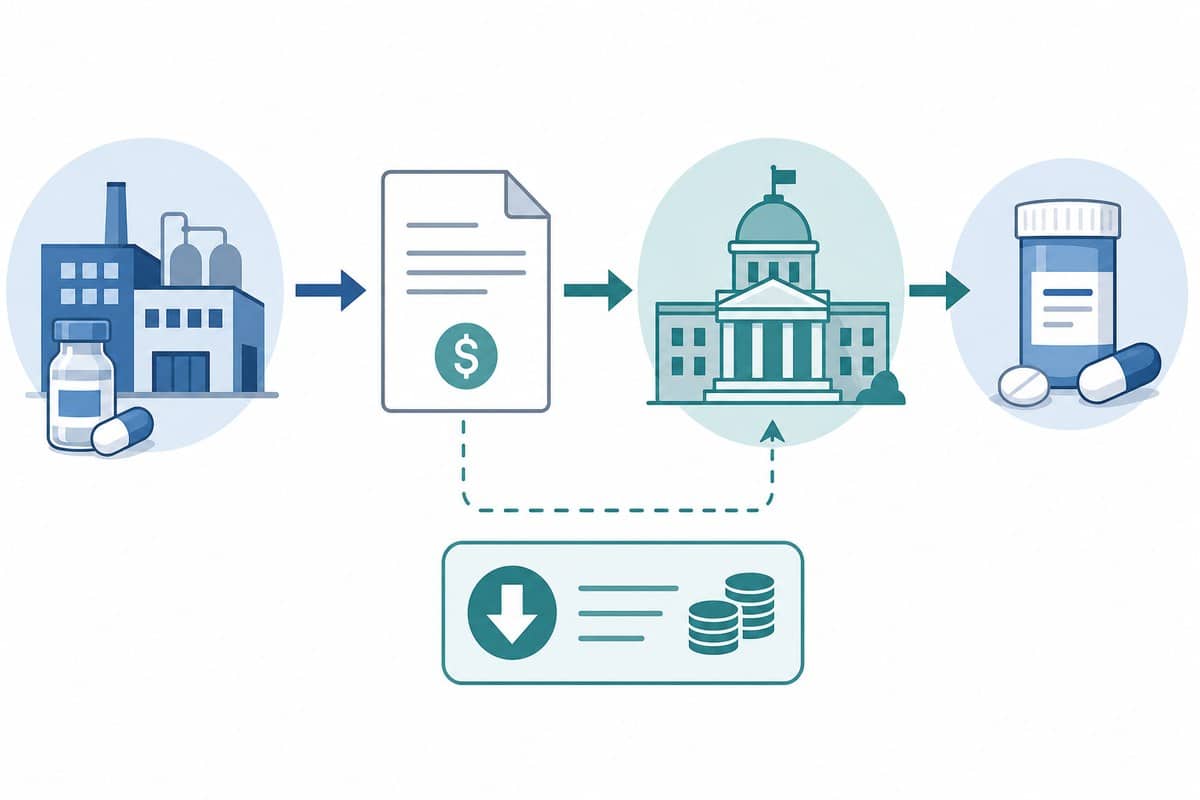
Under the White House fact sheet, participating manufacturers would pay rebates on costly brand-name drugs so Medicaid’s net price would not exceed the administration’s most-favored-nation price. A drug’s net price generally means the amount paid after rebates and other discounts, rather than its publicly listed price.
The White House said the model includes hundreds of medicines in major treatment categories, including cancer, diabetes and asthma. It also said it had agreements with 26 pharmaceutical manufacturers as of Sept. 18. Neither the fact sheet nor the publicly described announcement specifies the full drug list, the rebate formula, the foreign countries used for comparison, or how the model will handle changes in overseas prices and U.S. contracts.
Those omissions are important because international drug-price comparisons can vary considerably depending on which countries are included and whether the comparison uses list prices, confidential net prices or another measure. The administration has described the arrangement as a way of ensuring that Medicaid does not pay more than the selected international benchmark after rebates. The available public documents do not show how that benchmark will be calculated for each medicine.
Large projected savings, limited public evidence
The White House, citing its Council of Economic Advisers, estimated that the Medicaid initiative would save taxpayers $64.3 billion over 10 years: $36.6 billion for the federal government and $27.6 billion for state governments. It separately projected that its broader most-favored-nation drug-pricing agreements would yield $600 billion in savings over a decade.
Those are administration projections, not measured savings. Associated Press reporting carried by KSAT noted that the underlying agreements have not been made public, limiting outside experts’ ability to assess the expected savings. Kathy Hempstead, a senior policy adviser at the Robert Wood Johnson Foundation, told the AP that more granular evidence would be needed to support the estimates and inform potential legislative action.
The numbers also cannot be compared cleanly with an earlier estimate. The AP reported that the White House had estimated in May that its drugmaker agreements could save $529 billion over 10 years. The newer fact sheet’s $600 billion figure covers the administration’s most-favored-nation deals broadly, while $64.3 billion is specifically assigned to Medicaid. Publicly available descriptions do not explain whether the change from $529 billion to $600 billion reflects additional agreements, revised assumptions, a different set of medicines or another shift in methodology.
The distinction is more than an accounting question. Savings forecasts depend on the prices Medicaid would otherwise have paid, the volume of medicines used, the duration of rebate commitments and whether manufacturers alter prices or discounts elsewhere in response. None of those assumptions is detailed in the announcement.
Budget effects may be clearer than patient effects
If rebates reduce Medicaid’s acquisition costs as described, the immediate financial beneficiaries would generally be state and federal Medicaid budgets. Medicaid is financed by both levels of government, so lower net drug spending could reduce expenditures for each, though the share varies by state and by population served.
The effect on patients’ pharmacy bills may be smaller and less direct. Medicaid beneficiaries generally face nominal prescription copayments, the AP reported, meaning that a lower net price paid by a Medicaid program does not necessarily translate into an equivalent reduction at the pharmacy counter. The policy could still matter to patients if lower program spending affects states’ ability to maintain coverage or benefits, but such effects would depend on later state decisions and cannot be inferred from the announcement alone.
The model also does not establish that every Medicaid prescription will become cheaper. The White House describes a selected set of hundreds of drugs, not all medicines covered by Medicaid, and has not released the complete roster. It is therefore not possible to determine from the available information which patients, conditions or state programs will see the largest changes.
A broader administration campaign on drug prices
The Medicaid plan is part of a longer administration effort to use international pricing comparisons in negotiations with drugmakers. The White House says Trump signed an executive order on May 12, 2025, directing agencies to pursue actions aimed at aligning U.S. prescription-drug prices with those in comparable countries. It says the president then sent letters to 17 drug manufacturers on July 31, 2025, and announced the first related agreement with Pfizer on Sept. 30, 2025.
For now, the Sept. 18 announcement establishes the administration’s stated nationwide scope and its intended rebate mechanism, but not the results. State participation, covered medicines, negotiated rebates and savings will be easier to evaluate only when the agreements and implementation details become public, or when Medicaid spending data show whether the forecast reductions materialize.