


The Department of Energy has quietly scaled back nuclear safety and security requirements for reactors built on federal property, a policy shift that could accelerate demonstration projects but heightens concerns about worker exposure and environmental protection. According to reporting by NPR, roughly one-third of DOE’s internal safety rulebook was removed and several sections were rewritten, converting previously mandatory provisions into recommendations and leaving key security protocols largely to company discretion.
What Changed in DOE Oversight of Reactor Safety
The revisions apply to reactors sited on DOE campuses such as national laboratories, not to commercial plants licensed by the Nuclear Regulatory Commission. NPR’s review found that requirements aimed at limiting groundwater contamination, enforcing environmental monitoring, and constraining occupational radiation dose have been softened. In practice, language that once said “shall” now often reads “should,” giving project operators greater latitude in how they design safeguards and respond to incidents.
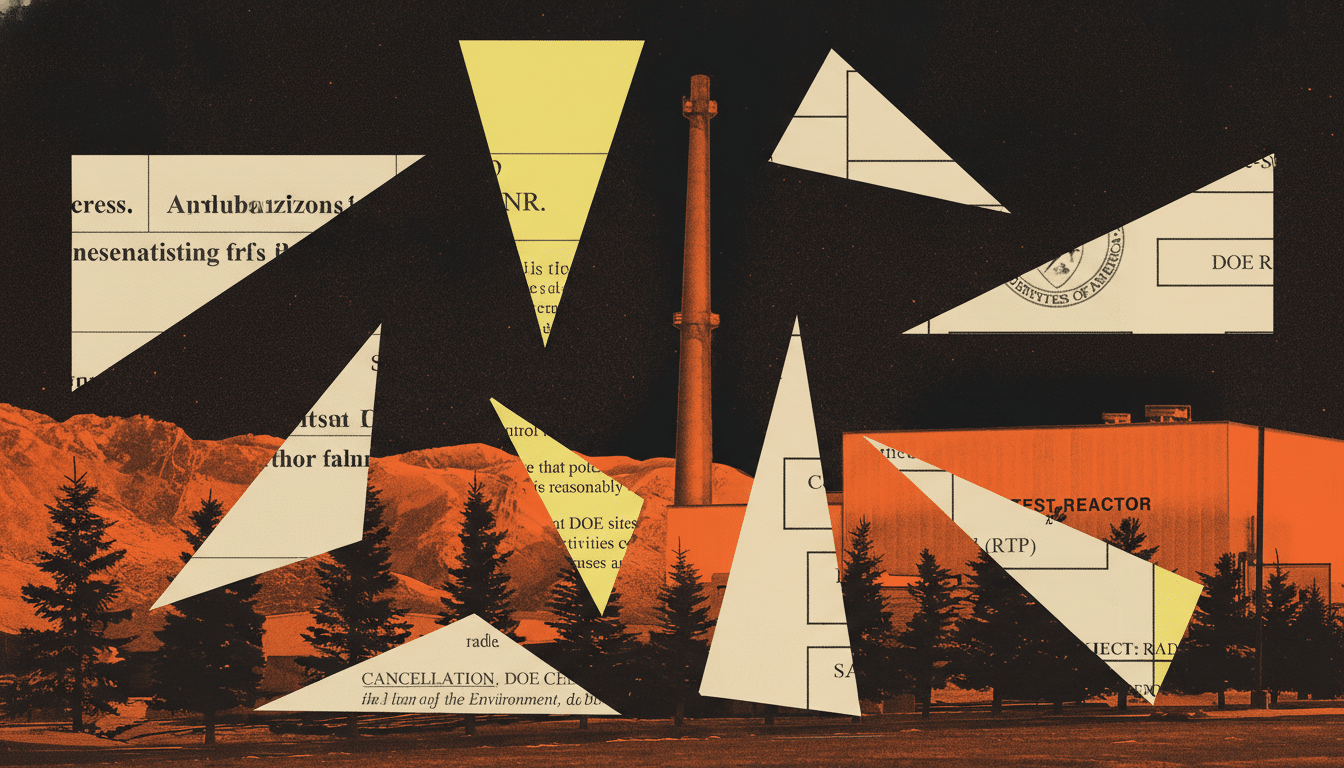
Security is another pivot point. NRC-licensed plants must meet prescriptive standards that include an armed response force, robust access controls, and resilience against a defined set of threats. On DOE property under the new approach, companies have broader authority to set their own protective strategies, subject to DOE oversight rather than NRC’s rulebook. The changes were issued without public notice and comment, NPR reported, underscoring how DOE’s internal directives can be revised outside the formal rulemaking processes that typically govern civilian nuclear facilities.
DOE has long maintained a dual role: it sponsors early-stage nuclear projects and also oversees safety at federal sites. That arrangement has drawn periodic scrutiny from auditors who warn that self-oversight can blur accountability. The Government Accountability Office has previously urged DOE to strengthen independent review and clarify lines of authority across its vast nuclear complex.
Implications For Workers And Communities
Occupational radiation exposure is a central flashpoint. The NRC caps worker doses at 50 millisieverts per year and emphasizes the ALARA principle—keeping exposures as low as reasonably achievable. Typical background radiation in the U.S. is about 3 millisieverts annually, with a chest CT scan adding roughly 7 to 10 millisieverts. If DOE allows higher internal thresholds or shifts key limits to guidance, experts say cumulative doses could rise for certain job categories, especially during testing, maintenance, or upset conditions. The International Commission on Radiological Protection has long cautioned that even low-to-moderate doses carry incrementally higher risk over time.
Environmental safeguards are also at issue. Federal sites still bear the imprint of legacy contamination—from Hanford’s tank waste to groundwater plumes around parts of the Savannah River Site—illustrating why consistent, enforceable monitoring matters. Converting hard requirements to suggestions for new reactors risks uneven implementation across contractors, and communities near DOE campuses may face greater uncertainty about how promptly and transparently operators must detect, report, and mitigate releases.
Startups Racing on Federal Land for Reactor Demos
The timing is consequential. A wave of advanced reactor startups is pursuing demonstration units on DOE property to showcase designs and meet ambitious deployment targets set by the administration, including an aggressive Independence Day 2026 goal for first-of-a-kind systems. Projects at sites like Idaho National Laboratory and Oak Ridge have been viewed as faster pathways precisely because they can proceed under DOE oversight rather than the NRC’s lengthier licensing process.
The rush coincides with a scramble to supply power-hungry data centers and AI infrastructure. Industry assessments project a sharp rise in electricity demand from computing loads this decade, and utilities in several regions are already revising long-term plans. Developers argue that streamlined safety regimes on federal land could shave months off schedules and help close looming capacity gaps. Critics counter that short-term speedups may invite long-term setbacks if an incident erodes public trust—history shows nuclear deployment hinges not just on technology, but on confidence in rigorous oversight.
Legal and Regulatory Tensions Around DOE Rules
The split jurisdiction—DOE for federal sites, NRC for everyone else—creates a patchwork that can confuse the public and complicate enforcement. The Union of Concerned Scientists and other watchdogs have long argued for harmonizing safety baselines so demonstration reactors don’t operate under materially weaker standards than commercial plants. Environmental groups may look to the National Environmental Policy Act to challenge projects if they see gaps in analysis or public engagement, even when DOE contends its internal directives are sufficient.
Congressional oversight is another wildcard. Committees with jurisdiction over energy and national laboratories have, in the past, pressed DOE to tighten contractor management and improve transparency around safety waivers. A new round of hearings or Inspector General reviews could follow if lawmakers conclude that the latest changes exceed what is prudent for first-of-a-kind nuclear systems.
What to Watch Next on DOE Reactor Oversight
In the coming months, watch for project-specific safety plans from reactor developers on DOE sites—especially how they address radiation protection, emergency preparedness, and security postures under the revised playbook. Equally important will be the clarity of environmental monitoring commitments and how often results are disclosed to surrounding communities.
The stakes are sizable. Advanced reactors promise firm, carbon-free power and a hedge against mounting grid stress. But the pathway to scale runs through credibility. Whether the DOE’s lighter-touch regime proves to be pragmatic streamlining or perilous shortcutting will depend on how rigorously it is applied—and how quickly gaps are corrected when they appear.