


The Glock trigger group is mechanically straightforward, but that simplicity masks a tightly sequenced chain of events. Every pull moves several components in a specific order, and each one influences pull weight, reset distance, and shot-to-shot consistency.
Shooters chasing better performance often focus on external upgrades, but the real variables are inside the trigger group. Having a clear picture of what each part actually does makes the difference between a smart modification and a wasted one.
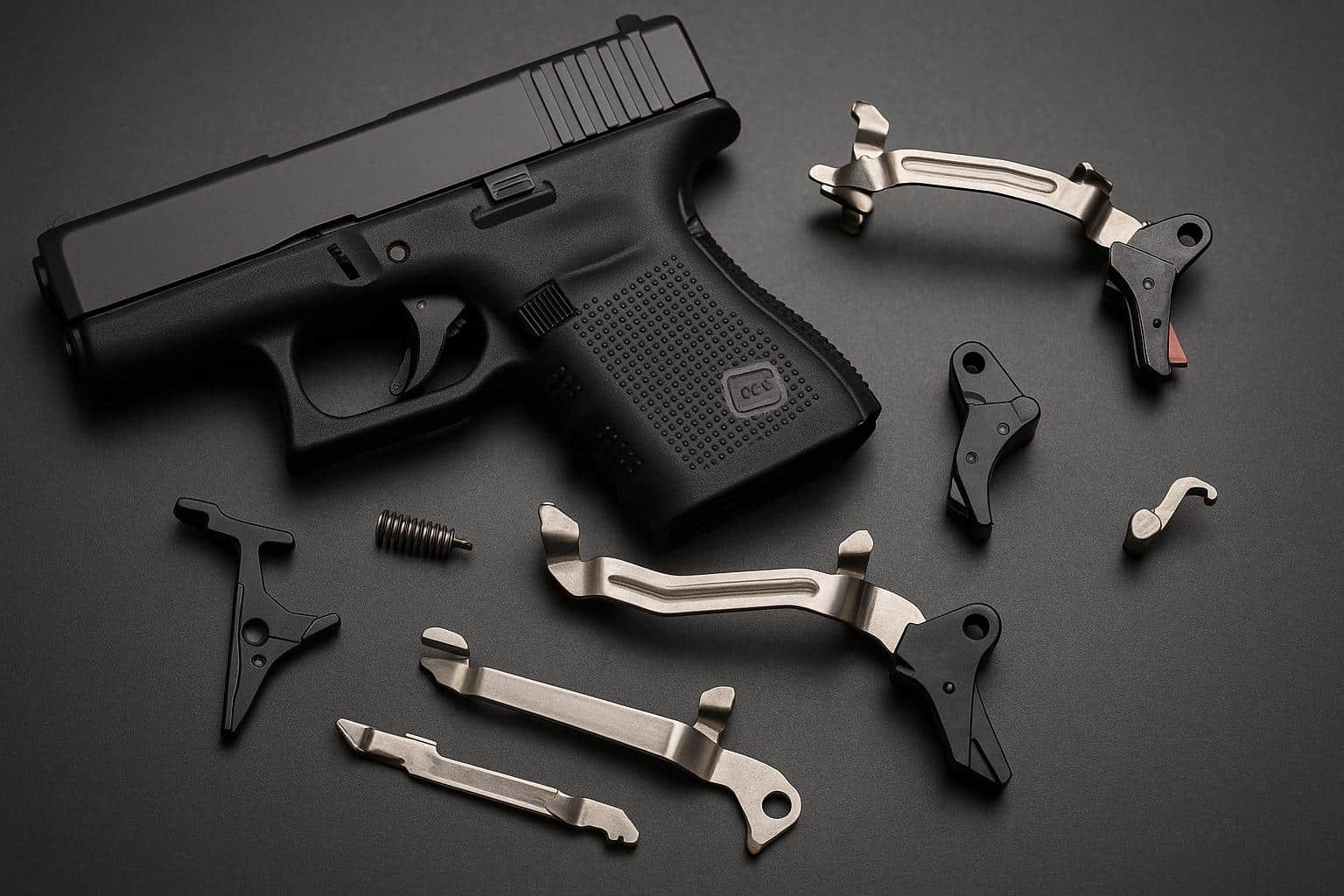
How the Stock Trigger System Works
The Glock relies on a striker-fired design with a partially pre-tensioned striker. Pulling the trigger rearward completes two actions at once: it finishes cocking the striker and releases the firing pin safety. The trigger bar, connector, and trigger housing each carry a distinct role in that sequence.
The connector sits at the rear of the trigger bar and governs the break angle. Stock connectors generally produce a pull weight around 5.5 pounds. The geometry of that connector face is the first thing most aftermarket modifications address.
The Role of the Connector Angle
The trigger bar cams over the connector face just before the striker releases. That angle determines how much resistance a shooter feels in the final stage of the pull. A reduced-angle connector lowers peak pull weight without altering the underlying mechanism. The cam-over action still happens the same way; the mechanical advantage simply shifts.
Shooters looking into these changes often start by reviewing glock triggers to get a clear sense of which components are available and how each one affects pull characteristics before making any changes. The range of options on the market reflects just how sensitive that connector geometry is to small dimensional differences.
What Aftermarket Trigger Bars Change
The trigger bar connects the trigger shoe to the firing mechanism. Its cruciform, the rear section that engages the striker and interfaces with the connector, is where most aftermarket bars make their changes. Refined cruciform geometry produces a cleaner, more defined break.
Surface finish is another variable. Where metal contacts metal during the pull cycle, a smoother finish reduces friction, making the pull feel lighter even without changing the spring weight.
Drop-in Versus Full Assembly Replacements
Drop-in trigger assemblies swap out the complete module, including the shoe, bar, and occasionally the connector. They are built for consistency and require little to no fitting. Full custom assemblies go further, incorporating revised spring rates and tighter tolerances across every component.
Drop-in options appeal to most shooters because they improve pull weight and reset without compromising reliability. Full assemblies offer a higher degree of control but demand closer attention to compatibility across different Glock generations.
Spring Changes and Their Mechanical Effect
Trigger return springs and connector springs both factor into pull weight and reset speed. Lighter springs reduce the overall pull feel, but spring rates also affect primer ignition. Taking the striker spring too light introduces the risk of light primer strikes.
Reputable aftermarket kits stay within safe thresholds. A reduced-power striker spring typically drops from 5.5 pounds to around 4 pounds, which remains reliable with standard commercial ammunition.
Reset Distance and Its Mechanical Cause
Reset is the forward travel the trigger must complete before it can fire again. That distance is set by how far the trigger bar needs to travel to re-engage the connector. A shorter reset comes from tighter tolerances and revised cruciform geometry, not from a lighter pull alone.
Aftermarket parts targeting reset typically machine the cruciform to a finer specification. The result is a reset that registers earlier and more predictably, which pays off most during quick follow-up shots.
Conclusion
Aftermarket Glock trigger parts work by refining the geometry that already exists inside the mechanism, not by replacing the logic behind it. Connector angles, cruciform dimensions, surface finishes, and spring rates each contribute to how the pull feels and performs. Shooters who understand what each component actually does will make better choices and see more consistent results downrange. The mechanical reasoning behind these modifications is what separates a purposeful upgrade from a random parts swap.