


Pixar’s next chapter in its flagship franchise points its flashlight squarely at the unease around “smart” playthings. In the first look at Toy Story 5, Woody, Buzz, and the gang confront a sleek AI tablet — a character called Lilypad — that behaves like an endlessly attentive, sometimes unnervingly precise companion. The trailer leans into an all-too-familiar phrase from the voice-assistant era: the sense that a device is “always listening.”
What might sound like a playful premise is calibrated to tap a real cultural anxiety. As Bonnie is transfixed by her new AI toy, the older, analog crew scrambles to reclaim her attention — and her privacy. It’s part cautionary tale, part family comedy, delivered by storytellers who know how to turn tech jitters into heart and humor.
Pixar Puts Surveillance Era Fears Onscreen
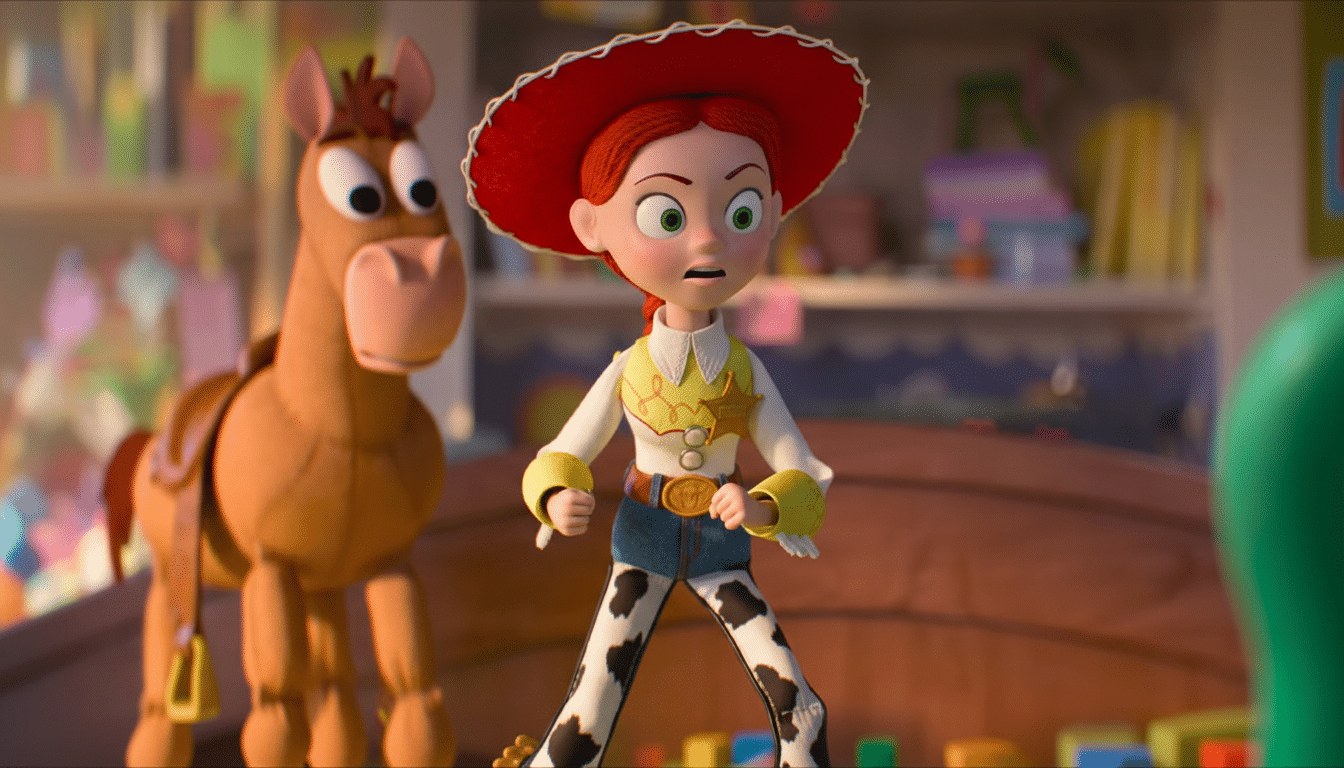
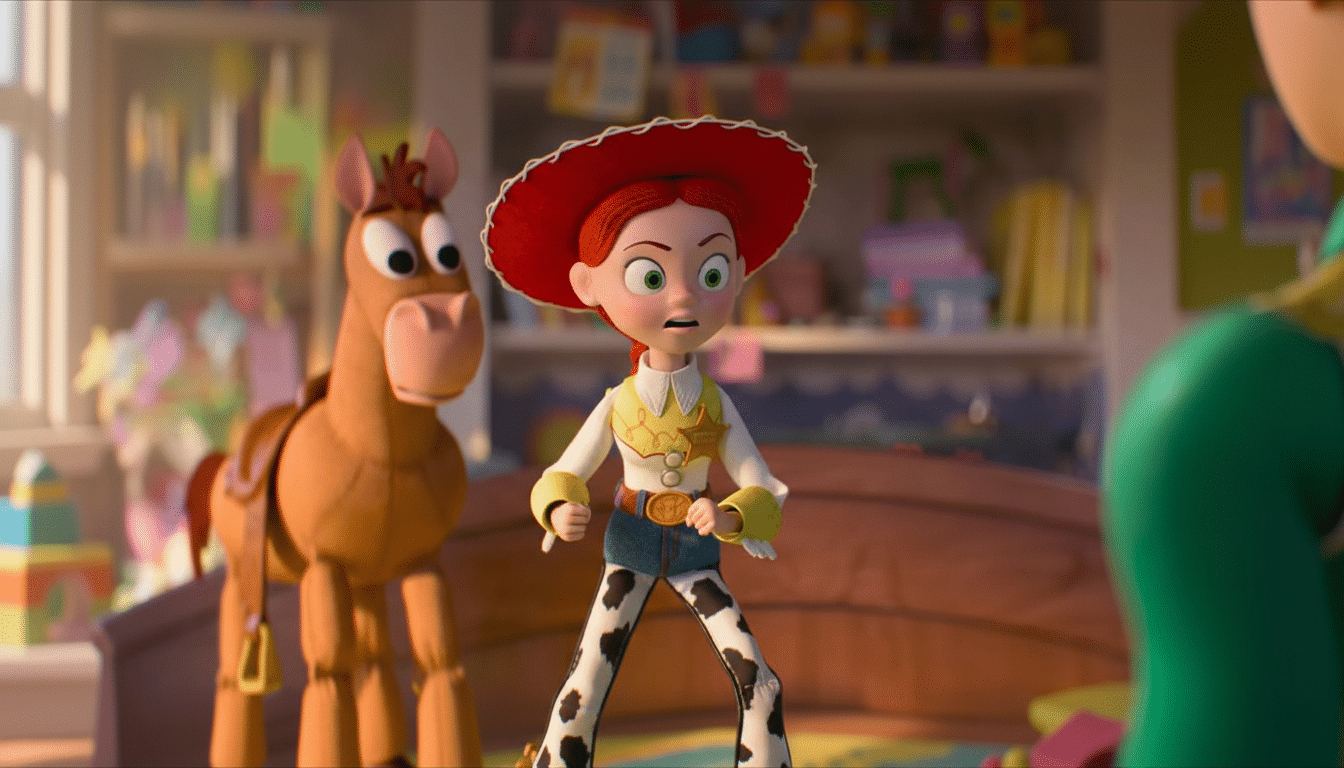
The trailer frames Lilypad as more than a tablet with games. It captures, repeats, and even translates conversations, mirroring the behavior of modern voice assistants that can wake unexpectedly and parse speech. When Jessie challenges the device about Bonnie’s well-being, the AI parrots her words back in an icy, synthesized cadence — a visual shorthand for the data trails and feedback loops baked into many connected products.
That creative choice cleverly updates Toy Story’s core tension: What happens to toys when children’s loyalties shift? Earlier films wrestled with fads and obsolescence; this one raises the stakes with a rival that isn’t just newer, but networked. Woody’s crew isn’t competing with a shinier action figure — they’re up against an adaptive system designed to be indispensable.
Onscreen Villain Meets Real World Precedent
Fiction, in this case, tracks uncomfortably close to fact. Regulators in Germany famously classified the interactive doll My Friend Cayla as a covert surveillance device and effectively banned it, citing the potential for eavesdropping. The VTech breach exposed data on millions of children and parents, prompting a U.S. enforcement action under the Children’s Online Privacy Protection Act. And the CloudPets incident left voice messages between kids and relatives exposed online, a stark reminder that intimate audio often lives on servers far from the playroom.
Researchers have also documented how “wake words” don’t always work as advertised. Academic teams at Northeastern University and Imperial College London have shown that smart speakers can mishear TV dialogue and casual speech, triggering unintended recordings. Mozilla’s Privacy Not Included project has repeatedly flagged connected toys for opaque data sharing and lax security. In that light, Lilypad’s eerie attentiveness feels less like satire and more like industry critique.
Parents Face an Uneven Fight Against AI-Driven Toys
Even before AI, many families were already wrestling with attention capture. Common Sense Media’s most recent census reports that tweens average more than five hours of daily screen media and teens closer to nine, with steady growth over recent years. The American Academy of Pediatrics recommends structured limits and device-free zones, but coaching kids away from deliberately sticky digital design can feel like asking them to ignore gravity.
AI turns the dial further. Adaptive toys can personalize content, learn a child’s preferences, and nudge them to return with streaks and rewards. That’s a different kind of “play,” one that mirrors the engagement mechanics of social apps. Toy Story 5’s setup — beloved toys losing ground to a device that seems to anticipate every need — is a distilled version of what many households already experience.
Regulators and Toymakers on Notice Amid Privacy Fears
Policy is catching up, unevenly. In the U.S., the Federal Trade Commission has stepped up COPPA enforcement and secured notable settlements around children’s voice data retention. The U.K.’s Age Appropriate Design Code sets higher bars for data minimization and profiling, and similar principles are gaining traction elsewhere. Consumer advocates at groups like Fairplay and the Electronic Privacy Information Center are pressing manufacturers to bake privacy by design into kids’ tech.
Market pressure matters, too. Analysts expect the smart toy category to keep growing at a double-digit clip this decade, intensifying competition to capture children’s time. Brands that foreground transparent data practices, offline modes, and clear parental controls could turn Toy Story 5’s unease into an opportunity — proving that intelligence and safety can coexist in products for young users.
Why This Toy Story Chapter Lands Powerfully Now
Toy Story has always been about loyalty, belonging, and what happens when the world moves on. By casting an AI tablet as the interloper, Pixar taps a conversation already unfolding in homes, schools, and legislatures: How much autonomy should we hand to machines built to hold our gaze, and what gets lost when childhood becomes another data stream?
If the film nudges families to ask sharper questions — Which toys listen? Where does the audio go? What can be played and learned offline? — it will have done more than riff on a headline. It will have given parents and kids a shared language for navigating a future in which the line between playmate and platform keeps blurring.
