


Tinder is making facial scans mandatory for anyone creating a new account in the UK, expanding its Face Check system as the latest front in the dating app’s push to curb scams, bots, and catfishing.
The requirement slots Face Check directly into the sign-up flow. New users must pass a brief video selfie scan before they can start matching, a move Tinder frames as a safety upgrade and critics see as a test of how far platforms can go with biometrics.
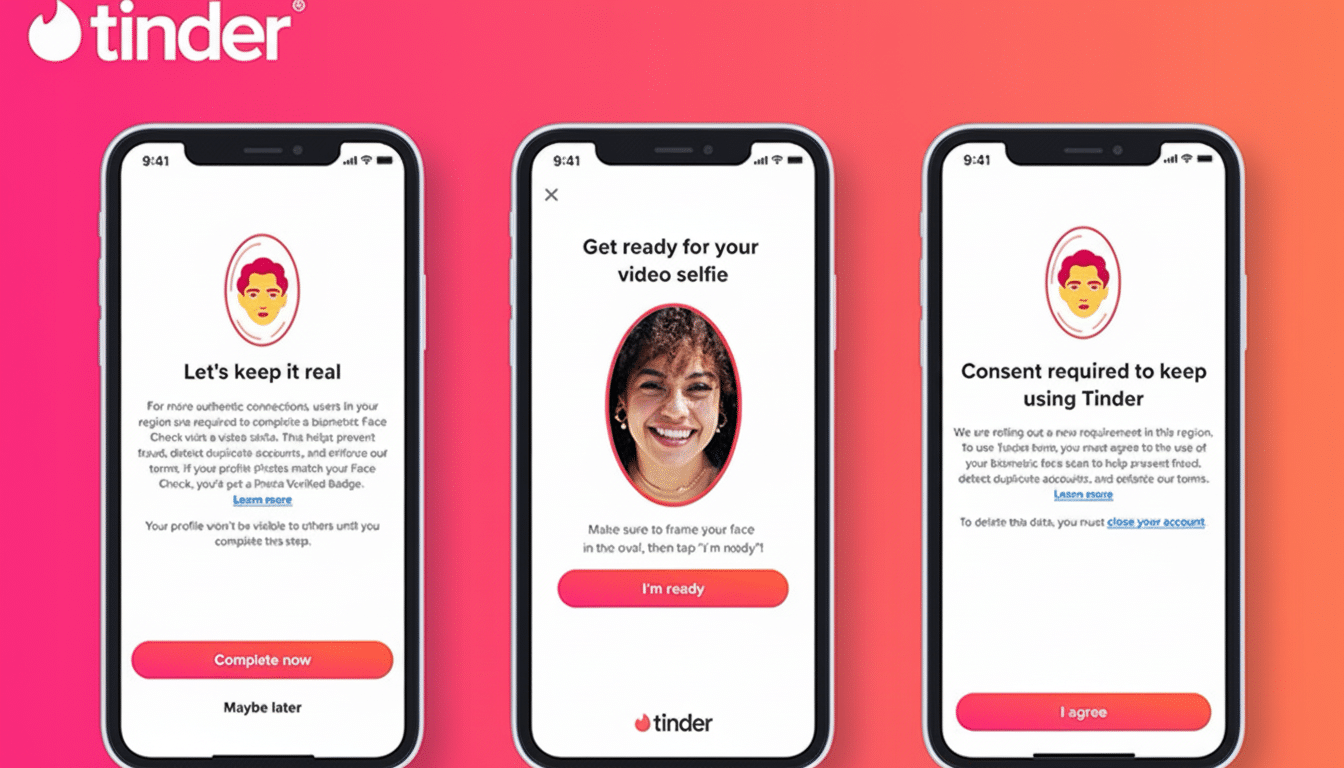
How Tinder’s Face Check Works for New UK Accounts
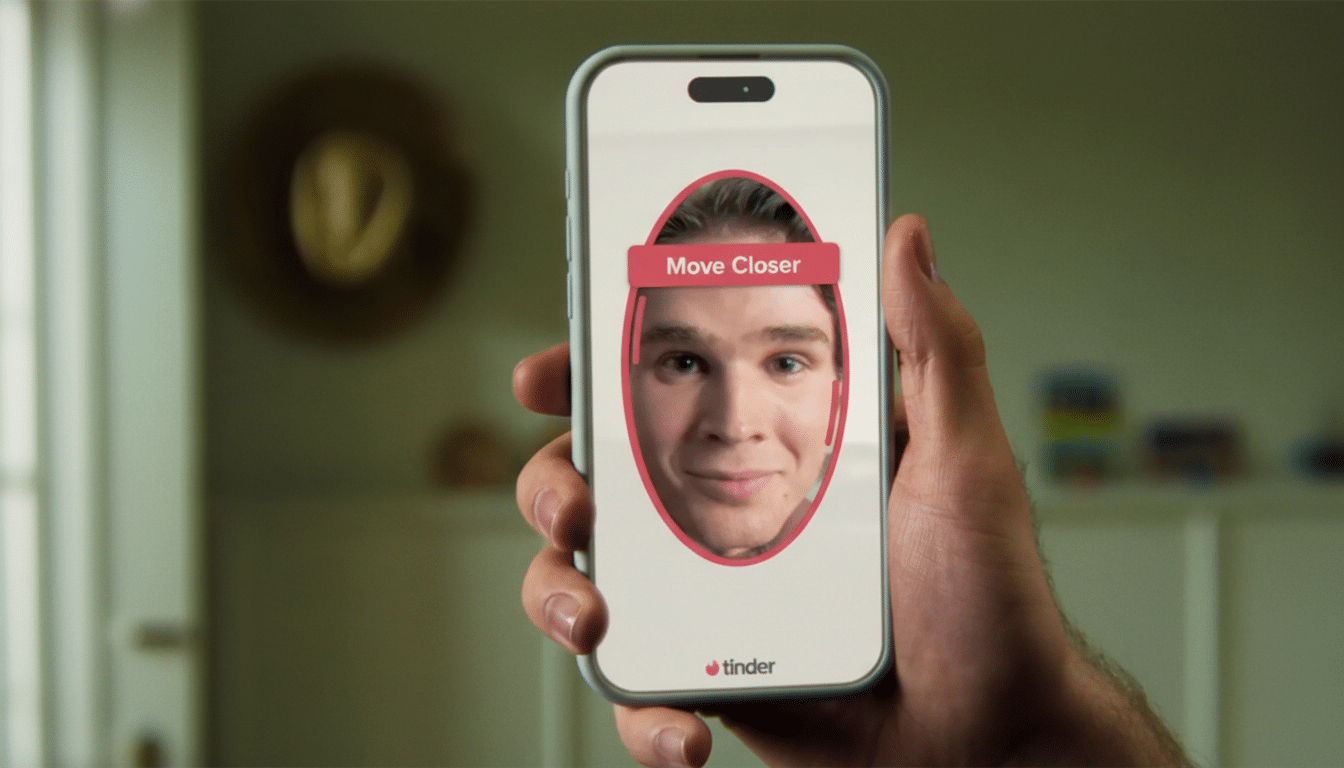
Face Check asks newcomers to record a short video selfie within the app. Tinder then analyzes the clip to confirm the person is real (a “liveness” test) and that their face aligns with photos they plan to use on their profile. Those who pass receive a Photo Verified badge, a signal meant to boost trust on first contact.
According to Tinder, the technology also helps flag suspicious behavior at scale, including attempts to run multiple accounts behind the same face or to upload AI-generated images. The company says the goal is to reduce the time users spend weeding out fake profiles and to give genuine daters more confidence in swiping.
Why Tinder Is Tightening Verification in the UK Now
Pressure on platforms to verify identity has intensified in the UK alongside the Online Safety Act, which compels services with adult content to implement effective age checks. Ofcom is charged with enforcement, while the Information Commissioner’s Office (ICO) has stressed that any biometric processing must be lawful, necessary, and transparent.
Scams are also top of mind for users. In a survey of 2,000 UK singles, 63% of 18–24-year-olds said scams have become harder to spot, reflecting a broader shift toward more polished fraud and AI-assisted deception. Tinder reports that after expanding Face Check and related measures, exposure to potential bad actors fell by over 60% and user reports of such profiles dropped by over 40%.
Global Rollout and Industry Context for Verification
The UK mandate follows similar requirements for new users in the U.S., Canada, Australia, India, and parts of Southeast Asia, Latin America, and the Middle East. It’s part of a years-long sequence: Tinder first introduced photo verification, then moved to video-based checks, and later layered on ID verification to strengthen its trust signals.
Rivals are moving in the same direction. Major dating platforms have publicized new verification tools and partnership models with identity vendors to tackle spam, impersonation, and age-gating. The sector’s safety posture is also shaped by high-profile legal scrutiny of dating apps’ handling of abuse and repeat offenders, putting further emphasis on screening and enforcement.
Privacy and Bias Questions Around Facial Scanning
Mandatory facial scans raise predictable but serious questions. Privacy advocates including Open Rights Group and Privacy International routinely warn that biometric systems can be intrusive, create new data-security risks, and entrench errors if not independently audited. Under UK GDPR and the Data Protection Act, facial biometrics are classed as special category data, demanding strict controls and clear user communication.
There’s also the fairness test. Face analysis can underperform across skin tones, ages, and lighting conditions. The ICO recommends algorithmic bias assessments, publishable accuracy metrics, and routes for redress. For users, that translates to a simple expectation: if the system gets it wrong, there should be a transparent appeal path without locking them out indefinitely.
What UK Users Should Expect Under Tinder’s New Rules
New UK sign-ups will be prompted to take a short video selfie in good lighting and to ensure their profile photos show their face clearly. If the scan fails, the app typically asks for another attempt. Skipping Face Check won’t be an option for first-time registrants, and the Photo Verified badge will appear once the scan is approved.
For many, the trade-off is straightforward: a few seconds of friction at onboarding in exchange for fewer fakes and faster trust-building. For others, the bigger question is how long the data is retained, how it’s secured, and what independent oversight exists. Those answers will determine whether facial verification feels like a safety feature or a step too far.