


TikTok is introducing Shared Collections, a collaborative place to save and organize videos with people you both follow, and is teasing another feature called Shared Feeds that mashes together two users’ tastes into a small, daily playlist. Collectively, the additions signal a push toward co-curation and small-group discovery within one of the world’s most powerful recommendation engines.
What Shared Collections Do and How They Help Users Collaborate
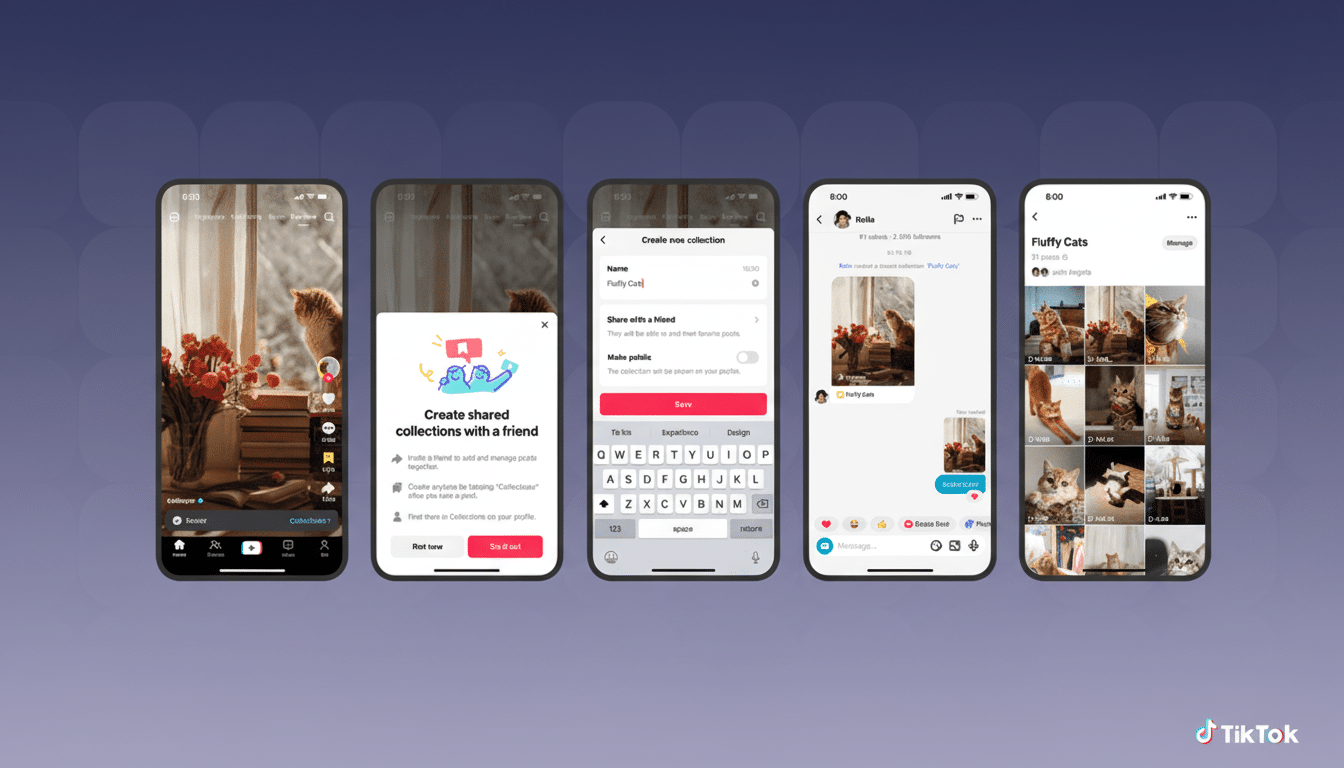
Shared Collections adds a social layer to the app’s current collections option that lets users co-save posts into folders shared between friends, partners or families. Think: roommates building out a design mood board, a bridal party exchanging makeup tutorials or teammates saving drills and plays. The feature is available worldwide to users 16 and older and requires a mutual follow, a guardrail that decreases spam and keeps collaboration intentional.
- What Shared Collections Do and How They Help Users Collaborate
- How Shared Feeds Will Function and What to Expect Daily
- Why Co-Curation Is Important on TikTok for Shared Discovery
- Privacy, Safety, and Controls for TikTok’s Shared Features
- What It Means for Creators and Brands Using Shared Tools
- A Festive Add-On for Chats That Nudges Personal Moments
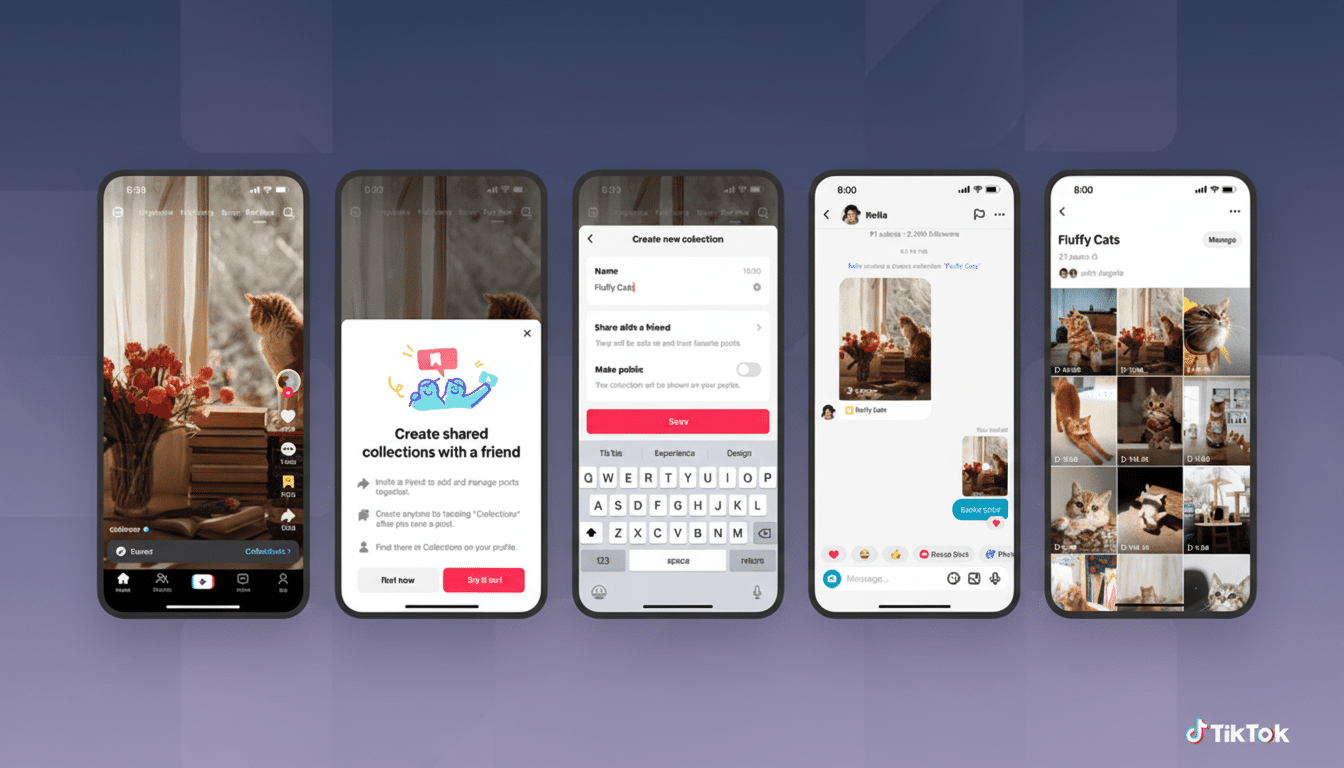
The creators and viewers of a collection can choose whether they want their collection to remain private among the participants or be published and shared more widely. That flexibility gives casual users a means to plan along with it; it also allows creators to spin up public “starter packs” or resource lists that can change based on what their audience suggests.
How Shared Feeds Will Function and What to Expect Daily
Shared Feeds will start rolling out in the next few months, bringing a co-personalized stream of posts to one-on-one messages. Starting a feed works when two people agree to it through private messages, and then TikTok’s recommendation system gathers videos that are passed back and forth according to the stuff each person views, likes and comments on. Unlike the never-ending For You Page, Shared Feeds are deliberately finite: 15 new videos per day.
After each viewer is done for the day, they can check out overlap metrics in a Shared Likes history — so you can see if both seem to show frequent interest in a single topic or creator, making it easier to find new content. The experience is a reflection of an industrywide push to formalize “taste matching” across platforms — borrowing from Instagram’s Blend for Reels and Spotify’s Blend playlists but tailored to TikTok’s fast-moving short-video graph.
Why Co-Curation Is Important on TikTok for Shared Discovery
Short-form video discovery has traditionally been a solo sport, with algorithms honed to maximize individual watch time. TikTok’s shift nudges that model more toward shared intent — planning a trip, learning something new together or even just comparing tastes — offering reasons for return that aren’t guided purely by what happens to be next up on an infinite scroll. Capped, built-for-purpose feeds also impose a “finished” state, which can help make viewing more intentional and reduce decision fatigue.
The timing coincides with general usage behavior. According to Pew Research Center researchers, 67% of U.S. teens are on TikTok and 16% report that they use the app “nearly constantly”; those levels can encourage features that facilitate casual collaboration without asking users to leave TikTok itself. Industry analysts at Insider Intelligence have also flagged that TikTok tops U.S. social platforms for average time spent per user, so co-curation could deepen the anchor point of interpersonal routines around the service.
Privacy, Safety, and Controls for TikTok’s Shared Features
Mandating mutual following between both parties prior to building a Shared Collection creates an explicit threshold of consent and prevents unwarranted invites. The 16+ requirement is similar to other social features intended to safeguard younger users. TikTok claims that its recommendations for Shared Feeds are made based on the same suite of existing activity signals — what you watch, like and comment on — as opposed to new data types, an important distinction given mounting government scrutiny of how social apps mix personalization with a user’s broader social graph.
These tools, which will join existing safety features like content controls, Family Pairing and account privacy settings, should give users more autonomy in deciding how visible their spaces-for-creativity are to the world … and who is part of them.
What It Means for Creators and Brands Using Shared Tools
Shared Collections might be a lightweight CRM for creators — organizing series, tutorials or product picks with their top fans — while public collections provide yet another format for evergreen guides. For marketers, the Shared Likes insights within Shared Feeds point to more nuanced signals — Keenu Reid refers to it as co-viewing — about shared preferences that may guide creator partnerships and social commerce tactics honed for a pair or small group considering a purchase together.
It also means that the 15 videos force tighter storytelling and sequencing. The creators who architect content in arcs — lesson plans, itineraries or challenge progressions — may be most suited to holding attention within these finite, purpose-driven feeds.
A Festive Add-On for Chats That Nudges Personal Moments
TikTok is adding greeting cards in chats, allowing users to append a brief message to a celebration animation. It’s a small touch, but it continues the same theme: nudging viral discovery back toward more personal, one-to-one moments.
The throughline is clear. In layering collaborative spaces on top of its recommendation engine, TikTok is betting that social organization — the acts of planning, saving and watching together — can strengthen ties, sharpen relevance and make an app that feels less like a firehose feel more like a shared toolkit.