


TikTok has quietly unveiled PineDrama, a standalone app built around serialized “microdrama” — bite-size narrative episodes typically running 60 to 90 seconds. The app is live in the US and Brazil on both Google Play and the iOS App Store, invites sign-in with existing TikTok credentials, and is free to watch at launch.
What PineDrama Offers: Design, Format and Features
PineDrama borrows heavily from TikTok’s familiar design language: vertical swipes, an algorithmic feed, and a Discover section that surfaces All and Trending shows. The format is brisk but serialized, encouraging viewers to binge short chapters back-to-back. Early titles lean into high-drama hooks — think Love at First Bite or The Officer Fell for Me — engineered to pay off every minute with cliffhangers that pull you to the next episode.
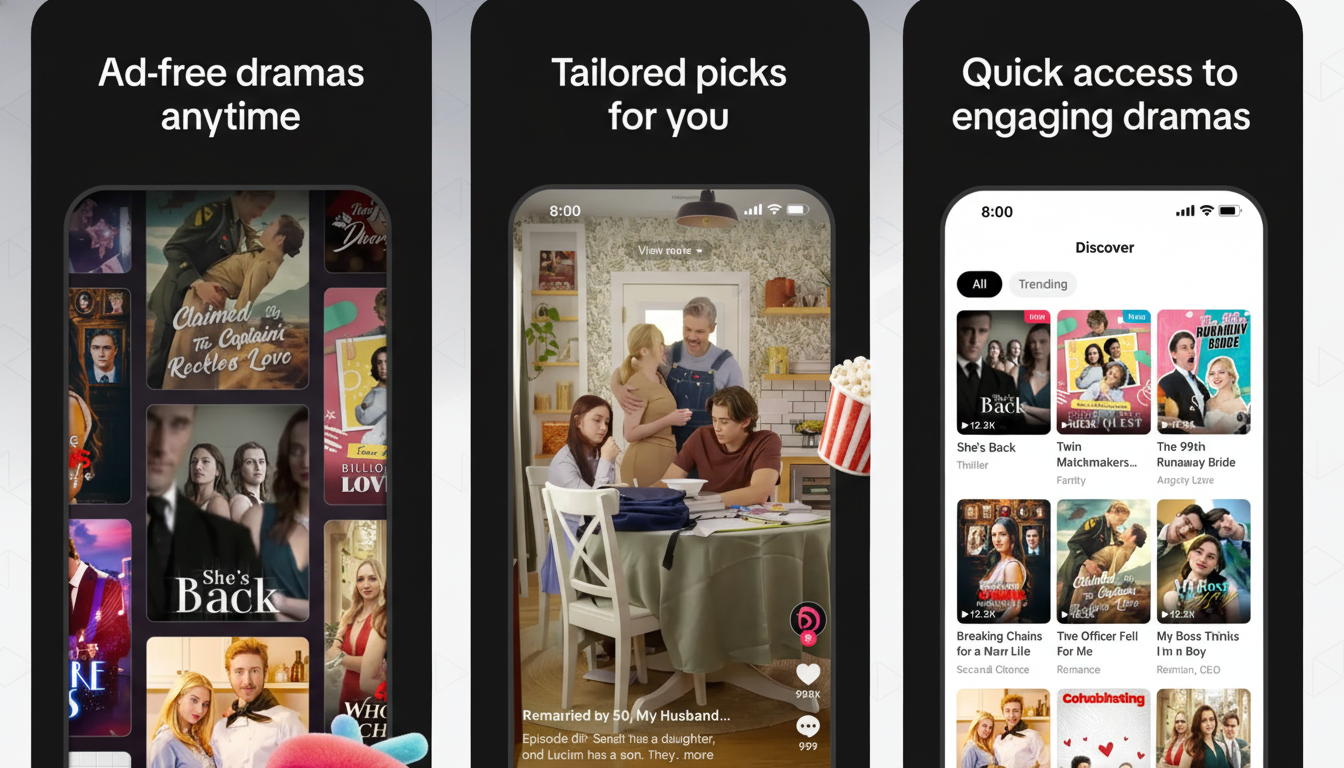
By splitting microstories into dozens of sub-two-minute chapters, PineDrama reduces friction for audiences while raising completion rates for creators. The strategy is straight from social video’s playbook: design each beat for the scroll, not the sofa. It also arms TikTok with a library that’s more structured than ad hoc creator posts, but still native to the phone-in-hand experience.
Why TikTok Is Betting on Microdrama and Serialized Stories
The microdrama genre, popularized in China and increasingly exported, is gaining commercial momentum outside its home market. Consultancy Owl & Co projected short-drama apps to generate $3 billion in global revenue excluding China in 2025 — roughly triple their 2024 haul. ReelShort’s breakout The Double Life of My Billionaire Husband reportedly amassed nearly 500 million views, showing how sticky these stories can become when the algorithm finds the right audience.
For TikTok and parent company ByteDance, PineDrama formalizes a trend already thriving on the main app: serialized storytelling built for vertical screens. It also offers a way to corral premium narrative content into a dedicated environment where discovery, pacing, and retention can be tuned for multi-episode arcs. A recent report from The Guardian noted traditional studios are exploring microdramas as a hedge against rising production costs — a signal that the format is graduating from experiment to strategy.
Monetization Questions and Competitive Landscape
PineDrama’s debut was first spotted by Business Insider, and TikTok has not outlined how the platform will make money. Today, everything is free to watch. Competitors such as DramaBox and ReelShort typically let viewers sample a handful of episodes before nudging them into subscriptions or paid unlocks, and some deploy token economies to drip-feed access. TikTok could follow with ads, paid series, tipping, or a hybrid — but the playbook remains open.

The calculus is straightforward: microdramas are cheap relative to traditional TV, audience acquisition is algorithmic, and engagement can be intense. If TikTok pairs PineDrama with targeted ads or commerce integrations, it can create high-frequency, high-intent moments around each cliffhanger. The risk is familiar, too — quality dilution, content moderation, and IP management all become tougher at the speed and scale short video demands.
What This Means for Creators and Brands on TikTok
PineDrama widens the runway for creators who can write to the minute and cut to the hook. Writers’ rooms for microdrama look more like growth teams: tight budgets, punchy scripts, iterative testing. Expect more creators to pilot season-one arcs over a few weeks, watch retention curves in real time, then double down on characters or twists that spike watch-through rates.
For advertisers, microdrama offers a narrative canvas with measurable beats. Short-form pre-rolls, brand placements inside episodes, and shoppable cues tied to story moments are all feasible, particularly given TikTok’s broader commerce ambitions. The upside is frequency and intent; the challenge is fit — intrusive ads will stick out more in a 75-second chapter than a 45-minute episode.
Signals to Watch as PineDrama Expands and Monetizes
Key tells will include geographic expansion beyond the US and Brazil, the first wave of monetization tests, and whether TikTok commissions exclusive franchises or leans primarily on independent studios. Also watch for creator incentives — revenue shares, bonuses for completion rates, or production grants — that could seed a pipeline of higher-quality series.
If PineDrama can avoid the pitfalls that sank earlier mobile-first experiments and keep the focus on cliffhanger-driven craft, it has the ingredients to become TikTok’s next growth surface: fast, serialized stories tuned to the rhythms of the feed, not the living room. The audiences are already primed; now the business model has to catch up.